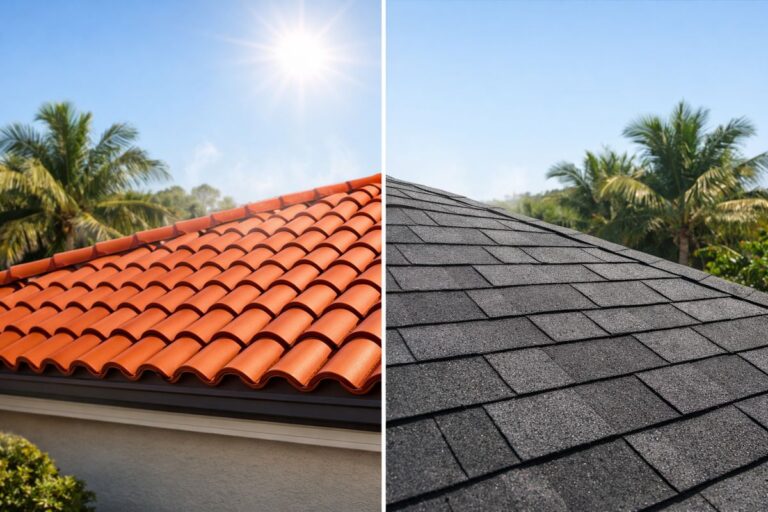
If your attic feels like an oven by 3 p.m., your roof is doing more than keeping rain out. In the tile roof vs shingles debate, tile is the better heat performer for Florida, plain and simple, while shingles still make sense if your budget matters more than long-term cooling and lifespan.
Quick Answer: Tile Usually Handles Florida Heat Better
Tile usually wins in Florida because it stays cooler under harsh sun, resists UV damage better, and lasts much longer. If your main goal is to cut heat gain and get a roof that still makes sense decades from now, tile is the stronger choice.
Shingles win on price, easier repairs, and lighter weight. That matters. If you need a code-compliant roof without turning the project into a much bigger structural upgrade, shingles are often the practical answer. But for heat alone, tile comes out ahead.
Tile Roof vs. Shingles at a Glance
Here’s the fast version: tile is the premium Florida roof, shingles are the budget roof. Both can be installed to meet code, both can survive tough weather when installed correctly, and both come in lighter, more reflective colors. The difference is how each one handles years of blazing sun, humidity, and storm wear.
| Feature | Tile Roof | Shingle Roof |
|---|---|---|
| Main material | Clay or concrete | Asphalt fiberglass shingles |
| Heat performance | Better | Fair to good |
| Typical lifespan in Florida | 50 to 75+ years for tile surface | 15 to 25 years |
| Upfront cost | Higher | Lower |
| Weight | Heavy | Light |
| Repairs | More specialized | Simpler |
| Curb appeal | Premium Florida look | Clean, practical look |
| Best for | Long-term ownership | Lower upfront budget |
What counts as a tile roof in Florida
In Florida, tile usually means clay tile or concrete tile. Clay is the classic terra cotta look you see all over coastal neighborhoods, while concrete gives you a similar style with a wider range of profiles and colors. Both are common in hurricane-prone areas because they hold up well in heat and can last for decades. If you want a deeper breakdown of the two, this comparison of Florida tile options side by side helps sort out the differences.
What counts as a shingle roof in Florida
A shingle roof usually means asphalt shingles, either standard architectural shingles or upgraded impact-resistant versions. Architectural shingles are thicker and better looking than old flat three-tab shingles, and impact-resistant products are the better fit if you want stronger storm performance. Shingles stay popular because they cost less, install faster, and fit a huge range of homes without much fuss.
Heat Resistance and Roof Surface Temperature
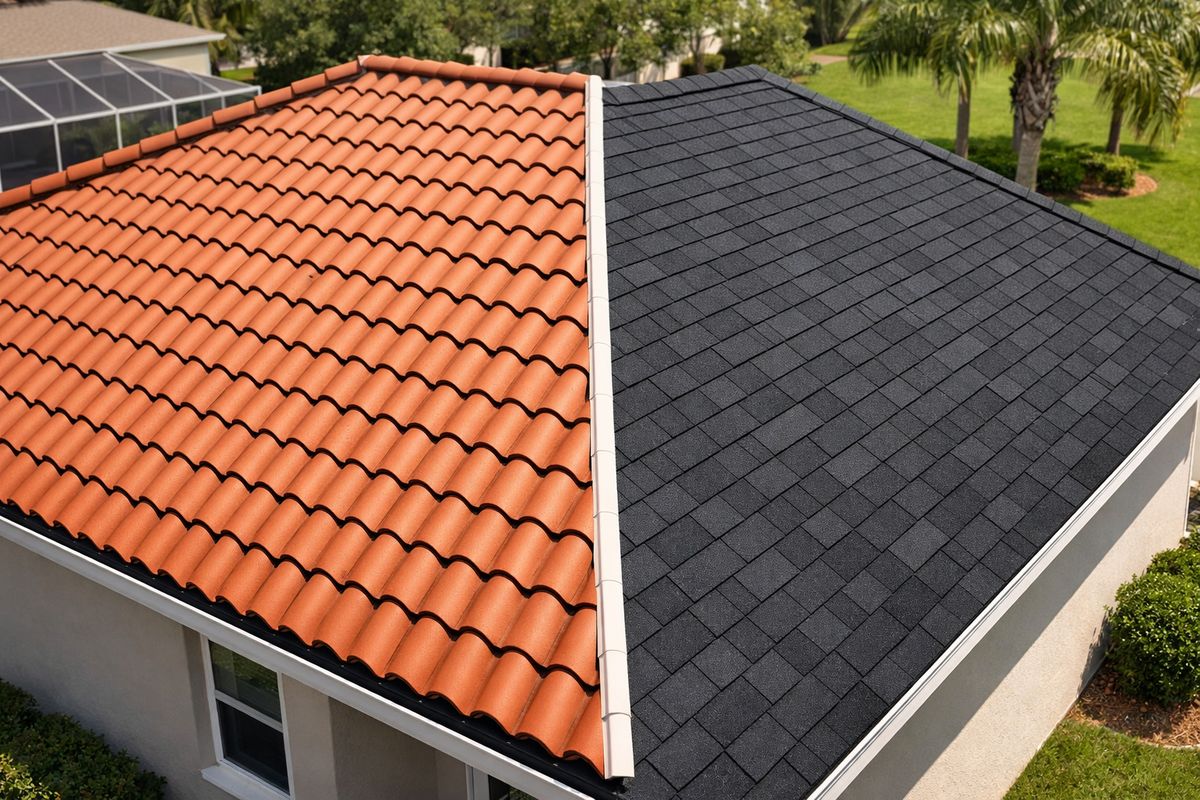
Florida sun is brutal on roofing. Roof surfaces can push past 50°F cooler with cool-roof materials than with conventional ones, and that gap matters when the sun sits on your house all afternoon.
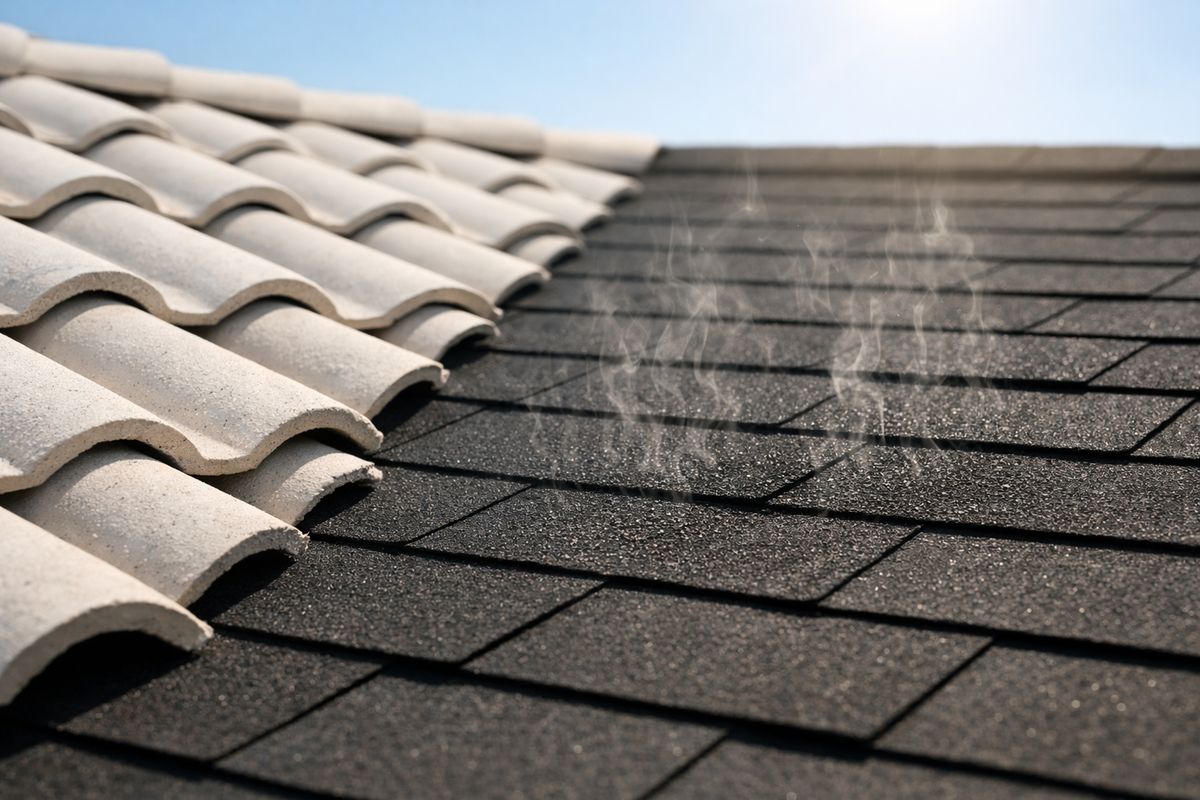
Tile generally absorbs less punishing heat than dark asphalt shingles, especially in lighter colors. It also handles that heat without breaking down as fast. Shingles, especially darker ones, soak up solar heat more readily and hold it closer to the roof deck. Think of it like standing barefoot on pale pavers versus blacktop in July. Both are outside in the same sun, but one is a lot less punishing.
Why tile stays cooler in the Florida sun
Tile has a built-in advantage because the profile creates small air spaces beneath the tiles. That air gap helps slow heat transfer into the roof deck and attic. Concrete and clay tile also work well in lighter finishes, and the Department of Energy specifically points to clay and concrete as strong cool-roof options for steep-slope homes.
That shape matters more than most sales pitches admit. A flat, heat-soaked surface sends warmth straight down. Tile interrupts that path, which is why your home often feels less burdened during a long August afternoon in places like Fort Myers or Boca Raton.
Where shingles fall behind in extreme heat
Asphalt shingles sit directly on the roof deck, so the heat they absorb has less distance to travel before it reaches the attic. Dark shingles are the weakest version of this setup. Over time, UV exposure also dries out the asphalt, loosens granules, and speeds up aging.
The catch is that shingles are not hopeless in Florida. A light-colored, reflective architectural shingle performs better than a dark standard one. But standard shingles still usually trail tile when the question is simple heat handling.
Energy Efficiency and Air Conditioning Load
Your roof affects your cooling bill more than most people expect. Research on roof performance notes that heat gain through the roof can account for about 20% of your air conditioning load in hot climates, which explains why roofing choice shows up in your day-to-day comfort, not just in contractor brochures.
If your current house gets stuffy upstairs every afternoon, roof material is part of that story. Ventilation, insulation, and duct layout matter too, but the roof is the first surface taking the hit.
How tile can help reduce attic heat
Tile helps by slowing heat transfer. Part of that comes from thermal mass, part comes from the air space under the tiles, and part comes from the fact that lighter-colored tile can reflect more sunlight in the first place. In plain English, it takes longer for roof heat to work its way into the attic.
That delay matters most during peak afternoon hours, when your AC is already working hard. A roof that sheds or slows heat gives your cooling system a little breathing room instead of piling on.
When cool shingles narrow the gap
Cool shingles can absolutely improve performance. The Department of Energy recommends choosing asphalt shingles with light-colored or cool-colored granules for steep roofs, and that’s smart advice in Florida.
Still, “narrow the gap” is the right phrase here. It does not erase the gap. If you want the best heat performance available from these two materials, tile still has the edge, especially when paired with light colors and proper attic ventilation.
Lifespan in Florida’s Climate
Florida ages roofs faster. Sun, humidity, salt air, pounding rain, and long heat cycles wear everything down sooner than in milder states.
This is where tile pulls away in a big way. Typical Florida service life for asphalt is about 15 to 25 years, while concrete tile often reaches 50+ years and clay can go beyond 75 years. That’s not a small difference. It changes how many times you may pay for reroofing during your ownership.
Typical Florida lifespan for shingles
Shingles often look great on paper because the packaging may suggest a 30-year product. But Florida is not a brochure climate. Intense UV and heat can make asphalt brittle sooner, and storm wear adds another layer of stress.
For many homes, especially in South Florida, a real-world range of 15 to 25 years is the more honest expectation. Sometimes less, if ventilation is poor or storms are rough.
Typical Florida lifespan for tile
Tile lasts much longer as the visible roof covering. Clay and concrete resist sun damage better, and that makes a real difference over decades. If you want a roof that fits the long game, tile is hard to beat.
Still, there’s an important catch that gets glossed over: tile lifespan is not just about the tile itself.
Wind, Hurricanes, and Storm Performance
Florida buyers never get to think about heat alone. Wind matters too, and sometimes it decides the whole project.
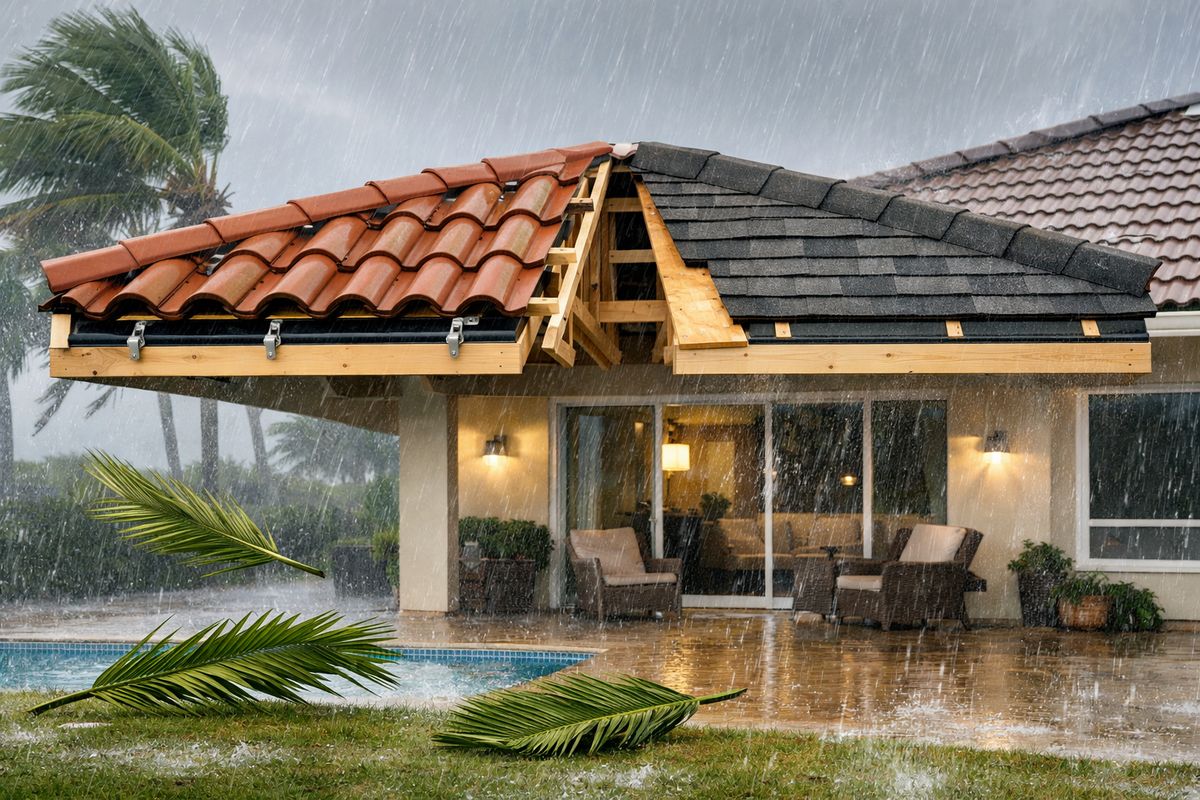
Both materials can perform well in storms when the roof system is designed and installed properly. Modern products are much better than older versions. But tile systems usually offer stronger top-end wind performance, while shingles can still be a solid option if installed to the right standard.
Wind ratings for modern shingles
Upgraded architectural and impact-resistant shingles can reach about 110 to 130 mph when installed with the correct fastening pattern. That’s respectable, and for many inland homes it’s enough to make shingles a reasonable choice.
The problem is not that shingles are weak. The problem is that lower-cost installs sometimes cut corners on nail pattern, edge details, or underlayment, and Florida storms punish shortcuts fast.
Wind ratings for tile systems
Mechanically fastened tile systems are commonly rated around 125 to 150 mph, sometimes higher depending on the tested assembly and local code path. That stronger range is one reason tile stays popular in exposed coastal areas.
If you want a Florida roof that feels built for the climate, tile roofing systems built for harsh weather are a good example of why the material keeps showing up on higher-end homes.
Why installation matters more than marketing
A roof is a system, not a sample board. Fasteners, deck attachment, flashing, edge metal, underlayment, and code compliance in your county matter just as much as the visible material.
That’s why choosing a properly vetted Florida roofer matters more than chasing the loudest product claim. A mediocre tile roof can fail sooner than a well-installed shingle roof. That part is easy to forget.
Moisture, Rain, and Underlayment Performance
Florida rain is not gentle. Wind-driven water finds weak spots fast, especially around valleys, walls, penetrations, and roof edges.
Both roofing types can handle rain well when new. The difference is how the system sheds water and what happens as materials age.
The hidden layer under tile roofs
Tile is not the primary waterproof layer. The underlayment beneath it does that job. The tile protects the system from sun and impact, but the waterproof barrier below often needs replacement after about 20 to 25 years, even when the tiles still look fine.
That surprises a lot of homeowners. A tile roof can be long-lived, but it is not maintenance-free. If you already have tile, this guide to what drives a tile reroof project helps explain what usually gets replaced and why.
How shingle roofs handle water
Shingles are the primary water-shedding surface. When they’re in good shape, they do the job well. As they age, sealing strips weaken, granules wear away, and flashing details become more vulnerable.
That means water performance depends heavily on age and installation quality. A newer shingle roof can be very dependable in rain. An older one can go from “fine” to leak-prone in one storm season.
Durability, Repairs, and Maintenance
Living with a roof is different from buying one. This is where day-to-day ownership comes in.
Shingles are easier to patch. Tile is tougher over the long haul but fussier when something needs repair. Neither point is dramatic, but both matter once the sales conversation ends.
Shingle repairs are usually simpler and cheaper
A damaged shingle section is usually faster and less expensive to replace. Materials are common, labor is familiar, and matching is often easier on newer roofs.
That makes shingles a practical choice for rentals, shorter ownership timelines, or homes where keeping repair costs predictable matters more than getting the longest possible service life.
Tile repairs can be more specialized
Tile repairs often need a more careful hand. Individual tiles can crack from impact or foot traffic, and older tiles can be harder to match. A careless repair can break neighboring tiles or disturb the underlayment underneath.
That does not make tile fragile overall. It just means repair work tends to be more specialized, and routine care for aging tile roofs pays off more than people expect.
Weight, Structure, and Home Compatibility
Not every house can take tile without extra planning. This is one of the biggest reality checks in the whole comparison.
Why tile’s weight changes the conversation
Concrete tile is heavy, often around 900 to 1,100 pounds per square. That may require structural review, especially if you’re replacing a lighter shingle roof on an older home.
This is where a tile quote sometimes jumps unexpectedly. The roofing material may not be the only upgrade. Framing, fastening, and engineering can become part of the job too.
Why shingles fit more homes easily
Asphalt shingles are much lighter, roughly 250 pounds per square, so they work on a much wider range of homes without structural changes. That makes the project simpler, faster, and cheaper.
If your home was not designed for tile, shingles may be the only realistic answer unless you’re ready for a larger renovation.
Appearance, Resale Appeal, and Florida Style
Looks are not everything, but they matter. In many Florida neighborhoods, the roof sets the tone for the whole house.
Where tile stands out
Tile feels right on homes with Mediterranean, coastal, or upscale architecture. In places like Naples or Boca Raton, the roof is part of the identity of the house, not just a weather shield.
Tile also tends to signal permanence. It gives a home that settled, finished look, like shutters that actually belong there instead of being added later.
Where shingles make sense visually
Modern architectural shingles still look good. On ranch homes, practical suburban builds, and lower-profile elevations, shingles often fit better than tile anyway.
If your house is simple and clean-lined, forcing a heavy tile look onto it can feel like dress shoes with gym shorts. Good shingles in the right color can look more natural.
Pricing and Long-Term Value
This is the tradeoff everybody gets to sooner or later. Tile handles Florida heat better, but it costs more up front.
Upfront installed cost
Installed asphalt shingles typically run around $350 to $550 per square. Tile often lands around $800 to $1,500 or more per square, before any structural upgrades.
That gap is big enough to decide the project for a lot of homeowners. If you need exact local numbers, a breakdown of what Florida reroofing prices usually include helps make quotes easier to compare.
Lifetime cost over decades
Shingles usually cost less now and more later because replacement comes sooner. Tile costs more now but may make better financial sense if you expect to stay put long enough to benefit from the longer lifespan.
Here’s the thing: if you plan to sell in 8 to 12 years, shingles often pencil out better. If this is your long-term house, tile starts looking smarter.
Insurance and code-related savings
Florida insurance can reward stronger roof systems, but savings depend on your carrier, documentation, wind-mitigation inspection, and exact installation details. Tile may qualify for better credits than standard shingles in some cases, and impact-resistant shingles can help too.
Do not assume the material name alone gets you the discount. The approved system and paperwork matter.
Best Choice for Different Florida Homes
At this point, the decision usually gets clearer. The roof that handles Florida heat best is tile. The roof that fits more budgets is shingles.
Choose shingles if you need lower upfront cost
Choose shingles if you need the lower initial price, if you’re working on a rental, if you expect to move within a decade or so, or if structural upgrades would make tile too expensive. Architectural impact-resistant shingles are usually the smartest version of this choice.
You still want light colors, strong underlayment, and a Florida-specific installation pattern. Cheap shingles installed carelessly are not a bargain.
Choose tile if you want the best heat performance
Choose tile if you plan to stay long term, want the best heat handling, care about premium curb appeal, and have a house that can support the weight. Tile is the better answer for Florida sun, especially in lighter reflective colors.
It also makes more sense when your upstairs rooms struggle with afternoon heat and you want every advantage you can get.
Coastal vs. inland considerations
Coastal homes take a harder beating from salt air, stronger winds, and relentless sun. That pushes many coastal properties toward more durable systems, especially tile. Inland homes have a little more flexibility, so shingles become easier to justify if budget is driving the job.
Still, even inland, Florida heat is Florida heat. The material choice does not stop mattering once you leave the beach.
Verdict: Which Handles Florida Heat Best?
Tile is the better performer for Florida heat. It stays cooler, transfers less heat into the home, resists UV damage better, and lasts much longer. Shingles remain the practical budget pick, and for many homes that is enough. But if you want the stronger long-term answer, tile wins.
Try one simple step before you decide: check whether your roof framing can support tile, then get quotes for both systems in a light, reflective color. That turns a vague debate into a real decision.
Frequently Asked Questions
Is tile always cooler than shingles in Florida?
Usually, yes. Tile tends to stay cooler because of its shape, air gap, and better compatibility with reflective finishes. Light-colored cool shingles can improve performance, but tile still usually handles heat better.
Do shingles fail quickly in Florida?
Not quickly, but faster than many homeowners expect. In Florida, shingles often last about 15 to 25 years because UV, heat, humidity, and storms wear them down harder than in cooler states.
Is a tile roof worth the extra cost?
If you plan to stay in the home for decades, want better heat performance, and your structure can handle the weight, tile is often worth it. If you need the lowest upfront price or expect to move sooner, shingles usually make more sense.
Can you replace a shingle roof with tile?
Yes, but only if your home can support the extra weight. That usually means a structural review first, especially on older homes built for lighter roofing materials.
Which roof is better for hurricanes, tile or shingles?
A properly installed tile system often has the edge on top-end wind performance, but both can do well when installed to Florida code with the right fastening pattern and underlayment. Installation quality matters more than brand marketing.
What color roof works best in Florida heat?
Lighter colors usually perform best because they reflect more sunlight. Whether you choose tile or shingles, a light or cool-colored product is one of the easiest ways to reduce heat buildup.