
A tile roof quote in Florida can feel like a punch to the wallet, especially after a summer storm leaves cracked tiles scattered across the driveway in Naples or Fort Lauderdale. But tile roof installation cost makes more sense once you see what you are actually paying for: not just tile, but a storm-ready roofing system built for Florida heat, code, and insurance reality.
What a Tile Roof Installation Costs in Florida Right Now
For many Florida homes, tile roof installation cost lands around $18,000 to $35,000. Larger homes, steep or complex rooflines, and clay tile projects often push into the $40,000 to $50,000+ range. That is well above a standard Florida roof replacement, and for good reason. Florida roofs are expected to handle punishing sun, salt air, driving rain, and hurricane winds.
Typical Florida price ranges by project size
Smaller homes often fall near the lower end, usually around $18,000 to $25,000 for concrete tile if the roof is simple and access is easy. An average single-family home usually lands in the $25,000 to $35,000 range. Larger or custom homes with more roof area, multiple levels, and more detailed layouts often start around $35,000 and can climb past $50,000.
The trick is not to compare your house to a neighbor’s floor plan. A 2,000-square-foot home can have far more than 2,000 square feet of roofing once slope, overhangs, and garage sections are counted.
Cost per square foot for tile roofing
Installed tile roofing in Florida often runs about $8 to $21 per square foot, though broader national ranges go higher depending on style and material. Concrete tile usually comes in below clay. Pricing by square foot is useful because it helps you compare estimates on equal footing, but it is not the final word.
Roof shape, access, story height, and code upgrades can swing the number fast. A simple one-story rectangle is cheaper to roof than a cut-up two-story home with valleys, hips, and dormers. Same material, very different labor.
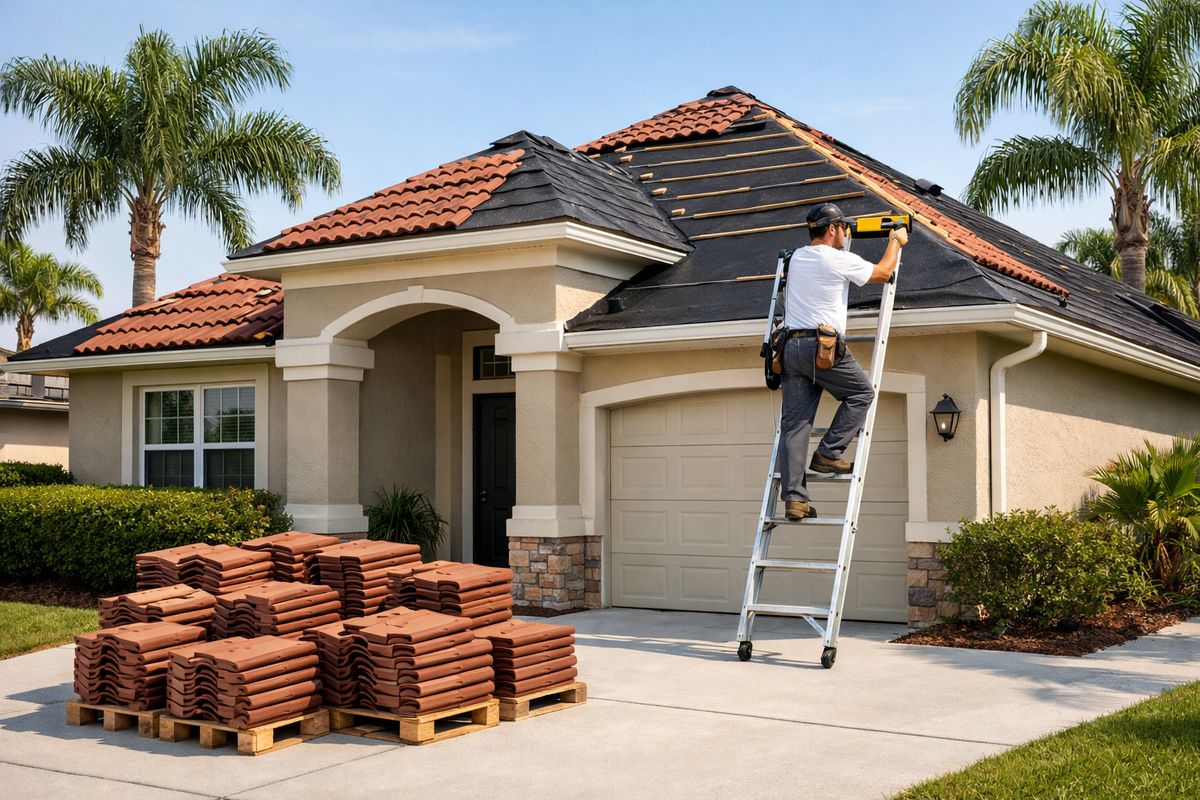
Why Florida Tile Roof Prices Run Higher Than Other States
Here’s the thing: you are not just paying for tile. You are paying for a roofing system built to deal with heat, humidity, salt, and hurricanes. That changes materials, labor, inspections, and the margin for error.
Hurricane and wind-resistance requirements
In Florida, installation details matter almost as much as the tile itself. Fastening methods, uplift resistance, edge securement, and underlayment choices all need to perform when wind starts pushing and pulling at the roof.
That adds labor and better materials, especially near the coast. Tile can perform very well in storms, but only when the system under it is done right. A cheap install on a tile roof is like putting performance tires on a car with loose lug nuts. It misses the point.
Building code and permit requirements
Florida code is strict, and that is a big part of the bill. Permits commonly run from $150 to $800 or more, depending on location and project scope. Inspections are part of the process, and reroof jobs can trigger upgrades that bring parts of the roof system up to current code.
Miami-Dade and other HVHZ areas usually cost more because the rules are tighter and the paperwork is heavier. Product approvals, fastening standards, and documentation can all add time and cost. If you want a deeper look at how these costs stack up, this breakdown of Florida reroof pricing factors helps connect the line items.
Insurance pressure and replacement timing
Insurance changes the timing of roof decisions in Florida more than most people expect. Roof age is a big reason policies get flagged, and premium pressure has been intense, with 42% average premium increases hitting many Florida homeowners in 2023.
The 25% roof replacement rule is also widely misunderstood. Many people assume damage over 25% always means full replacement. Not necessarily. Older roofs are more likely to trigger full replacement, but some newer code-compliant roofs may still qualify for partial repair. The catch is that this is a code and insurance conversation, not just a math problem.
What Drives Your Final Tile Roof Quote
A quote can start reasonable and then jump fast. Usually, that happens because the original number did not include half the job.
Tile material: concrete vs. clay
Concrete tile is usually the more budget-friendly Florida choice. It is durable, widely available, and comes in plenty of profiles and colors. Clay costs more, sometimes a lot more, but many homeowners pick it for its look, lifespan, and premium feel.
If you are narrowing down the material itself, this guide to sorting out the two main tile options makes the trade-off easier to picture.
Roof size, pitch, and complexity
Bigger roof equals more material and more labor, but complexity is where quotes really separate. Valleys, hips, skylights, chimneys, steep slopes, and second-story sections all slow the job down. Steep roofs alone can add $1,000 to $3,000 in some cases because the crew needs more time, more safety setup, and more careful handling.
Labor is a huge piece of tile roofing, often 40% to 60% of total cost. That is why two homes with similar square footage can get very different numbers.
Tear-off, disposal, and old roof layers
Removing the old roof is not a side note. Tear-off often adds $1 to $3 per square foot, and debris disposal can run $500 to $1,500 depending on weight and volume. If your roof already has multiple layers or heavy materials, the bill goes up.
A low estimate that barely mentions tear-off is worth a hard second look. Hidden labor tends to reappear later as a change order.
Decking repairs, structural support, and underlayment
Decking is the wood base under your roof. If it is soft, rotted, split, or storm-damaged, it has to be repaired before new tile goes on. Those repairs often add $2 to $5+ per square foot in affected areas.
Tile is also heavy, often several times heavier than shingles, so some homes need structural reinforcement. Underlayment matters just as much. In Florida, upgraded underlayment is worth paying for because it helps protect against wind-driven rain and moisture buildup. That extra layer can add around $0.50 to $2 per square foot over basic felt, but skipping it is the kind of shortcut that gets expensive later.
Flashing, ventilation, and accessory work
Flashing is the metal waterproofing around walls, chimneys, valleys, and roof penetrations. It is not glamorous, but it prevents some of the most stubborn leaks. Ventilation matters too, especially in a Florida attic that already feels like an oven by 2 p.m.
If an estimate is vague about flashing or ventilation, that is a problem. Those details help the roof last and help your home breathe. For a good overview of how a full roof evaluation catches issues like these, see what gets checked during a Florida roof review.
Concrete vs. Clay Tile: Which Gives You Better Value?
Price matters, but value is about what fits your house, your budget, and how long you plan to stay.
When concrete tile makes more sense
Concrete tile makes sense when you want the tile look and durability without paying top-tier pricing. It is strong, common in Florida, and easier on the budget than clay. It also gives you broad style options, which is one reason tile holds about 25% of Florida’s residential roofing market.
For many homes, concrete is the sweet spot. You get solid storm performance, long life, and good curb appeal without stretching the budget to its limit.
When clay tile is worth the extra cost
Clay tile is worth the extra money when you plan to stay put for a long time, care a lot about appearance, or want a roof that feels at home on Mediterranean, Spanish, or upscale coastal architecture. It can also deliver a longer service life, which softens the higher upfront cost over time.
The catch is lead time and budget. Clay can cost more and may be slower to source in some markets. If timing matters because of insurance or active leaks, that can change the decision.
How tile compares with shingles and metal in Florida
Shingles win on upfront price. Metal often wins on weight and long lifespan. Tile sits higher on initial cost, but it offers excellent durability, strong heat performance, and standout curb appeal. In Florida, shingles usually last about 15 to 20 years, while metal can last 50+ years. Tile can go much longer still when maintained and properly installed.
If your budget is tight or your home cannot support the weight, tile may not be the best buy. If you want the long view, it often is. For a closer side-by-side on the budget option, this look at how tile stacks up against asphalt in Florida heat is useful.
Hidden Costs Florida Homeowners Often Miss
Sticker shock usually comes from the extras, not the base tile price.
Coastal upgrades and HVHZ add-ons
Homes in Miami-Dade, Broward, and other high-exposure coastal areas often need stricter fastening, sealed-deck details, and more documentation. In many cases, HVHZ requirements add 10% to 20% or more to the project total.
That sounds painful, but it is part of building for the place you live. Salt air and hurricane exposure are hard on roofs.
Permit fees, inspections, and code-triggered upgrades
Permit fees, inspection schedules, and code-triggered upgrades catch people off guard all the time. Roof-to-wall connection improvements, secondary water barriers, or reinforced decking can show up during reroofing because older systems no longer meet current standards.
This is where detailed paperwork matters. A vague quote keeps the number pretty until the real work starts.
Future cost changes and seasonal demand
Roofing costs do not sit still. Some market forecasts expect Florida roofing prices to rise another 3% to 5% in 2026, and storm-season demand can tighten schedules fast. Material pricing has already been volatile, and some premium products have seen supply delays.
Waiting too long can turn a planned project into an emergency project. Emergency jobs usually cost more and give you fewer choices.
How to Compare Tile Roof Estimates Without Getting Burned
The cheapest quote is often the one that leaves out the parts your home actually needs.
What a complete estimate should include
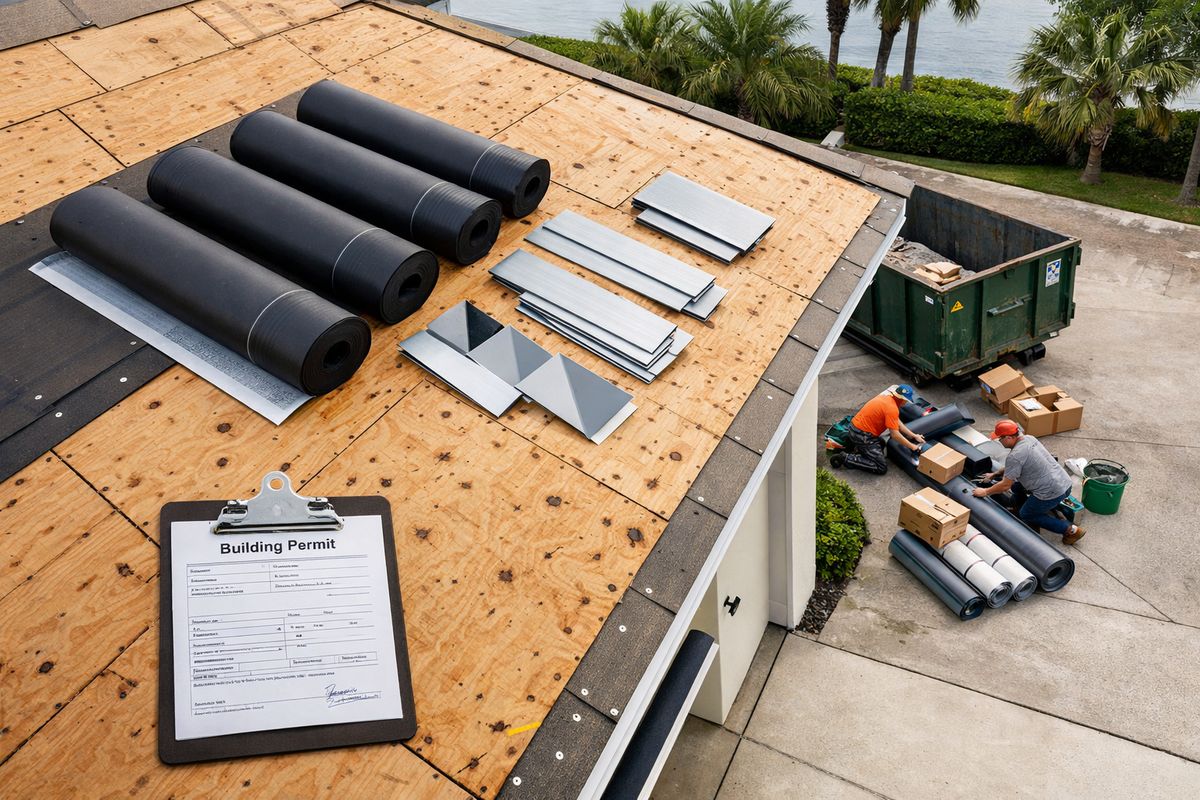
A complete estimate should spell out materials, tear-off, disposal, underlayment, flashing, ventilation, permits, inspections, warranty terms, cleanup, and some allowance for decking replacement if damage is found. If you are looking at a tile system built for Florida weather, those pieces should be easy to find in writing, not buried in fine print.
Clear scope beats a pretty low number every time.
Questions to ask before you sign
Ask for license and insurance verification. Ask who pulls the permit. Ask whether the system meets current Florida code and HVHZ rules if your home falls in that zone. Ask how change orders are handled if bad decking shows up once the old roof comes off.
You should also check who will manage the job day to day and how long the project is expected to take. If you need help screening crews, this guide to checking a Florida roofer before hiring is worth a few minutes.
Red flags in low bids
Watch for vague wording, no permit mention, missing underlayment details, unrealistically cheap material pricing, and pressure to sign right after a storm. Another red flag is a quote that talks a lot about tile color and almost nothing about fastening, flashing, or code compliance.
A roof estimate should read like a construction plan, not a flyer.
When a Tile Roof Is Worth the Cost for Your Home
Tile is often worth the money if you plan to stay in your home and want long-term resilience. That is the direct answer. But it is not the right fit for every budget.
Best fit for long-term homeowners and coastal properties
Tile makes the most sense when your home gets hammered by sun, salt air, and wind, or when you want a roof that may outlast multiple shingle replacements. It also makes sense when curb appeal matters. On the right Florida home, tile looks like it belongs there.
Long ownership changes the math. A high upfront number hurts less when spread across decades of service.
When another roofing material may be the smarter buy
Shingles may be the smarter move if cash flow is tight, you expect to move sooner, or your home would need expensive structural reinforcement to carry tile. Metal can also be a better fit when you want long lifespan without the same weight load.
A good roof is not the fanciest one. It is the one that fits your house, your timeline, and your budget without creating a mess later.
Smart Next Steps Before You Request Quotes
Before you ask for numbers, get clear on four things: your budget, how long you expect to stay, any insurance pressure you are dealing with, and whether this is storm damage or a planned replacement. Those answers shape almost every material and scope decision.
Then try one simple thing: get at least three line-item quotes and compare what is included before looking at price alone. That is how you avoid buying the cheapest number instead of the right roof.
Frequently Asked Questions
How much does a tile roof installation cost in Florida for an average home?
For many average single-family homes, tile roof installation cost falls around $25,000 to $35,000. Simpler concrete tile jobs may land lower, while larger or more complex clay tile roofs can run much higher.
Is concrete tile cheaper than clay tile in Florida?
Yes. Concrete tile is usually the lower-cost option. It still offers strong durability and good storm performance, while clay usually costs more because of material price, appearance, and longer lifespan.
Why are Florida tile roof quotes so much higher than national averages?
Florida pricing includes more than tile and labor. You are also paying for hurricane-rated installation methods, stricter code compliance, permits, inspections, and in some areas tougher coastal or HVHZ requirements.
Does a tile roof lower long-term roofing costs?
Often, yes, if you stay in the home long enough. Tile costs more upfront, but its lifespan can make the cost per year surprisingly reasonable compared with replacing shingles more often.
Can damaged roof decking change the price after the job starts?
Yes. Decking problems are one of the most common reasons a final bill increases. Until the old roof comes off, hidden wood damage may not be visible, which is why good estimates include a decking allowance or clear change-order terms.
Is a tile roof always the best choice in Florida?
No. Tile is a strong long-term option, but not every home is a fit. If your budget is tight, your ownership timeline is short, or your structure needs costly reinforcement, shingles or metal may be the better buy.