Getting metal roofing quotes can feel like shopping for the same cart of groceries and somehow getting totals that are thousands apart. That gap is real, but it usually comes from differences in system, labor, code details, and missing scope, not just price games. If you want to avoid overpaying, the trick is simple: stop comparing the total first.
Why metal roofing quotes can look all over the place
Three quotes for one roof can come back so far apart that it feels absurd. One lands at $18,000, another at $27,000, and another pushes past $35,000. In a place like Tampa, Fort Myers, or anywhere near salt air and storm season, that spread is not unusual.
Here’s the thing: “metal roof” is not one product. One quote may be pricing standing seam aluminum with upgraded underlayment, full tear-off, code-ready edge details, and permit handling. Another may be pricing exposed-fastener steel with vague trim, minimal flashing work, and a few expensive surprises left for later. On paper, both can say metal roof replacement. In real life, they are not close to the same job.
A big part of the confusion is that most roofing work is replacement work, not brand-new construction. In fact, about 80% of roofing activity comes from renovations and upgrades, which means hidden conditions under the old roof often affect the final number. That matters in Florida, where older decking, storm wear, and code updates can change the scope fast.
The goal is not the cheapest quote , it is the cleanest comparison
The fastest way to overpay is to compare only the bottom line. A low number can still cost more if it leaves out tear-off, skimps on flashing, or turns basic repairs into change orders once your old roof is off.
A clean comparison means lining up the same roof system, the same material, the same thickness, the same underlayment, the same trim package, the same permit responsibility, and the same warranty coverage. Apples to apples, in plain English. Once those pieces match, price starts to mean something. Before that, it is mostly noise.
Start by making sure every quote is pricing the same roof system
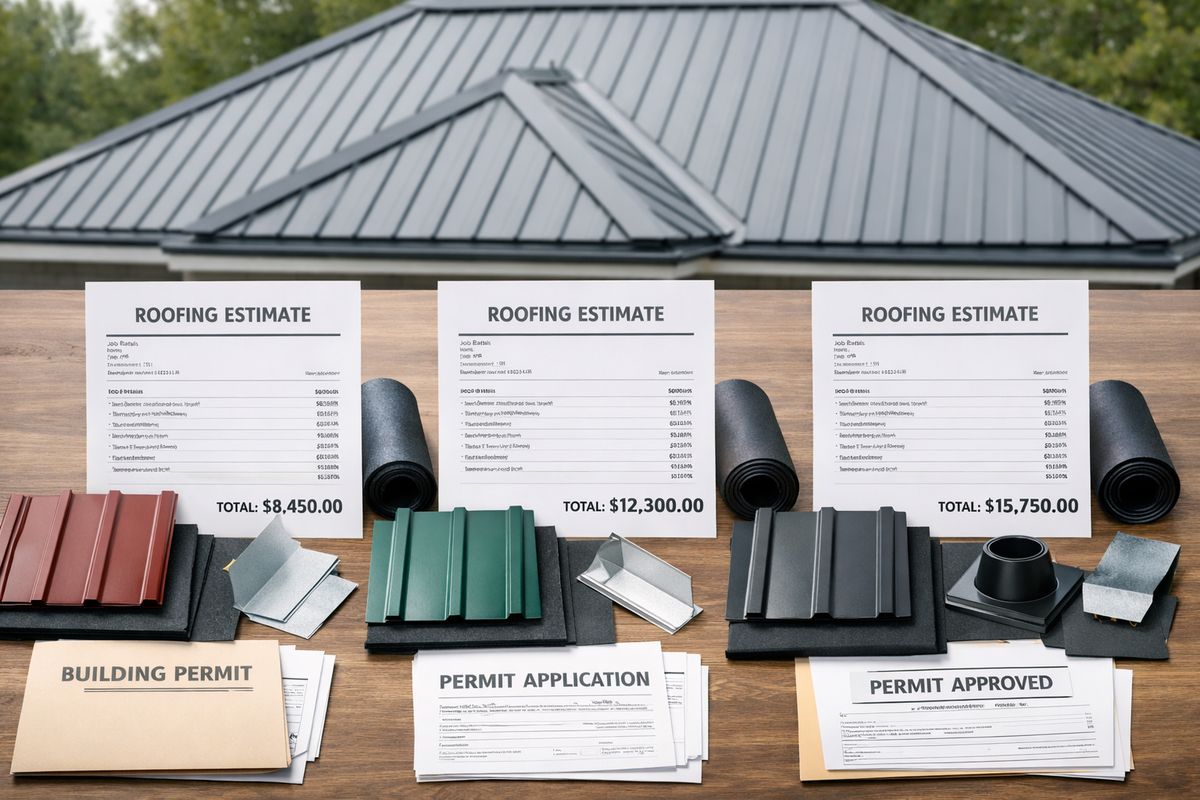
If one contractor says “standing seam” and another says “metal panel roof,” stop right there and slow down. Those phrases are not interchangeable. Before comparing numbers, confirm each quote spells out the panel style, attachment method, metal type, panel thickness, and finish.
This is where sorting through Florida-friendly roof styles helps. Not every system fits the same budget, maintenance tolerance, or coastal condition.
Standing seam vs. exposed-fastener panels
Standing seam has raised seams with concealed fasteners. That means the screws are hidden instead of exposed to sun, rain, and temperature swings. It usually costs more up front, but it often brings better long-term value because there are fewer leak points and less routine fastener maintenance.
Exposed-fastener panels, often called corrugated or ribbed panels, use visible screws driven through the panel face. That makes installation faster and cheaper. For tighter budgets, outbuildings, some rental properties, or simpler structures, that can be a sensible choice. The tradeoff is maintenance. Those fasteners and washers take more abuse over time, especially in heat, humidity, and wind.
Pricing reflects that difference. Standing seam often runs around $10 to $18 per square foot installed, while corrugated systems commonly land lower. So if one quote is much cheaper, check whether you are even looking at the same category.
Steel, aluminum, and premium metals in coastal climates
Steel is common because it balances durability and cost. Aluminum usually costs more, but near the coast it deserves a hard look because it resists corrosion better in salt-heavy air. That coastal factor changes the math. A lower steel quote may not be the better value if your property sits close to the water and gets blasted by salt and wind all year.
Premium metals like copper belong in a separate category entirely. Once copper shows up in a quote, the budget jumps and the comparison stops being useful against standard steel or aluminum systems.
If your property is inland, coated steel may make plenty of sense. If your property is near the Gulf or Atlantic, aluminum or a higher-end coated steel system often earns the extra cost.
Gauge, paint finish, and corrosion protection
Not all metal panels are built the same, even when the color looks identical from the driveway. Gauge means thickness. Lower gauge numbers usually mean thicker metal. Finish matters too, because the paint and protective coating are part of what stands between your roof and heat, moisture, UV exposure, and salt.
In hot, humid, storm-heavy climates, weaker coatings show up sooner. Chalky finish, fading, rust spots, and edge corrosion are not just cosmetic annoyances. They are clues that the cheaper quote may have shaved quality where you cannot easily see it at signing.
Ask for exact material details in writing. “26-gauge steel” or “0.032 aluminum” means something. “Standard metal panel” does not.
Compare the full scope of work, not just the panels
This is the part that separates a realistic quote from a teaser price. Panels get all the attention, but a metal roof succeeds or fails because of the whole assembly.
Tear-off, disposal, and deck inspection
Start with the old roof. Does the quote include tear-off? Debris hauling? Dumpster fees? Disposal? If not, the price may be artificially low.
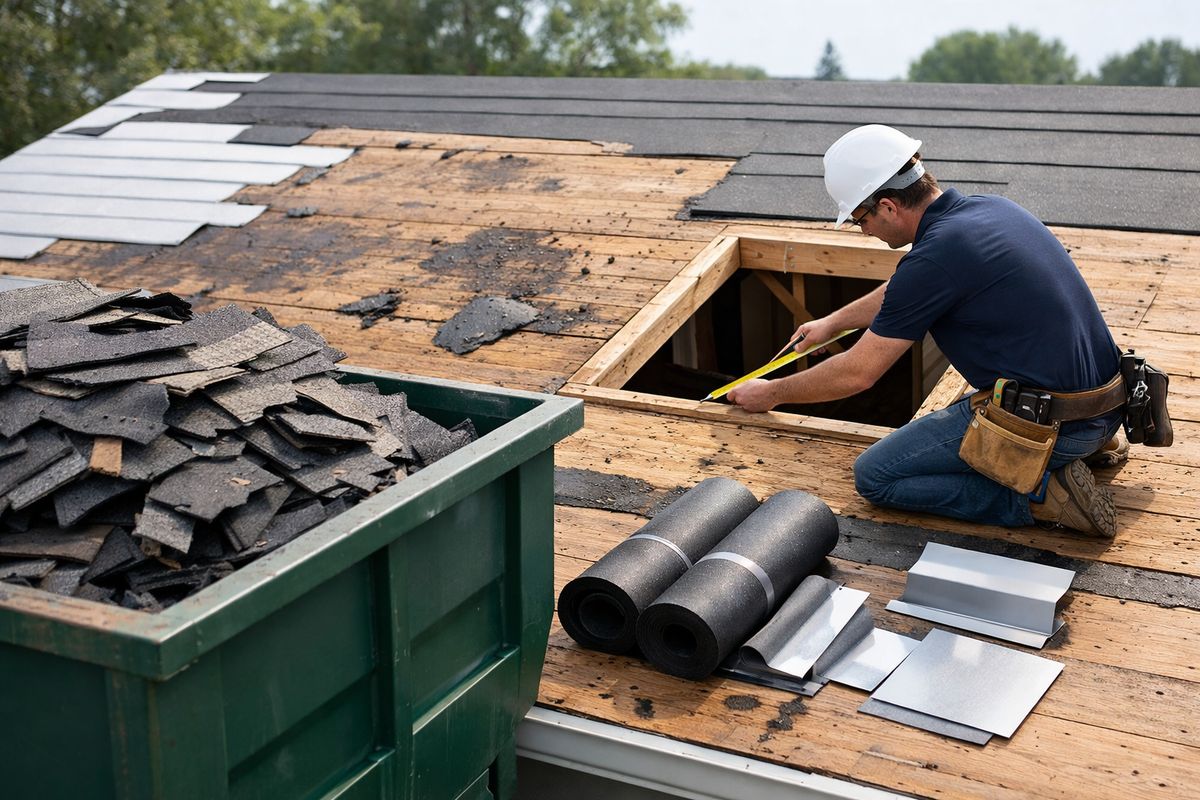
Old roof removal often adds $1,000 to $5,000, depending on size, layers, and access. Then comes the roof deck inspection. Once the old material is removed, damaged wood can show up around valleys, penetrations, or eaves. Decking repairs often add $2 to $5 per square foot in affected areas. That does not mean a contractor is padding the bill. It means hidden damage stayed hidden until the roof came off.
A good quote explains what is included and how deck repairs will be handled if needed.
Underlayment, flashing, trim, and fasteners
Underlayment is the water-shedding layer that sits between the roof deck and the metal panels. Flashing is the shaped metal installed around chimneys, walls, valleys, skylights, vents, and roof edges to keep water moving out instead of in. Trim finishes edges and transitions. Fasteners hold the system together.
These pieces are not accessories. In a heavy Florida rain, they are the difference between a roof that stays quiet and dry and one that starts staining a ceiling by August.
Some quotes use fuzzy wording like “standard underlayment included.” That is not enough. Ask what type. Synthetic underlayment, self-adhered membrane in vulnerable areas, custom flashing details, and system-matched trim should all be clear. If trim and flashing are barely mentioned, that cheap quote may be missing a lot.
Permits, code upgrades, and wind mitigation details
In hurricane-prone areas, code details are not optional add-ons. Permit fees, fastening patterns, edge securement, uplift requirements, and inspection steps should show up in the quote or be clearly assigned to somebody.
A properly installed metal roof can withstand winds up to about 140 mph, but that performance depends on the system and installation. The panel alone does not save you. The attachment method, trim details, and code compliance do.
Permit costs are often a few hundred dollars, commonly around $250 to $500, but the real issue is not the fee. It is whether the quote includes the work needed to pass local review and final inspection.
Repairs, add-ons, and cleanup
One quote can look cheaper simply because it leaves important items vague. Deck replacement, skylight flashing, vent upgrades, gutter tie-ins, fascia repairs, and ventilation changes are common examples. Cleanup matters too. So does magnet sweeping for metal scraps and fasteners around the property.
If one estimate sounds tidy and another sounds specific, the specific one usually gives you the better comparison. Vague wording is how surprise costs sneak in later.
Know what a fair metal roofing quote usually includes on price
Price matters, obviously. But material-only numbers are almost useless when your real decision is installed cost. Metal roof projects are driven by labor, roof conditions, and detail work just as much as panel price.
Typical installed cost ranges by system
Most installed metal roofs land somewhere between $7 and $30 per square foot, depending on system, material, and complexity. Corrugated or exposed-fastener systems often fall around $7 to $12 per square foot installed. Standing seam commonly lands around $10 to $18. Premium metals like copper can run $15 to $40 or more.
That range sounds huge because it is. But similar systems on similar roofs should still land in a similar ballpark. If two contractors are pricing 24-gauge standing seam steel on a simple home and one number is dramatically lower, something is probably missing.
For a deeper look at the moving parts behind pricing, it helps to review what actually pushes installation costs up.
Why labor often drives 60% or more of the total
Metal roofing is installation-heavy. Cutting panels, setting lines, forming trim, waterproofing penetrations, fastening to code, and handling expansion details take skill and time. Multiple industry sources put labor at roughly 60% or more of the total project cost, and some put it closer to 70%.
That is why a suspiciously low labor number is not comforting. It can mean rushed crews, limited metal experience, weaker detail work, or too few steps included. If the labor line is thin, look harder, not less.
How roof shape and complexity push quotes up
A simple rectangle roof is easier and cheaper to cover than a roof with hips, valleys, dormers, skylights, multiple levels, and lots of vent penetrations. Every angle means more cutting, more trim, more waste, and more hand work.
Complex roof shapes can raise pricing by 15% to 35% or more. Steep slopes do the same because the work gets slower and harder. That is why a neighbor with the same square footage may still get a very different quote. Square footage matters, but shape often matters almost as much.
Spot the low quote traps before you sign
Cheap bids rarely announce where they cut corners. You usually find out later, often when the crew starts asking for extra money or when the first hard rain tests the weak spots.
Vague wording and missing line items
If a quote says “metal roof package,” “standard trim,” or “code compliant as needed,” that is too fuzzy. You want exact panel type, metal type, gauge, finish, underlayment, flashing scope, tear-off details, cleanup, and permit responsibility.
Specific writing protects your budget. It also protects your expectations. If the product name and scope are not on the page, it is much harder to argue about what was promised.
Allowances that can balloon later
An allowance is a placeholder number. It is basically a note that says, “this part may cost more once the job starts.” Some allowances are reasonable. Deck repair is the classic example, because hidden wood damage cannot always be confirmed before tear-off.
The catch is that low allowances can make a quote look better than it really is. If decking repair is listed at a tiny number, ask what range is realistic. Do the same for flashing replacement, fascia repairs, and rotten trim. You want a likely range, not just the prettiest starting number.
Short workmanship warranties or material-only coverage
A long manufacturer finish warranty sounds great, but it does not cover bad installation. That is what workmanship coverage is for.
If one quote leans hard on a 30-year or 40-year paint warranty but offers a very short labor warranty, pay attention. Material warranties cover manufacturing defects. Workmanship warranties cover installation mistakes like faulty flashing, poor fastening, and leak-prone details. Those are two different things, and the second one matters a lot more during the first few years.
Judge the contractor, not just the number
A great metal roof installed badly is still a bad roof. This part is not fluff. It is where a lot of expensive mistakes start or stop.
Ask about metal roofing experience, not just roofing experience
Shingle experience is not the same as metal experience. Standing seam, snap-lock panels, trim fabrication, clip systems, penetrations, and expansion details require different habits and tools.
Ask how often metal systems are installed, not just whether metal is offered. That is a big difference. If you want help narrowing down the right fit, this guide on finding a qualified local installer covers what to look for before signing.
Check licensing, insurance, and local code familiarity
Before comparing final bids, confirm licensing, liability coverage, workers’ compensation, and permit familiarity. In Florida, that means local inspections, high-wind fastening rules, and product approvals should not sound like an afterthought.
A contractor who knows local code usually writes a better quote because more of the real work appears on the page from the start.
Look for recent projects in coastal or storm-prone areas
Ask for recent projects in places that deal with the same punishment your roof will face: Tampa, Naples, Fort Myers, coastal stretches, or the Panhandle. Salt, heat, and wind expose weak details fast.
A polished sales pitch is easy. Recent local jobs with clean valleys, tidy penetrations, and solid trim lines tell you much more. Pay special attention to edges, skylights, and wall transitions. That is where sloppy work tends to show itself.
Choose the right quote for your budget and ownership plans
The best quote depends on what you need from the roof, how long you plan to hold the property, and how exposed the building is to wind and salt. A roof is not just a purchase. It is a timeline decision.
If you want the lowest upfront cost
A simpler exposed-fastener system may be good enough if the budget is tight and you understand the tradeoffs. You will likely get a lower initial price, faster installation, and acceptable performance on the right building.
But you should accept the downsides knowingly: more visible screws, more maintenance over time, and usually less long-term weather resistance than a higher-end concealed-fastener system.
If you plan to stay for decades
If this is the roof you want to live under for 20, 30, or 40 years, paying more up front can be the smarter move. Metal roofs often last 40 to 70 years, and some can reduce cooling costs by 10% to 25%, with reflective finishes pushing savings even higher in the right conditions.
That is where standing seam, stronger coatings, and better workmanship warranties start to make real financial sense. The upfront number is higher, but the annual cost over the life of the roof can be lower.
If the property is near the coast or needs insurance-friendly upgrades
Near the coast, salt resistance matters more than bargain pricing. Aluminum or better-protected steel often makes more sense than the cheapest panel you can find. You also want clear documentation on wind ratings, permits, fastening methods, and inspection completion.
If you are still weighing materials against other roof categories, it helps to compare how metal stacks up against shingles in Florida. The answer changes depending on wind exposure, maintenance expectations, and how long you plan to keep the property.
Use a simple checklist to compare metal roofing quotes side by side
By this point, the pattern is clear. The right quote is not the one with the prettiest total. It is the one that clearly prices the roof you actually want, with the details needed to install it correctly.
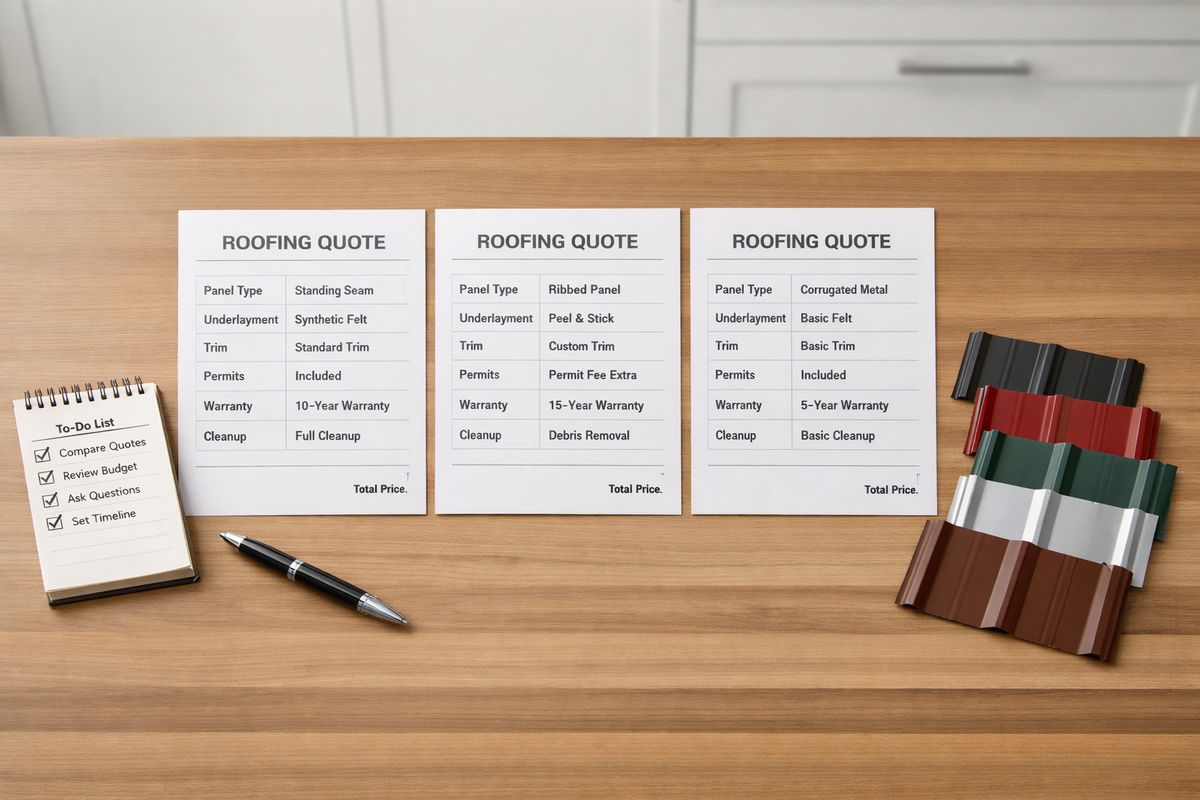
Set two or three quotes side by side and line up these items: roof system, metal type, panel thickness, finish, underlayment, tear-off, disposal, flashing, trim, permits, code upgrades, deck repair terms, warranty coverage, timeline, and cleanup. If one quote leaves any of those vague, it is not ready to compare.
Questions to ask before saying yes
Before signing, ask what is excluded, what could change the price later, which code requirements are included, who handles permits, who handles final inspection, and how hidden deck damage will be priced if found. Ask for exact product names, not category labels. Ask how flashing at penetrations and walls will be handled. Ask what workmanship warranty is included and what would void it.
Try one thing this week: pull out two metal roofing quotes and compare them line by line with a pen in hand. That twenty-minute exercise catches problems faster than staring at the total ever will.
Frequently Asked Questions
How many metal roofing quotes should you get?
Three detailed written quotes is a good target. That usually gives you enough range to spot a fair market price, notice missing scope, and see whether one contractor is far outside the normal pattern.
Is the cheapest metal roofing quote ever the best choice?
Sometimes a lower quote is legitimate, especially if overhead is lower or the roof is simple. But a very low bid often means lighter materials, less detail work, weaker warranty coverage, or exclusions that raise the final price later.
What should be included in a metal roofing quote?
At minimum, you want the roof system, metal type, gauge or thickness, finish, underlayment, flashing, trim, tear-off, disposal, permit responsibility, warranty details, timeline, and cleanup spelled out in writing. If those items are vague, the quote is not complete enough to compare.
Are metal roofing quotes higher in coastal Florida?
Usually, yes. Coastal conditions often push quotes higher because corrosion resistance matters more, aluminum may be preferred, and installation details must hold up against wind, salt, and moisture. Local code and permit demands can also add cost.
Can a metal roof be installed over shingles to save money?
Sometimes. Installing over existing shingles can reduce tear-off and disposal costs, but it still depends on roof condition, local code, structural approval, and whether the system is appropriate for that method. It should never be assumed just because it makes the quote look cheaper.
How long should a metal roof workmanship warranty last?
Longer is generally better, but the real value is clarity. You want to know exactly what workmanship issues are covered, for how long, and what steps are required to keep the warranty valid. A strong labor warranty paired with a detailed written scope is usually a good sign.