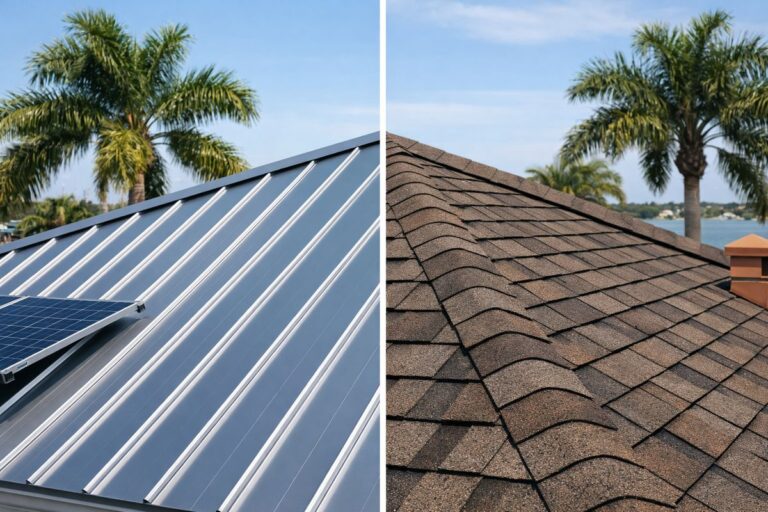
If you’re comparing a metal roof vs shingles in Florida, the short version is simple: shingles win the price tag, but metal usually wins the house. In a state where your roof has to take blazing July sun at 3 p.m. and then sideways rain by midnight, that difference matters more than it would almost anywhere else.
Quick Overview: Metal Roof vs. Shingles in Florida
Florida is rough on roofs. Heat bakes them, humidity wears them down, salt air speeds up aging near the coast, and storm season tests every seam and fastener.
That is why this comparison is not close for most homes. Metal usually gives you better storm protection, a longer lifespan, lower maintenance, and better long-term value. Shingles still have one real advantage: a much lower upfront cost. If your budget is tight or you’re planning to sell sooner rather than later, shingles can still be the smart pick.
How Florida’s Climate Changes the Roofing Decision
A roof that does fine in Georgia or Tennessee can struggle in Fort Myers, Cape Coral, or the Panhandle. Florida adds constant UV exposure, high moisture, wind-driven rain, and stricter code expectations in hurricane-prone zones. In some high-velocity hurricane areas, roofing systems need stronger uplift resistance than national baseline standards.
That changes the whole buying decision. You are not just picking a color and a price. You are picking how often you want to deal with repairs, how much risk you want during storm season, and how long you want this roof to last before you have to think about it again.
Storm Resistance and Wind Performance
This is where metal pulls ahead the fastest.
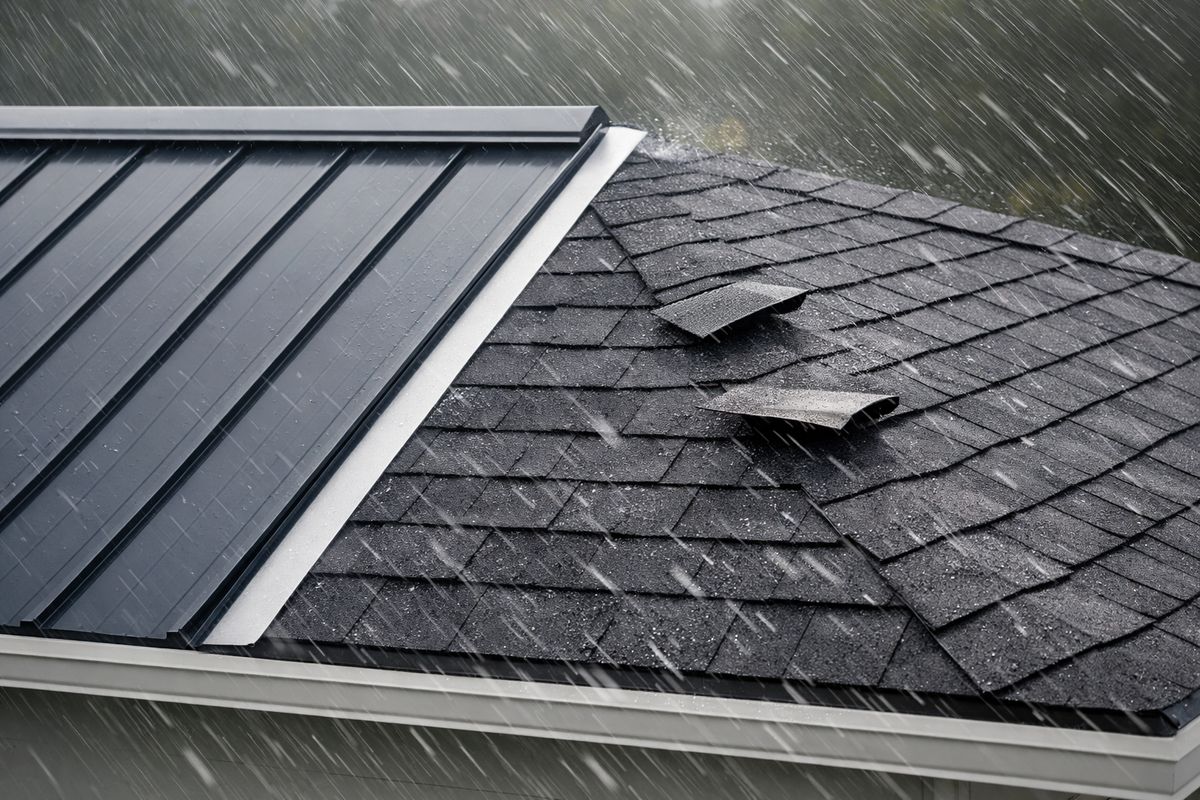
A standard asphalt shingle roof depends on layers of smaller pieces, adhesive strips, and nails. That system can perform well when it is installed right and rated properly, but it has more individual parts that can lift, crease, or blow off in a hurricane. Metal roofing, especially panel systems, sheds wind and rain more cleanly. Fewer seams, longer panels, and tighter attachment give wind less to grab.
In coastal and exposed areas, that matters a lot. The difference between a roof that stays put and a roof that starts peeling back at the corners is not subtle.
Wind Ratings and Hurricane Readiness
Plain-English version: higher wind ratings mean the roof has been tested to hold up better in stronger wind events. Standing seam metal systems are commonly rated around 140, 180 mph, while many asphalt shingles land closer to 110 to 130 mph depending on product and installation method.
That does not mean every metal roof is automatically hurricane-proof. It means the better metal systems start with a stronger ceiling. In Florida, that extra margin is worth paying attention to.
Leaks, Uplift, and Fastener Design
Not all metal roofs are the same. Concealed-fastener systems hide the screws under the panel seams, while exposed-fastener systems leave the screw heads visible. Standing seam is the most common concealed-fastener choice and the strongest option for storm-prone homes because the fasteners are protected and the seams interlock.
That design matters when a storm hits at 2 a.m. in Cape Coral or up in the Panhandle. A roof with fewer exposed entry points and better uplift resistance is simply less likely to let wind-driven rain sneak in. If you’re sorting through systems, it helps to understand which profile fits your location best, because the panel style affects performance as much as the material itself.
Lifespan and Long-Term Durability
Shingles are cheaper now because you are usually buying fewer years.
In Florida, asphalt shingles often last around 15 to 25 years. Metal roofing commonly lasts 40 to 70 years. That is the real story. Your roof is not a one-time purchase if you choose shingles. It is often the first round.
How Florida Sun and Humidity Age Each Material
Asphalt shingles age visibly in Florida. Constant sun dries them out. Granules loosen and wash away. Edges can curl. Tabs can crack. Algae streaking is common, especially in humid, shaded areas. Near the coast, salt and moisture make the environment even tougher.
Metal can age too, but usually more slowly when you choose the right system and finish. Good coatings resist UV damage, and corrosion-resistant materials hold up much better near salt air. The weak point is usually not the panel itself. It is poor installation, bad trim details, or using the wrong metal for a coastal setting.
How Many Times You May Replace the Roof
Over 40 to 50 years, the math gets pretty blunt. A quality metal roof may be your one roof. A shingle roof may need two or even three rounds in the same span.
That is why metal often ends up cheaper over time, even though the initial number looks painful. You are spreading the cost over decades instead of restarting the whole process every 15 to 20 years.
Energy Efficiency and Heat Control
In Florida, roof temperature is not just trivia. It affects attic heat, AC runtime, and how hard your home has to work all summer.
Metal usually has the edge here, especially in lighter colors or cool-roof finishes. Instead of soaking up heat like a dark parking lot, reflective metal can bounce a lot of solar radiation away before it turns into attic heat.
Reflectivity, Roof Temperature, and AC Use
Some modern metal roofing can reject a large share of the sun’s heat, and cool-roof finishes can noticeably reduce roof surface temperature. In real Florida conditions, metal roofs are often tied to 10% to 25% lower cooling costs, especially when paired with proper attic design.
That can mean a cooler upstairs bedroom in August and less strain on your AC. Not magic, but noticeable.
The Catch: Roofing Alone Won’t Fix a Hot House
Here’s the thing: a better roof will not rescue bad insulation, poor attic ventilation, or leaky ductwork. If your attic traps heat and your insulation is weak, even the best metal roof cannot fully fix that.
Still, roofing is a big piece of the puzzle. If you want the full picture on pricing, finishes, and what moves the number up or down, it helps to review what really changes the final roofing price before comparing bids.
Maintenance, Repairs, and Everyday Upkeep
Shingles need more babysitting in Florida. That is just reality.
You are more likely to deal with missing tabs after storms, granule loss in gutters, algae streaks, and localized damage from debris. Metal usually asks for less: keep it clear of debris, check flashings and sealants, and inspect after major weather.
What Routine Maintenance Looks Like
For either roof, annual inspections are smart, and post-storm checks are non-negotiable. If branches hit the roof or wind gets ugly, inspect it.
Shingles often need more frequent attention because small issues are easier to miss until they become leaks. Metal is generally lower maintenance, though exposed-fastener systems need periodic screw and washer checks.
Which Roof Is Easier to Repair
Shingles win this round.
If a few shingles blow off, repairs are usually straightforward and relatively affordable. Matching is not always perfect, but it is manageable. Metal repairs can be trickier. Panel matching, finish matching, and system-specific details matter, and not every contractor handles metal well. If you go metal, choosing a contractor who actually knows these systems makes a big difference later.
Appearance and Curb Appeal
A lot of homeowners still picture metal roofing as a barn roof. That image is outdated.
Modern metal roofing can look sharp, coastal, traditional, or clean and modern depending on the profile and color. Shingles still win for familiarity, though. On many suburban Florida homes, shingles just look expected.
Traditional Look vs. Modern Look
If you want a classic neighborhood look, shingles are the easy answer. Architectural shingles fit almost anywhere.
Metal gives you more range than most people expect. Standing seam looks crisp and modern, while stamped metal can mimic tile, shake, or even shingles. On beach houses and coastal homes, metal often looks more at home than asphalt.
HOA Rules and Neighborhood Fit
This part gets overlooked until late in the process. Some HOAs are flexible. Some are not. A roof that performs better on paper may still get blocked if the profile, color, or visible seam style does not fit community rules.
Check that before you fall in love with a product. It saves a lot of frustration.
Noise, Comfort, and Common Metal Roof Myths
The biggest metal roof myths are old ones.
Rain noise is usually not the problem people expect. With solid decking, underlayment, and attic insulation, rain noise can be similar to shingles. Metal does not attract lightning, either. If lightning hits your house, the roof material is not the deciding factor. And metal roofs do not automatically make your house hotter. In Florida, reflective metal usually does the opposite.
Rust worries are more reasonable, but modern coatings and proper material choice handle that well. Near the coast, aluminum or properly coated steel is the better move.
Insurance, Wind Mitigation, and Florida Code Compliance
Insurance can change the math more than people expect. In Florida, roof age, wind resistance, and code compliance are all tied to what you pay and what carriers will accept.
A well-installed metal roof may qualify for stronger wind mitigation credits than standard shingles. Impact-rated shingles can also help, especially Class 4 products, but standard shingles usually do not get the same benefit.
Potential Insurance Discounts
Reported savings vary a lot by insurer and roof system, but metal roofs can sometimes bring 5% to 35% premium reductions. Impact-rated shingles may earn smaller savings. The point is not to assume. It is to ask before you sign anything.
That call can shift the numbers fast.
Ratings, Testing, and What to Ask a Contractor
A few terms matter. Class 4 impact resistance means the material performed at the highest common residential impact rating under UL 2218. ASTM standards cover wind and fire testing for shingles. Florida approvals and local code requirements matter just as much as national testing.
Ask for product approvals, wind ratings, underlayment details, fastening method, and permit scope. If the answers are vague, move on.
Pricing and Lifetime Cost
This is the section that makes shingles tempting and metal frustrating.
Shingles are the budget-friendly option today. Metal is the lower-stress option later. For most Florida homes, that tradeoff is exactly what you are deciding.
Upfront Installation Cost
Typical installed pricing in Florida looks like this: shingles around $4 to $7 per square foot, exposed-fastener metal around $5.50 to $9.50 in some markets and often higher in Florida, and standing seam metal around $9 to $14 or more per square foot.
For a 2,000 to 2,200 square foot home, that usually means about $8,000 to $14,000 for shingles, about $12,000 to $20,900 for exposed-fastener metal, and about $18,000 to $30,800 or more for standing seam. The gap is real. Upfront cost is shingles’ biggest advantage.
Long-Term Value Over 20 to 50 Years
Over 20 years, shingles may still look cheaper, especially if you sell before replacement time. Over 40 to 50 years, metal starts looking a lot better because you are often paying for one roof instead of multiple roofs, with lower maintenance, possible cooling savings, and possible insurance savings layered in.
That is why metal wins long term in Florida. Not because it is cheap. Because repeating the cheaper option gets expensive.
When Shingles Make More Sense
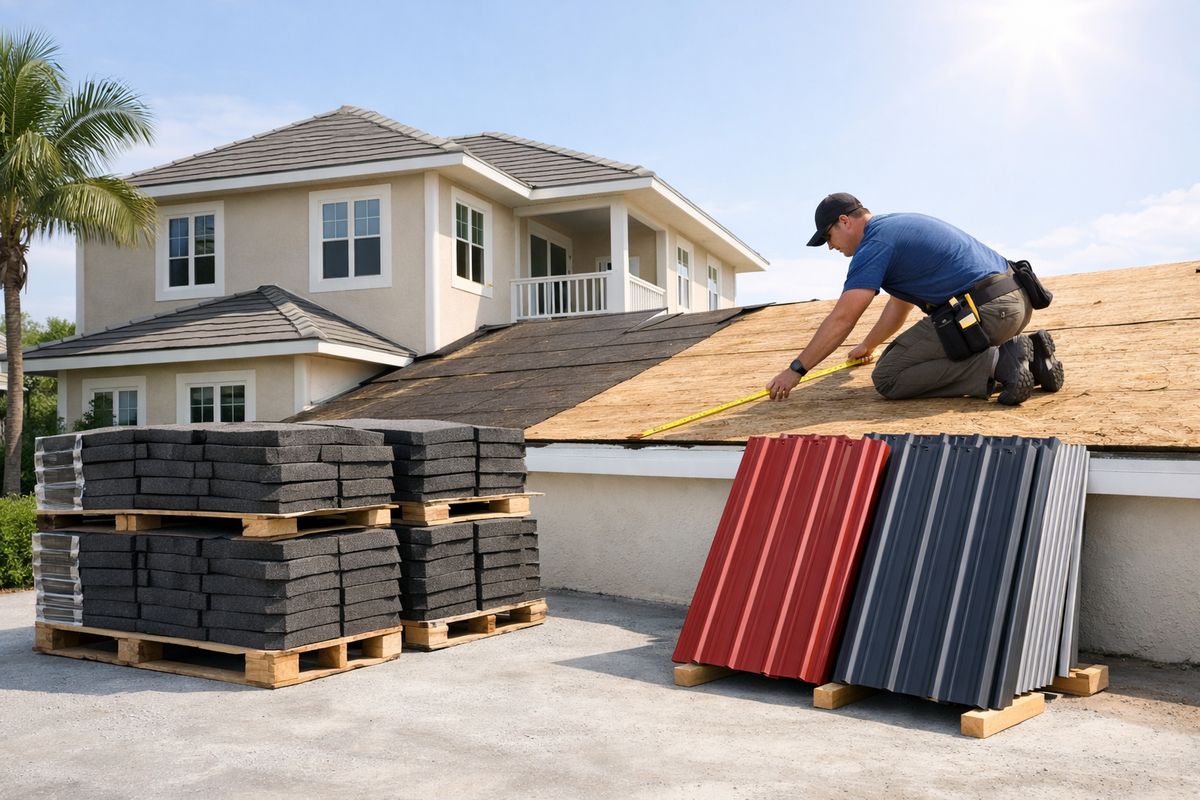
Shingles make sense when cash flow matters more than long-term optimization. If your roof budget is tight, you need a faster install, or you expect to sell within 10 to 15 years, shingles are a practical choice.
Shingles also make sense when simple repairs matter most. Rental properties, short-term ownership plans, and homes in neighborhoods where shingle aesthetics dominate can all tilt this direction.
When a Metal Roof Makes More Sense
Metal is the better fit when you plan to stay put, especially 15 years or longer. It also makes more sense for coastal homes, homes in high-wind areas, and houses with brutal summer cooling bills.
If you want fewer replacements, less maintenance, stronger storm performance, and better odds of insurance savings, metal is the clear winner. For Florida, standing seam is usually the version worth wanting.
Verdict: Which Wins in Florida?
Metal wins for most Florida homes. It handles storms better, lasts decades longer, cuts down heat gain, and usually makes more financial sense over the life of the home.
Shingles still win if your main goal is the lowest upfront cost. That is a real reason, not a bad one. But if you want the best overall roofing choice for Florida conditions, metal takes it.
Try one thing this week: get one quote for architectural shingles and one for standing seam metal, then compare the 20-year and 40-year cost side by side instead of just looking at the install total.
Frequently Asked Questions
Is a metal roof better than shingles in Florida?
Yes, for most homes. Metal usually performs better against hurricane-force wind, lasts much longer in Florida sun and humidity, and can lower cooling costs. Shingles are mainly better if you need the cheaper upfront option.
Do metal roofs make your house hotter?
No. Reflective metal roofing usually reduces heat gain compared with standard dark shingles. The roof can help, but insulation and attic ventilation still need to be right.
Are metal roofs louder in heavy rain?
Usually not in a meaningful way when installed over solid decking with good underlayment and insulation. The old “tin roof” sound is not how most modern residential metal roofs behave.
How long do shingles last in Florida?
Many asphalt shingle roofs in Florida last about 15 to 25 years, sometimes less near the coast or after repeated storm exposure. Heat, UV, humidity, and wind all shorten lifespan.
Is standing seam metal worth the extra cost?
Yes, if storm resistance and longevity matter to you. Standing seam usually outperforms exposed-fastener metal and standard shingles because the fasteners are concealed and the panels interlock more securely.
Can shingles still get insurance discounts in Florida?
Sometimes. Impact-rated shingles, especially Class 4 products, may qualify for discounts with some insurers. Standard shingles usually offer less of an insurance advantage than a properly installed metal system.