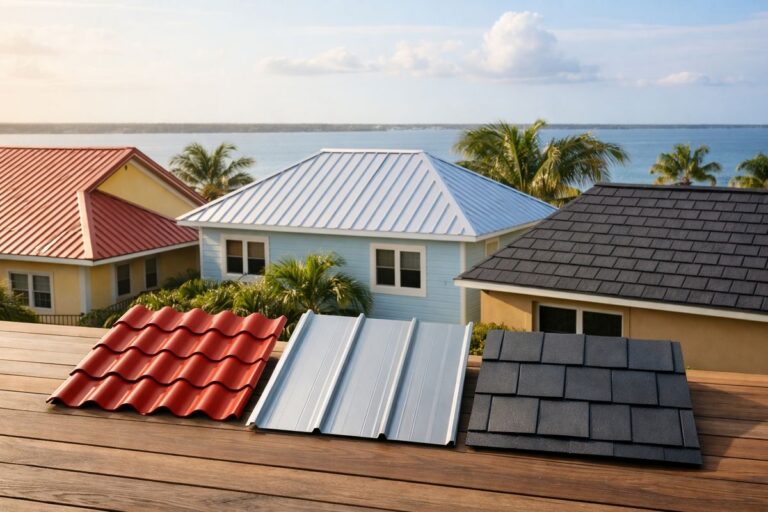
Picking between metal roof types in Florida can feel simple right up until you realize that “metal roof” covers some very different systems. In a place where salt air, sideways rain, and hurricane gusts can test every weak point, the best choice is not just metal. It is the right metal roof system for your house, your location, and your budget.
Quick Look at Florida’s Main Metal Roof Types
If you want the short answer early, here it is: standing seam is the best all-around choice for most Florida homes, especially if you live near the coast or in a high-wind zone. Exposed fastener panels are the budget play. Metal shingles and metal tiles are the style-first option with solid performance. Stone-coated steel sits in the middle for homeowners who want durability and a more familiar residential look.
That difference matters because Florida does not reward shortcuts. A roof that does fine on a barn inland can become a maintenance headache on a coastal home in Naples or Palm Beach.
Here’s the basic lineup. Standing seam uses vertical panels with raised seams and hidden fasteners. Exposed fastener roofing uses visible screws through the panel face. Metal shingles and tiles are stamped panels designed to look like shake, slate, or tile. Stone-coated steel uses steel panels or shingles with a textured stone finish for a more traditional street view.
All four are “metal roof types.” Only one usually leads on wind, leak resistance, and low-hassle ownership.
What Florida Puts a Roof Through
Florida roofing is a stress test. Not once, but every year.
Your roof has to deal with hurricane-force gusts, wind-driven rain that can push water uphill, brutal UV exposure, high humidity, long cooling seasons, and in coastal areas, salt that slowly chews at the wrong material. Then there is the paperwork side: code approvals, product approvals, permit requirements, and insurance inspections that care a lot more about tested assemblies than glossy brochures.
That is why broad promises do not help much. “Lifetime roof” sounds nice. But if the screws back out, the coating fails near the ocean, or the system was never approved for your wind zone, that promise gets thin fast.
A better way to compare metal roof types in Florida is to judge each one through five lenses: wind resistance, rain tightness, corrosion resistance, energy performance, and maintenance. Once you do that, the field gets clearer.
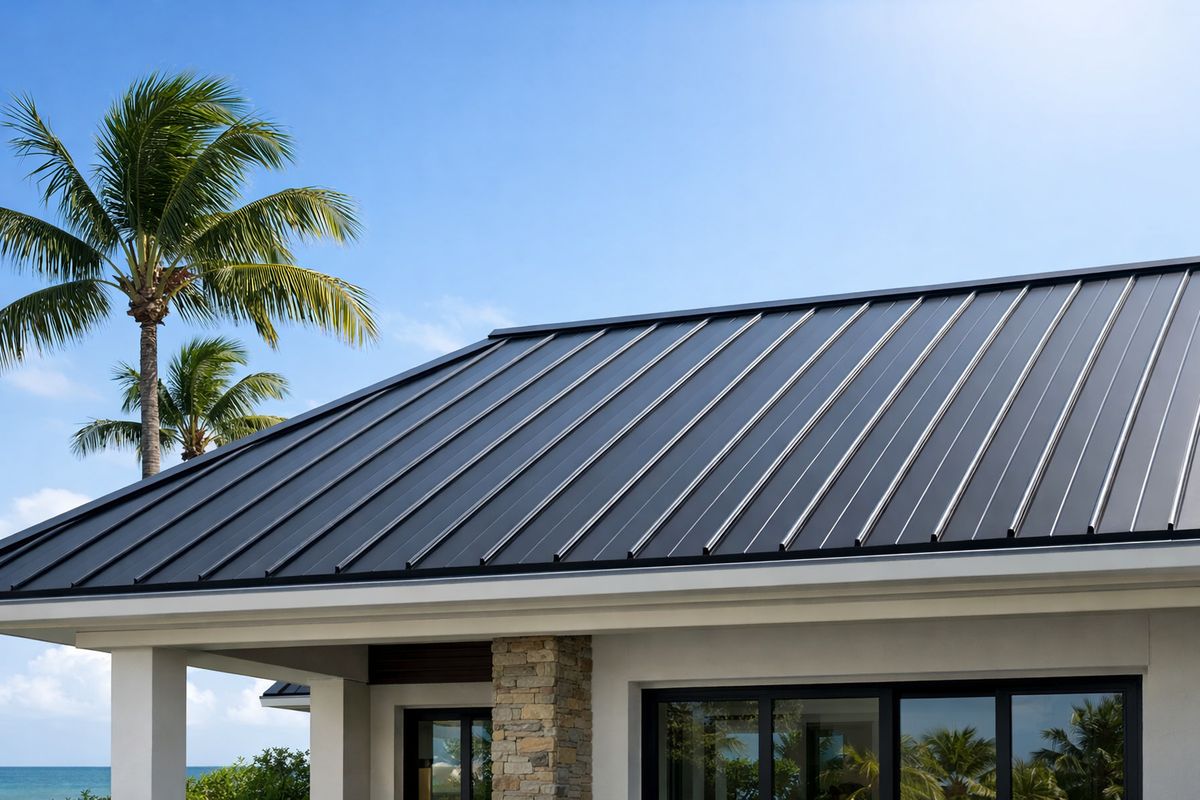
Standing Seam Metal Roofing
Standing seam is the premium system. You get long vertical panels with raised seams, and the panels are attached with concealed clips or hidden fasteners instead of screws driven through the exposed face.
That design solves several Florida problems at once. Hidden fasteners mean fewer direct openings where water can work in. Raised seams help manage runoff during heavy rain. The system also allows for expansion and contraction in the heat without stressing exposed screw points. That is a big deal in a state where roofs bake for months.
This is why standing seam is often treated as the gold standard for hurricane-prone areas. Premium systems can be engineered for very high wind performance, and some tested assemblies reach wind ratings up to 180 mph depending on the exact panel, clip spacing, substrate, and installation details.
The catch is price. Standing seam costs more up front, and it demands a skilled installer. But if your goal is the strongest all-around Florida roof, this is the one to beat.
Exposed Fastener Metal Roofing
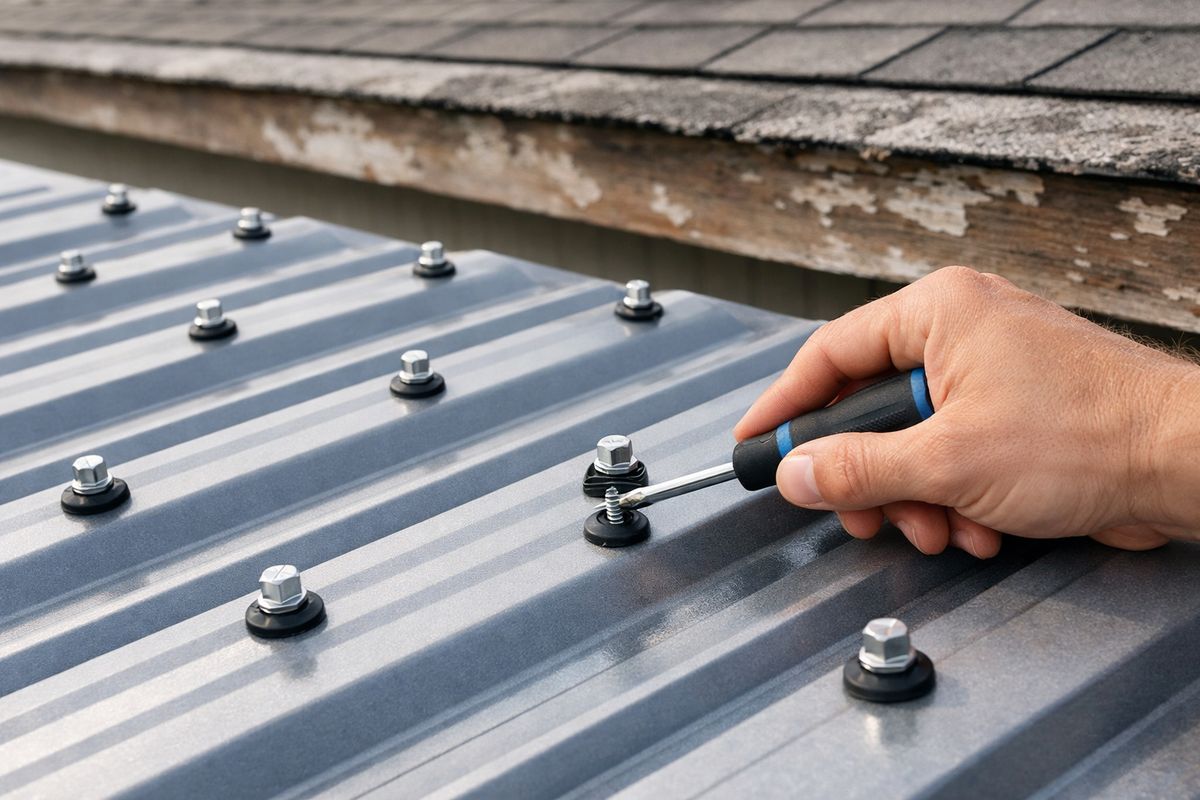
Exposed fastener roofing is the straightforward, lower-cost option. You have likely seen it on agricultural buildings, workshops, carports, and some homes. The panels are fastened directly through the face with visible screws and rubber washers.
That simplicity is why the price is lower. The labor is usually faster, the materials are often less expensive, and the system works fine in many settings. Inland, on a tighter budget, it can still be a reasonable choice.
But here’s the thing: Florida tends to punish exposed fasteners over time. Every screw is a potential wear point. Every washer is a small component that has to survive sun, moisture, movement, and storm cycles. Even when the panel itself still looks good, the screw system may be aging out underneath your confidence.
That is why exposed fastener panels are common, but not ideal, for homes that face intense weather year after year. You can make them work. You just need to accept the tradeoff.
Metal Shingles and Metal Tiles
Metal shingles and metal tiles exist for one main reason: you want metal performance without the modern standing seam look. These products are stamped and formed to mimic more traditional roofing styles such as shake, slate, or barrel tile.
For many Florida homes, that solves a real problem. A sleek vertical-panel roof can look perfect on a coastal contemporary house in Sarasota, but out of place on a Mediterranean or traditional neighborhood home. Metal tile-style products bridge that gap.
Performance is usually better than asphalt and often better than brittle conventional tile in storm conditions, especially because metal versions are much lighter. Some systems also use interlocking designs that help with wind resistance. Still, performance varies more from one product line to another than it does with standing seam, so product approval and installation details matter even more.
If appearance is high on your list, this category deserves a serious look.
Stone-Coated Steel Roofing
Stone-coated steel is a steel-based metal roof with an acrylic-bonded stone granule finish. From the street, it looks closer to shingles, shake, or tile than to sheet metal. That is the appeal.
It gives you a more residential, textured appearance while keeping many metal-roof benefits: lower weight than concrete tile, good durability, and strong storm performance when you choose the right system. Some products are specifically designed to meet Florida and even Miami-Dade style high-velocity requirements.
This option makes sense when curb appeal is non-negotiable. If you want the protection of metal but do not want neighbors to instantly clock your roof as “metal,” stone-coated steel is often the answer.
The tradeoff is that it is still steel-based, so coastal corrosion needs more attention than with aluminum. It can be an excellent roof. It just needs the right environment and the right product details.
Wind Resistance and Hurricane Performance
This is where Florida choices get serious.
Standing seam usually wins on hurricane performance because the attachment system is protected, the seams are raised, and the panel assembly can be engineered for high uplift resistance. Properly installed metal systems often rate around 140 to 160 mph, with some premium standing seam assemblies reaching up to 180 mph. In parts of Florida, especially HVHZ areas, that margin matters.
Exposed fastener panels can still perform well, but the system has more vulnerable points. The screws are exposed to weather and movement, and under repeated wind stress, those penetrations become the obvious place to worry.
Metal shingles, metal tiles, and stone-coated steel can perform very well too, especially interlocking systems with solid product approvals. But this category is less uniform. One product may be excellent. Another may just be average. You cannot judge the whole category by one brochure.
Here is the practical takeaway:
| Feature | Standing Seam | Exposed Fastener | Metal Shingles/Tiles | Stone-Coated Steel |
|---|---|---|---|---|
| Wind performance | Best overall | Good to fair | Good to very good | Good to very good |
| Leak resistance | Excellent | Fair to good | Good | Good |
| Coastal corrosion | Excellent in aluminum | Fair to good | Varies by material | Fair to good |
| Maintenance | Low | Moderate to high | Moderate | Moderate |
| Appearance | Modern | Utilitarian | Traditional styles | Traditional textured look |
| Upfront cost | Highest | Lowest | Mid to high | Mid to high |
| Best fit | Coast, storms, long-term | Inland budget jobs | Style-focused homes | Traditional homes |
Why Hidden Fasteners Usually Win in Storms
A hidden fastener system keeps the attachment points under the panel seams or beneath the roofing surface. An exposed fastener system drives screws through the weather-facing part of the panel.
That sounds like a small detail. It is not.
When wind-driven rain hits hard, every exposed screw location is a direct stress point. When the roof expands in heat and contracts at night, those screws and washers take the movement. Over time, that can mean loosening, cracking, or seal fatigue. Hidden clips avoid much of that exposure, which is why concealed-fastener systems tend to hold up better in storms and stay tighter longer.
What Wind Ratings and ASTM E1592 Actually Mean
Wind ratings can get fuzzy fast because sales material often throws around mph numbers without explaining the test behind them.
The test worth paying close attention to for standing seam is ASTM E1592. In plain English, it evaluates how the roof assembly handles uplift pressure, including both panels and anchors, instead of treating the roof like a simple pass-fail sample. That matters because Florida wind performance is about the whole assembly, not just the metal sheet.
So if a contractor says a roof is “rated for hurricanes,” look for the actual tested assembly, the approval, the attachment pattern, and where that rating applies. Marketing claims are easy. Engineering is what counts.
Rain Tightness and Leak Risk
Florida rain is not polite. It comes hard, sideways, and often for months.
Standing seam handles this best because the seams are raised and the fasteners are concealed. Water is less likely to sit over a penetration point, and there are fewer exposed openings to manage. When installation is done right, this is the lowest-leak-risk category of the four.
Exposed fastener roofs are more leak-prone over time, not necessarily on day one. At first, the screws and washers seal the panel just fine. Years later, after heat, movement, UV, and storms, those small seals can become the weak spots.
Metal shingles, tiles, and stone-coated steel fall in the middle. Interlocking designs help. But these systems also involve more pieces, more transitions, and more detail work around valleys, hips, ridges, and penetrations. That does not make them bad. It means installer skill becomes even more important.
If you are comparing bids and one contractor is vague about flashing details, pipe boots, underlayment, or valley treatment, pause there and look closer. That is where leak stories usually begin. It also helps to understand what really changes your roof price, because the lower quote sometimes trims the exact details that keep rain out.
Salt-Air and Coastal Corrosion Resistance
Salt air changes the conversation. A roof that performs well inland may age much faster a few blocks from the beach.
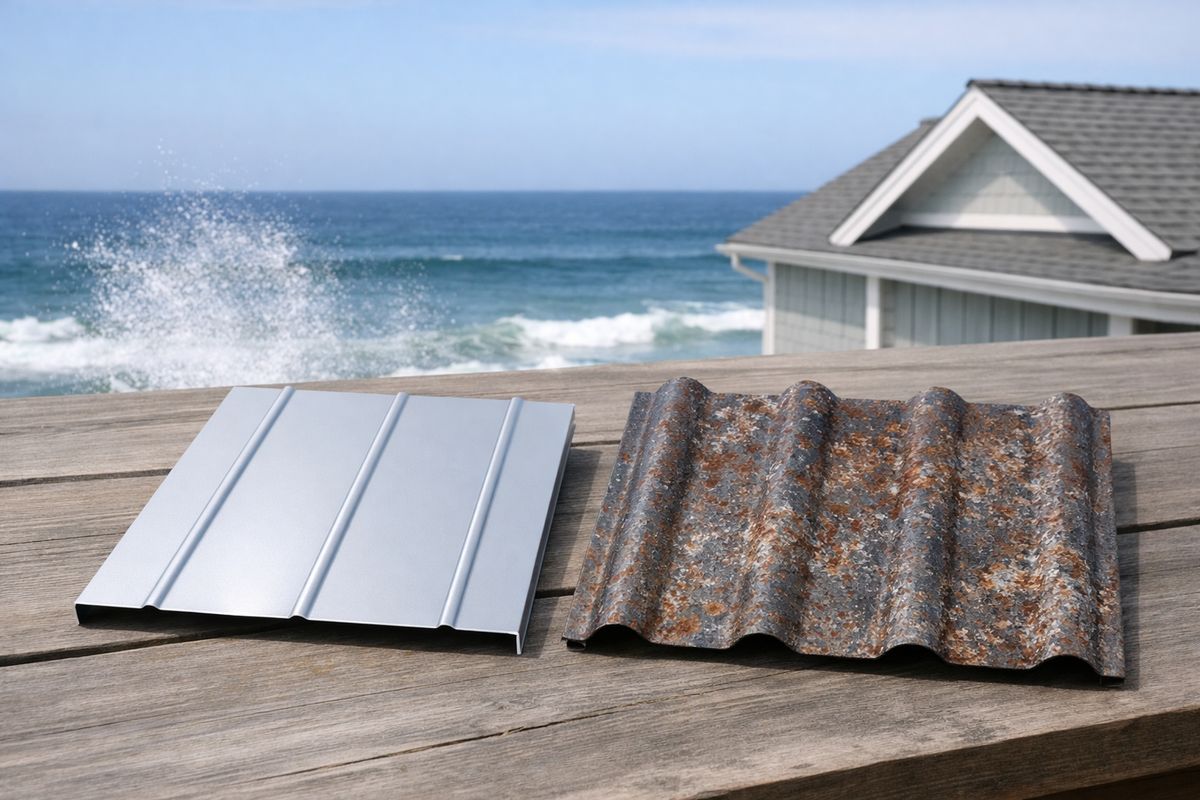
Near the coast, aluminum usually gets the edge because it resists corrosion better than steel-based systems. That is why coastal recommendations so often point toward standing seam aluminum. Steel can still work, especially with high-quality coatings, but the margin for error gets smaller as you get closer to saltwater.
Stone-coated steel and steel shingles can be strong options farther inland or in less aggressive coastal exposure. But if you are close to the ocean, material choice stops being a side note and becomes a deciding factor.
This is one of those places where a roof can look great at install and still be the wrong pick. Salt is patient.
Aluminum vs. Galvalume vs. Steel in Coastal Florida
Aluminum is usually the safest coastal pick. It is lightweight, corrosion-resistant, and widely used in standing seam systems for exactly that reason. If your home sits close to saltwater, aluminum is often the smartest move.
Galvalume is steel coated with an aluminum-zinc alloy. It performs very well inland and in many Florida locations, and for plenty of homes it offers a strong balance of value and durability. But right near the ocean, aluminum usually remains the better long-term fit.
Painted steel works farther inland, but many manufacturers limit or void coastal warranties within roughly 1,500 feet of saltwater. That is not fine print you want to discover after the contract is signed.
Heat Reflection and Energy Efficiency
Florida sun turns roofs into giant heat collectors. Metal does better than many alternatives because reflective finishes can bounce more solar heat away instead of soaking it in.
That does not mean every metal roof performs the same. Color still matters. Finish matters. A light-colored standing seam roof with a reflective coating will usually beat a dark metal roof on cooling performance. Texture and granule finishes can also affect how heat is absorbed and released.
Done right, metal roofing can lower attic heat gain and reduce AC strain during the long summer stretch. Some estimates put cooling-cost reductions up to 40% with energy-efficient metal systems, though actual savings depend on attic insulation, ventilation, color choice, and your existing roof condition.
So yes, the energy-efficiency story is real. But the roof color you pick from the sample board matters almost as much as the material category.
Lifespan, Maintenance, and Repair Needs
Florida is hard on roofs, which is why lifespan matters more here than in milder climates.
A properly installed metal roof in Florida often lasts 40 to 60 years or more. Standing seam usually lands at the low-maintenance end of that range because the fasteners are protected and the system sheds water well. Exposed fastener roofs can also last a long time, but they ask more from you in maintenance. Screw checks, washer aging, and occasional refastening are part of the picture.
Metal shingles, metal tiles, and stone-coated steel usually fall between those two extremes. You get better longevity than asphalt, but repairs may be more detail-heavy because you are dealing with smaller, interlocking pieces instead of long, simpler panels.
The cheapest roof to buy is often not the easiest roof to live with. If you are sorting proposals, it helps to know how to compare competing bids side by side so you can see which estimate includes long-term value and which one just looks cheaper on page one.
The Fastener Problem You’ll Notice Later
Visible screws do not usually fail all at once. The problem shows up slowly.
Rubber washers dry out. Fasteners loosen a little from expansion and contraction. Moisture finds tiny paths. Then one season you notice a small stain near a screw line after a storm, and suddenly the “affordable” roof starts asking for attention.
That is the long-tail cost of exposed fastener roofing in Florida. Not disaster, usually. Just more upkeep than many homeowners expected.
Appearance and Home Style Fit
Performance matters most, but looks still count. You have to live with the roof every day.
Standing seam has a clean, modern, architectural look. It pairs especially well with coastal contemporary, farmhouse, and simpler residential designs. On the right home, it looks sharp. On the wrong home, it can feel a little too sleek, like wearing running shoes with a suit.
Metal shingles and tiles fit traditional homes better. If your house has Mediterranean, Spanish, cottage, or classic suburban styling, these systems usually blend more naturally. Stone-coated steel also works well here because it softens the industrial feel and reads more like a conventional roof from the curb.
If you live in an HOA community, these style-driven categories may also be easier to get approved. Standing seam is increasingly accepted, but traditional-looking systems still tend to raise fewer eyebrows.
Noise, Comfort, and Everyday Living
The old idea that metal roofs sound like a drum in the rain is mostly outdated.
On a properly built home, the roof deck, underlayment, attic insulation, and ceiling assembly do more to shape sound than the roof material alone. A metal roof installed over solid decking with quality underlayment is usually not dramatically louder than other roofing systems in everyday rain.
During a hard Florida storm, you may notice a different sound character. More crisp, less dull. But it is rarely the deal-breaker people fear. Comfort comes down more to assembly quality than roof type.
Installation Complexity and Contractor Skill
Even the best roof type can fail early if the installer gets the details wrong. In Florida, that is not a side issue. It is the issue.
Standing seam demands precision. Panel layout, clip spacing, fastening patterns, flashing details, sealant placement, and trim work all affect performance. Exposed fastener roofs are easier to install, but that also means some crews treat them casually, and casual is not what you want above your living room in a hurricane state.
Metal shingles, tiles, and stone-coated steel require careful sequencing and detail work. If a crew is unfamiliar with the exact system, the finished roof may look fine from the driveway and still have trouble spots hidden at transitions and penetrations.
Choosing the system matters. Choosing the installer matters just as much. Spend time checking how to vet a qualified roofing pro before you sign anything.
Why Florida Code Approval Matters More Than a Pretty Brochure
A product being sold in Florida does not automatically mean it is approved for your location, your wind exposure, or your code requirements.
You want the Florida Product Approval, and in HVHZ areas you may also need Miami-Dade NOA or equivalent approvals tied to the exact assembly. That means panel type, substrate, underlayment, fastening pattern, clip spacing, and edge details. Not just the brand name.
A glossy brochure can show a beautiful roof. Code approval shows whether that roof belongs on your house.
Cost Up Front vs. Value Over Time
Exposed fastener roofing usually costs the least up front. Standing seam usually costs the most. Metal shingles, tiles, and stone-coated steel often land in the middle to upper-middle depending on product and complexity.
That sounds simple, but the value story is not.
Standing seam often wins over time because you are buying lower maintenance, stronger leak protection, better storm performance, and longer service life. Exposed fastener roofing can still make financial sense if your budget is tight and your property is inland, but the maintenance tradeoff is real. Style-driven systems can be worth the premium when curb appeal or HOA fit matters, especially if concrete tile weight or fragility is a concern.
Material prices can also move around because coil-steel quotes have been volatile, so price differences from one season to the next are not unusual.
Insurance and Wind-Mitigation Considerations
Insurance companies usually care less about roofing buzzwords than about documentation. The questions are practical: Was the roof installed to current code? What is the attachment method? Is there a product approval? Can the inspector verify wind mitigation features?
A well-documented metal roof may help with wind-mitigation inspections and possible discounts, but the discount varies by carrier and by what the inspection actually confirms. A standing seam roof with tested uplift performance and code-compliant installation tends to tell a stronger insurance story than a generic “metal roof” label on paperwork.
So keep your approvals, permit records, invoices, and product data sheets. That folder can save money later.
Best Metal Roof Type by Florida Situation
This is where the choice gets easier.
Best for Coastal Homes
Standing seam aluminum is the strongest fit for most coastal Florida homes. You get excellent corrosion resistance, hidden fasteners, strong wind performance, and low long-term hassle. If your house is close to saltwater, this is the safest bet.
Best for Inland Florida on a Tighter Budget
Exposed fastener panels can make sense inland when price is the main driver and you understand the tradeoffs. You spend less up front, but you accept more maintenance and a higher chance of fastener-related issues later. For sheds, workshops, rentals, and some homes away from the coast, that can still be a fair deal.
Best if You Want a Traditional Look
Metal shingles, metal tiles, and stone-coated steel all deserve attention here. If you want the appearance of tile, shake, or shingles without the weight or fragility of conventional materials, these systems do the job well. Stone-coated steel often has the edge when you want the most familiar residential look from the street.
Best for Long-Term, Lowest-Hassle Ownership
Standing seam wins again. Concealed-fastener systems generally ask for less maintenance, stay tighter in harsh weather, and age more gracefully in Florida conditions. If you plan to stay put for decades, this is usually the smartest long game.
Verdict: Which Metal Roof Type Fits Florida Best?
Standing seam aluminum or Galvalume is the best all-around choice for most Florida homes. That is the clearest answer.
If your home is near the coast, standing seam aluminum usually takes the top spot. If your home is inland, standing seam Galvalume is often an excellent value-performance balance. If budget is your biggest constraint, exposed fastener panels are the realistic runner-up, but you need to go in with open eyes about maintenance. If your priority is a traditional look, stone-coated steel or metal tile-style systems are the best alternatives.
Florida does not just reward metal. Florida rewards the right system, the right material, and the right installation details.
Before You Choose, Try This One Step This Week
Ask one roofer for three exact items in writing: the product approval, the wind rating for the full assembly, and the fastening details for your home’s location.
That one step cuts through a lot of sales talk fast. If a contractor can show you those details clearly, you are looking at a real roofing proposal, not just a nice brochure.
Frequently Asked Questions
What metal roof type lasts longest in Florida?
Standing seam usually lasts the longest with the least upkeep, especially when you choose aluminum near the coast or a quality Galvalume system inland. Proper installation and approved details matter just as much as the panel style.
Are exposed fastener metal roofs a bad choice in Florida?
Not always. Inland, on a tighter budget, exposed fastener roofs can still be a practical option. The downside is maintenance. The visible screws and washers are more likely to age, loosen, or leak over time than hidden-fastener systems.
Is aluminum better than steel for Florida roofs?
Close to the coast, yes. Aluminum resists corrosion better in salt-heavy air. Farther inland, Galvalume steel can be a strong and cost-effective choice, especially in standing seam systems.
Do metal shingles hold up as well as standing seam in hurricanes?
Some do, especially interlocking products with strong approvals, but standing seam usually has the edge on wind performance and rain tightness. Metal shingles are often chosen when style matters almost as much as storm resistance.
Will a metal roof make your house louder in rain?
Usually not by much if it is installed over solid decking with good underlayment and normal attic insulation. The roof assembly has more effect on sound than the metal itself.
Can a metal roof help with insurance in Florida?
It can, but the paperwork matters. Insurers and inspectors usually look for code-compliant installation, approved products, and verified wind-mitigation features rather than just the word “metal” on a contract.