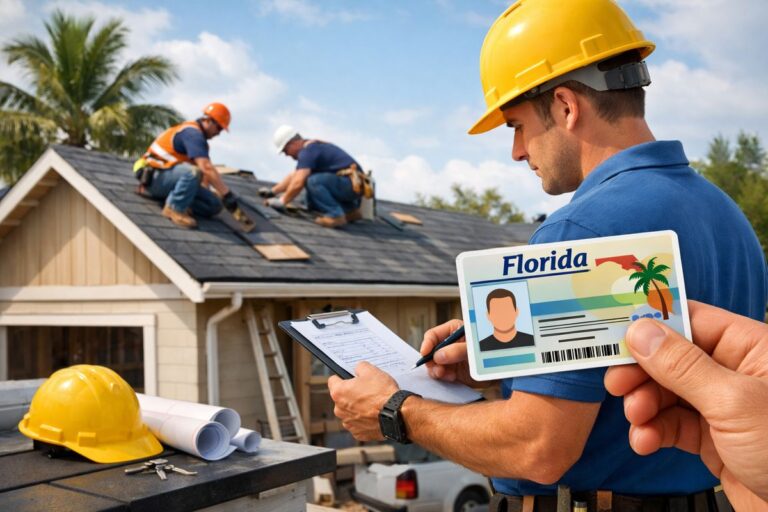
A ceiling stain after a hard summer storm can turn your phone into a circus fast. By lunch, you may already have three bids, two promises of “full insurance coverage,” and one guy saying he can start tomorrow if you just text back. In Florida, hiring a licensed roofing contractor Florida homeowners can trust is not paperwork for paperwork’s sake, it is the difference between a roof that passes inspection and a mess that keeps following you through permits, insurance questions, and resale.
Why “licensed” in Florida means more than a business card
Florida is not forgiving about roofs. Heat cooks materials, rain finds weak spots, salt air chews through the wrong metals, and hurricane winds punish shortcuts that might survive just fine in a quieter state.
That is why “licensed” needs to mean something real. A true license is proof that the contractor is legally authorized for roofing work, not just operating a business with a nice logo, a wrapped truck, and a polished sales pitch. In a state where roof work is constant and competition is everywhere, that distinction matters even more. Florida has 25,190 roofers, the largest roofing workforce in the country, so you are not choosing from a tiny pool. You are choosing from a huge, crowded market where good contractors exist, but so do rushed crews, loose paperwork, and storm-chasing operators.
Here’s the thing: a roof problem is rarely just a roof problem. Once you touch the system, you are dealing with code, permits, inspections, product approvals, installation methods, and often insurance documentation. If the contractor is sloppy at the start, that sloppiness tends to spread into every part of the job.
A good Florida roofer should make the process calmer, not murkier. If the job feels confusing before the contract is signed, that is already useful information.
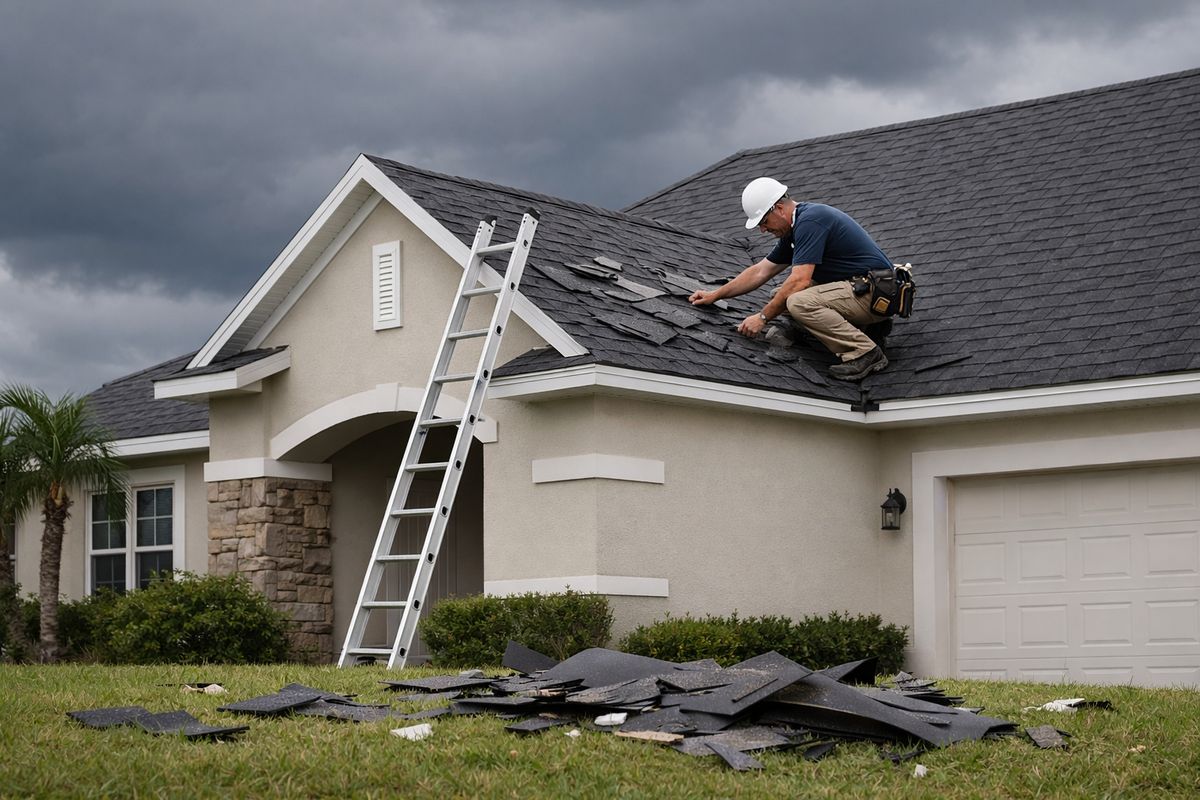
What counts as a licensed roofing contractor in Florida
In plain English, a licensed roofing contractor in Florida is a contractor who holds the proper state-recognized credential to perform roofing work legally. That is different from having an LLC, a local business tax receipt, or a county registration that simply says a business exists. Florida roofing work is regulated under Chapter 489 and the Florida Building Code, which means the legal right to do the job is tied to the actual contractor license.
This is where plenty of people get tripped up. A business can look perfectly legitimate on Google and still not hold the right roofing license. A slick website does not count. A county tax receipt does not count. An incorporated business name does not count. Only the actual contractor license counts.
That distinction matters because roofing is a regulated trade. A person cannot legally jump from general repair work into full reroofing just because a customer says yes. If your property needs a reroof, major repair, storm restoration, tile replacement, metal installation, or commercial membrane work, the contractor should be licensed specifically for roofing.
Certified vs. registered roofing contractor
Florida uses two main license paths for roofing contractors: certified and registered.
A Certified Roofing Contractor can work statewide. A Registered Roofing Contractor is limited to the local jurisdiction where the registration applies. That sounds like a technical detail, but it becomes very practical the moment a contractor advertises all over Central Florida or South Florida while only holding a local registration.
If your property sits in one county and the contractor mostly operates under a registration from somewhere else, stop and verify exactly where that contractor is allowed to work. A statewide certified license gives you much more flexibility and usually creates fewer headaches on multi-location projects, scattered-site portfolios, or properties near county lines. Florida DBPR recognizes that statewide distinction, and a statewide certified license is the cleaner fit for work across multiple counties.
Why the license type should match the job
Roofing is not one thing. A shingle reroof on a single-family home, a tile system on a coastal property, and a TPO membrane replacement on a multifamily or commercial building are very different jobs. The legal scope matters, and the practical skill matters even more.
A handyman who offers to “patch that roof real quick” may be cheap, but cheap stops being cheap the second permit trouble starts or an inspection fails. The same goes for an out-of-area operator with vague credentials and a local magnet slapped on the truck door. If the contractor does not clearly have the legal authority and experience for your exact roof type, the risk moves onto you.
That risk is not abstract. It shows up when permits are delayed, inspectors ask for corrections, insurers push back, or a future buyer asks for documentation and you have very little to give.
Start with the DBPR license check
Your first screening step should be boring. That is the point.
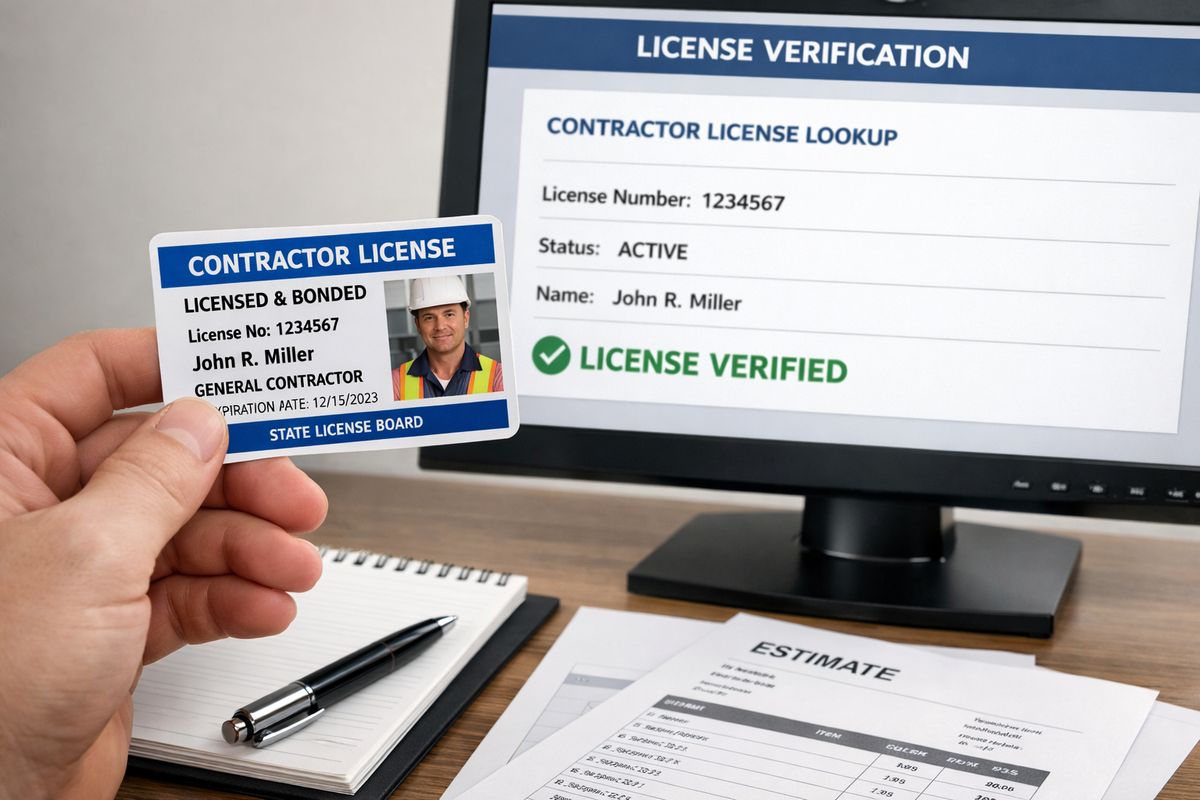
Look up the contractor through the Florida Department of Business and Professional Regulation, usually called DBPR. This takes minutes and can save you from weeks of cleanup later. Do not rely on a screenshot the contractor sends. Do not rely on “licensed and insured” printed on a flyer. Run the search yourself.
You want to confirm that the license is active, that the business name matches what appears on the proposal or contract, and that the roofing qualifier listed in the record lines up with the company you are hiring. In Florida, the qualifying agent matters because the license belongs to an individual person attached to the business, not to the logo on the truck.
What to verify in the license record
Check the license number, the exact qualifier name, the business name, the status, and the expiration date. Also look for any public disciplinary actions or complaints shown in the record.
A clean record is not a guarantee of great craftsmanship. Plenty of average contractors have clean paperwork. But a missing record, an inactive status, or a name mismatch is different. That is a hard stop.
Florida counties also reinforce this point. In places like Charlotte County, an LLC or corporation by itself does not authorize roofing work, and contractor ads are expected to include a verifiable license number. That kind of local reminder matters because it cuts through the marketing gloss.
Questions to ask if the record looks unclear
If the business name on the estimate does not match the DBPR record, ask why. If the qualifier is a different person entirely, ask whether that person is still actively attached to the business and overseeing work. If the contractor says the license is “pending,” treat that as not licensed today.
The simple rule is this: if the paperwork gets slippery before the job starts, it usually gets worse later.
A reliable contractor should answer license questions cleanly, without irritation and without a story that changes halfway through. Your goal is not to play detective forever. Your goal is to find out quickly whether this is a serious business or a mess in a polo shirt.
Make sure insurance is real, current, and enough for the job
Licensing and insurance are separate checks. One does not cover the other.
A licensed roofer should also carry appropriate insurance, especially general liability and workers’ compensation. If a crew member gets hurt during tear-off, if falling debris damages a car, or if part of the property gets damaged during the job, insurance is what keeps one bad day from turning into a financial fight.
This matters for homeowners, and it matters even more for property managers and commercial owners. Once you have tenants, shared spaces, parking lots, or multiple buildings in the mix, site risk gets real fast.
Proof to ask for before signing anything
Ask for current certificates of insurance. Check the policy dates, the insurer name, and the named insured. Then compare that named insured to the company name on the estimate and contract. If the proposal says Sunshine Coast Roofing LLC but the insurance certificate is for another business entirely, do not shrug that off.
Better yet, ask for proof sent directly from the insurer or the insurance agent. That extra step filters out stale certificates and fake paperwork. A contractor who is properly set up should not act surprised by this request.
If your job is larger, ask whether policy limits are appropriate for the scope. A small repair and a large commercial reroof do not carry the same exposure.
The workers’ comp question that trips people up
Workers’ comp is where a lot of conversations get fuzzy. Some contractors talk about exemptions. Some say the crew is subcontracted. Some say coverage is not needed because the installer is “independent.”
The catch is that none of those phrases tells you who is actually protected on your property.
Ask who will physically be on the roof. Ask whether every person on site is covered under workers’ compensation or another lawful arrangement that truly applies. Ask whether the contractor uses employees, subcontractors, or a mix of both. Then ask for paperwork that matches that answer.
If that exchange becomes complicated in a hurry, pay attention. Confusion around labor setup often shows up later as schedule problems, finger-pointing, and weak supervision. And in 2026, labor strain is real. Some contractors are being forced into less-experienced crews or longer timelines, which makes proper supervision even more important.
Check permit history, not just promises
A dependable Florida roofer should know permits and inspections the way a good cook knows the stove knobs, without fumbling around every time. Permit history tells you whether the contractor actually lives in that system or just talks confidently about it.
A sales rep can promise “full code compliance” all day long. Permit records show whether jobs were actually pulled, inspected, and closed out.
Who should pull the permit
The contractor doing the work should pull the permit in the contractor’s own licensed name.
That sentence is simple because it needs to be. If you hear, “You can save time if you pull it as owner-builder,” be very careful. Owner-builder status is not a casual workaround. It means you are taking on responsibility that the contractor should usually be carrying, including direct management and legal accountability for the job.
Unless you truly plan to run the project yourself, owner-builder suggestions are a major red flag.
Local agencies say this plainly. In places like Charlotte County, licensed contractors are expected to obtain the permit and have the work inspected. That is the normal path, and normal is good here.
What permit and inspection records can tell you
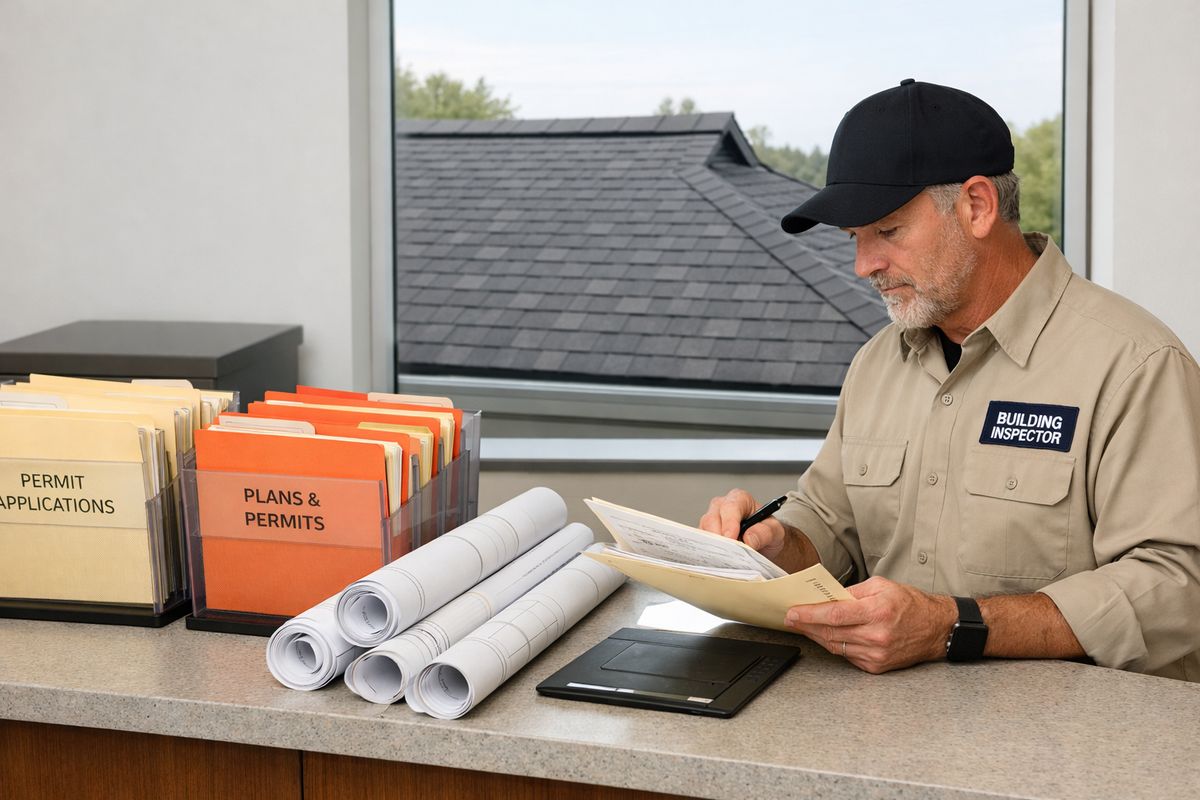
Many local building departments let you search permit records online. Use that. A quick permit search can show whether a contractor regularly pulls reroof permits, what types of properties show up, whether projects reach final approval, and whether failed inspections are a recurring theme.
This is not about expecting perfection. Corrections happen. But patterns matter.
A contractor with steady permit volume and clean closeout habits usually has better operational discipline than one who gives vague answers like “permits depend on the county” or “we usually handle that later.” In Florida’s busy market, discipline matters more than chest-thumping. Many contractors are operating in a tight, fragmented market, and the ones worth hiring usually show that in their paperwork as much as in their photos.
If you are planning a reroof and want a better sense of the inspection side before choosing anyone, it helps to understand what local roof checks usually involve. That background makes permit talk much easier to judge.
Florida code knowledge is not a bonus feature
In Florida, code fluency is part of the job. Not a nice extra. Not something to “figure out as needed.”
Your contractor should be able to explain, in plain language, how your roof system will meet wind requirements, what underlayment is being used, how flashing will be handled, how ventilation fits in, and what product approvals apply to the materials going on your building. If that conversation turns into buzzwords and shrugging, move on.
Ask about wind-load and hurricane requirements
Ask how the proposed roof system handles wind uplift, edge securement, attachment methods, and local hurricane exposure. You do not need a lecture in engineering terms. You need clear answers that connect material choice to installation method.
That last part matters a lot. The material itself is only half the story. A very good shingle installed badly is still a bad roof. A high-end metal system with weak fastening details can fail exactly where the brochure said it would not.
In parts of Florida, especially in tougher wind zones, the method of attachment and edge detailing can make or break performance. A contractor who knows local code should be able to explain that without hiding behind jargon.
Ask about product approvals and roofing systems
Roofing products used in Florida often need proper approvals for the intended application. This gets even more serious in places with stricter wind exposure, including the High-Velocity Hurricane Zone.
Ask what exact system is being proposed. Not just “tile” or “metal,” but the actual material line, underlayment approach, fastening method, and compatible components. For residential jobs, that may mean shingles, metal, or tile. For commercial properties, common systems include TPO, modified bitumen, EPDM, built-up roofing, and standing seam metal.
A good contractor should be able to explain tradeoffs plainly. For example, tile can be durable and energy-smart, but it is heavier and often more expensive. If you are considering tile, it helps to compare what different tile materials do in Florida weather. And if you want a feel for how tile performs over time, this overview of tile roofing options in Florida gives useful background before you start sorting through bids.
Ask how local code can differ by jurisdiction
Statewide rules are not the same as local habits. Permitting and inspection practices can differ by city or county, even when the underlying code framework is statewide.
Ask whether the contractor regularly works in your jurisdiction. A roofer who knows Tampa may still stumble in Miami-Dade. A contractor comfortable in inland counties may not be as sharp about coastal expectations, documentation, or local approval workflows.
You are not hiring for trivia. You are hiring for smooth execution in your exact place.
Look for Florida-specific experience, not just roofing experience
Roofing experience from a mild climate does not automatically translate to Florida. The state is its own test.
Salt air changes corrosion risk. Humidity changes drying behavior and moisture concerns. UV exposure punishes cheaper components. Storm response work adds documentation pressure. Insurance-funded jobs bring another layer of scrutiny. All of that means “30 years in roofing” is less impressive if most of those years were spent somewhere with gentler conditions.
Experience with coastal properties and storm zones
If your property is near the coast, ask about corrosion-resistant components, fastening details, and how exposure affects material recommendations. A contractor who regularly works inland may not put enough emphasis on those details.
The same goes for hurricane-prone areas. Ask for examples of jobs with similar exposure to yours. Not just “we do a lot of roofs in Florida,” but roofs in your type of neighborhood, your wind zone, and your building style.
Specific experience beats generic confidence every time.
Experience with your roof type
Match the contractor to the roof system. This sounds obvious, but people skip it constantly.
The best crew for standing seam metal may not be the best fit for brittle tile repairs. A company that handles tons of shingle reroofs may not be the strongest choice for a TPO commercial system. A residential storm repair specialist may not have the project coordination habits needed for a multifamily reroof with tenants, boards, and access restrictions.
If your roof is tile, ask for recent tile-specific work and details on breakage handling, underlayment replacement, and component matching. It can also help to review what to look for in a crew that works on tile every day, because tile mistakes often hide under a nice-looking finished roof until later.
Compare estimates like scope sheets, not price tags
The cheapest roofing quote can become the most expensive one with amazing speed.
Roof estimates should be read like scope documents, not price tags. You are comparing what is included, how clearly it is written, and how much room it leaves for surprise charges later. A low number built on vague language is not a bargain. It is an invitation to argue.
What a strong Florida roofing estimate should include
A solid estimate should spell out the exact materials, the manufacturer line, tear-off details, underlayment, flashing, ventilation components, permit responsibility, inspection handling, cleanup, debris removal, timeline, warranty terms, payment schedule, and how change orders are handled. If deck repair is possible, there should be a clear allowance or a clearly defined process for pricing hidden damage once exposed.
It should also state the fastening approach and any code-related components tied to your jurisdiction or roof type. Florida jobs are too code-sensitive for lazy proposals.
This is one place where detail is your friend. Good estimates feel less glamorous than flashy sales presentations, but they are far more useful once the job starts.
Why vague line items are dangerous
Phrases like “repair as needed,” “code upgrades if required,” or “replace damaged wood if necessary” are not automatically wrong. The problem is when those phrases appear without pricing logic, unit rates, or any explanation of what happens next.
That is how a low bid balloons.
Ask for plain-English clarification before signing. What counts as damaged decking? How is extra material billed? Who approves change orders? How quickly will you be informed? If the answers stay fuzzy, assume the billing will too.
For bigger reroofs, especially tile work, pricing gets tied to material choice, access, roof complexity, and hidden-condition risk. If you want a clearer sense of how those factors affect overall numbers, what drives roof replacement pricing in Florida is worth reviewing before you compare bids.
Understand warranties without getting sold a fantasy
Roofing warranties sound wonderful right up until you try to use one.
There are usually two buckets to think about: manufacturer warranties and workmanship warranties. Manufacturer warranties typically cover material defects under certain conditions. Workmanship warranties cover installation mistakes, which is often what homeowners actually care about when a leak shows up after a reroof.
The catch is simple: a 30-year or 50-year material warranty does not save you if the roof was installed incorrectly or with unapproved components.
Questions to ask about workmanship coverage
Ask what the workmanship warranty actually covers, how long it lasts, what voids it, and who handles service calls if a leak appears after installation. Ask whether emergency tarping or diagnostic visits are included. Ask how warranty requests are submitted and how quickly the company responds.
Then get it in writing.
Handshake promises are nice until the office number changes or the sales rep disappears. The written warranty is the version that counts.
Why manufacturer credentials can help, but don’t replace vetting
Some contractors have manufacturer certifications or preferred installer statuses. That can be a useful signal, especially for warranty eligibility and familiarity with a specific system.
But it should not outrank the basics. Licensing, insurance, permit discipline, code knowledge, supervision, and job history still matter more. A contractor can be great at collecting badges and still be sloppy in the field.
Think of credentials as supporting evidence, not the main case.
Ask how storm damage and insurance claims are handled
Florida roofing and insurance work are tangled together more than most homeowners would like. After storms, the pressure ramps up fast. Roofers knock doors. Adjusters ask for documentation. Deadlines feel urgent. Everybody seems to have a script.
A good contractor should make that process clearer. Not magically painless, but clearer.
What good documentation looks like
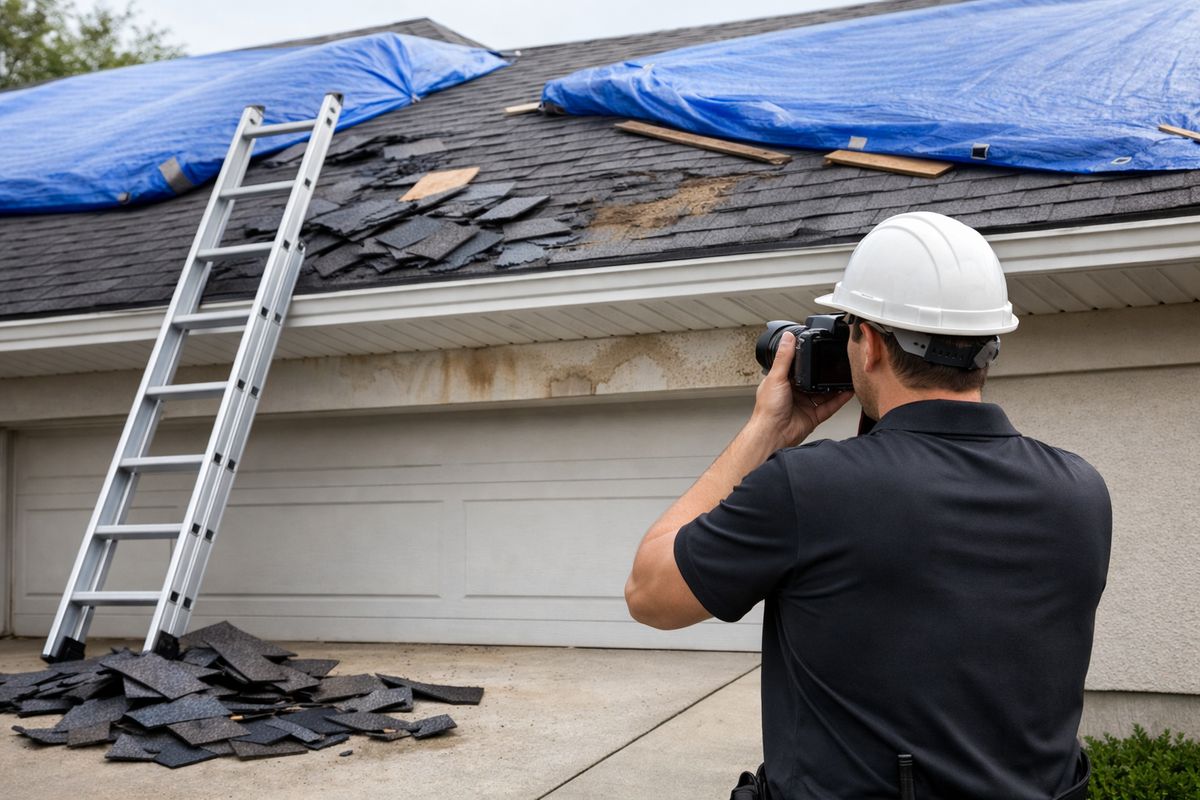
Good storm documentation includes clear photos, measurements, notes on visible damage, interior leak evidence when relevant, moisture findings if part of the inspection, and a written scope that describes what is actually being proposed.
Drone photos and aerial measurement tools can help. So can estimating software. But those tools should be checked by a human who understands the roof in front of your house. That matters because software-generated data can create scope disputes if nobody verifies it carefully.
A contractor who documents well tends to communicate well. That alone reduces a lot of stress during claim-related work.
Red flags in insurance-driven roofing sales
Be wary of promises that sound a little too clean. “You won’t pay anything.” “We guarantee claim approval.” “Sign now and the rest gets handled later.” “The insurer always owes for a full roof.”
That style of pitch is common after storms, and it should make you slow down, not speed up.
Florida has post-storm rules around roofing contracts and insurance-related conduct for a reason. Aggressive storm sales often come with rushed paperwork, vague supplements, inflated urgency, and contracts signed before the actual scope is understood. If the sales process feels like a trap door, it probably is.
Check crew quality, subcontracting, and site supervision
The company name matters. The crew on your roof matters more.
A lot of roofing jobs look fine from the street during installation. The real difference shows up in supervision, sequencing, cleanup, and whether somebody competent is checking the work before the inspector does.
Ask who will be on your roof
Ask whether the installers are employees, subcontractors, or both. Ask how long the foreman has been with the company. Ask who the day-to-day site supervisor is and whether that person will be physically present or just “available by phone.”
Subcontracting is not automatically bad. Plenty of solid roofers use subs. But if the company cannot explain who will be there and how quality is controlled, that is the problem.
You want to know who is touching underlayment, flashing, fasteners, tiles, ridge details, vents, and cleanup. Those details are where a roof succeeds or fails.
Ask how quality control happens
Good quality control usually looks simple from the outside. Daily supervision. Progress photos. Mid-job checks. Punch-list items before final billing. Inspection prep. Final walkthrough.
For property managers and commercial owners, this matters even more because multiple stakeholders are involved. You may need documentation for boards, tenants, owners, or maintenance records, not just a finished roof.
If the contractor has no clear process for supervision and closeout, expect surprises.
Reviews help, but real proof matters more
Online reviews are useful, just not enough by themselves. A five-star profile can hide weak paperwork. A three-star profile can include one bad scheduling week and ten solid installs. Star ratings are the appetizer, not the meal.
What matters more is consistency across reviews, references, permits, recent job examples, and your direct conversations with the contractor.
Better questions for references
Ask references whether the job stayed close to schedule, whether change orders were fair, whether the crew protected landscaping and driveways, whether communication stayed steady once the deposit was paid, and whether final inspection passed without unnecessary drama.
Those questions get to the actual lived experience. “Were you happy?” is too broad to tell you much.
What recent local jobs can reveal
Ask for recent projects from your city, county, or a similar exposure zone. A nearby completed roof tells you more than generic praise from somewhere two hours away.
If you can see a roof of the same material and slope, even better. On tile projects especially, local examples can show how neatly details were handled and whether the contractor regularly works with that system. If you are still sorting through material choices, how tile compares with shingles in Florida heat can help you ask better follow-up questions when you review those local jobs.
Budgeting for a Florida roof without buying the cheapest problem
Price matters. Of course it does. But your real goal is value, not the lowest number in the stack.
Florida roof pricing moves for real reasons: material choice, roof complexity, pitch, access, tear-off difficulty, decking repairs, local code requirements, permit costs, and jobsite logistics. A roof over a simple inland ranch home is not priced the same way as a tile reroof on a coastal property with limited access and stricter exposure concerns.
The mistake is assuming the cheapest bid found a secret efficiency that every other contractor missed. Usually, the difference is scope, material quality, labor discipline, or risk being pushed onto you.
When it makes sense to spend more
Sometimes spending more is the smart move. Better wind resistance, upgraded underlayment, corrosion-resistant components near the coast, improved ventilation, stronger project documentation, and tighter supervision can all justify a higher price.
Energy performance can matter too. In hot Florida conditions, reflective materials, system design, and ventilation can affect long-term comfort and cooling costs. On tile roofs, durability and thermal performance are part of why some owners accept higher upfront cost.
Spend more when the added cost clearly buys durability, code confidence, service quality, or a longer useful life. Do not spend more for vague prestige.
How to compare payment schedules safely
Look closely at payment timing. Reasonable deposits are normal. Huge upfront payments with weak paperwork are not.
A safer payment structure usually ties money to milestones: deposit, material delivery or mobilization, progress stage, substantial completion, then final payment after final inspection or punch-list completion, depending on the project type. This matches how careful contractors think anyway. In a tighter market, clear payment milestones are becoming more important for both sides.
Avoid cash-only deals and avoid paying in full before permits are closed. If somebody pushes hard for that, the conversation is already telling you enough.
Red flags that should end the conversation fast
Some warning signs are not subtle. Treat them that way.
No DBPR record. Expired insurance. A refusal to provide current certificates. Pressure to sign today. Vague answers about permits. Requests to pull the permit yourself as owner-builder. Cash-only pricing. No local references. Scope details that never quite make it into writing.
Any one of those can be enough to walk away.
The classic Florida storm-chaser pattern
You have probably seen this one before. A storm rolls through. A crew starts canvassing the neighborhood within a day or two. The pitch is urgent. The address is temporary. The paperwork is thin. The promises are huge.
That pattern exists because it works on stressed property owners.
Do not let urgency make the decision for you. A real local contractor can still move fast, but the paperwork should stay solid. If it does not, speed is not a benefit. It is bait.
Smaller warning signs that still matter
Not every bad contractor waves a giant red flag. Sometimes it is smaller things: missed appointments, inconsistent names across documents, generic estimates, slow answers, or dodging simple code questions.
Those details matter because roofing is a detail business. A person who cannot keep names and documents straight before the job often cannot keep flashing and sequencing straight during the job.
Small sloppiness has a way of growing teeth once the tear-off starts.
Best contractor by use case: how to narrow the field
There is no single “best roofer” for every property in Florida. That claim is usually marketing fluff. The better approach is matching the contractor to the job.
Best fit for a hurricane-prone coastal home
Prioritize wind-rated systems, corrosion-resistant components, strong permit habits, and real coastal experience. Ask more questions about fasteners, edge securement, product approvals, and salt-air durability than you would for an inland property.
A contractor who has done ten roofs two miles from the beach is more useful than one who has done a hundred roofs far from coastal exposure.
Best fit for a commercial or multifamily property
Prioritize membrane or low-slope system experience, maintenance planning, documentation quality, warranty clarity, and project coordination. Commercial and multifamily jobs often involve staging, tenant communication, safety planning, and inspection sequencing that go well beyond residential reroof habits.
You want operational discipline here, not just installation ability.
Best fit for storm repair and insurance work
Prioritize photo documentation, clear written scope, permit responsiveness, and calm communication during claim-related steps. Speed matters, but compliance matters more. The right contractor should be able to move quickly without skipping the paperwork that protects you later.
Best fit for energy efficiency and long-term value
Prioritize reflective materials, smart ventilation, roof-system compatibility, and life-cycle thinking. The cheapest install price says very little about what the roof costs over twenty years.
A contractor who can explain comfort, maintenance, durability, and repairability in the same conversation is usually worth your attention.
Your Florida roofing vetting checklist
If all of this feels like a lot, that is normal. Roof bids arrive fast, and sorting the serious contractors from the smooth talkers takes a system.
Use this one. Verify the DBPR license first. Confirm the business name matches the license and contract. Check current insurance and workers’ comp details. Review permit history in your local jurisdiction. Ask who pulls permits and who supervises the crew. Compare estimates line by line, especially materials, underlayment, flashing, ventilation, cleanup, warranties, and change-order terms. Ask direct Florida code questions about wind resistance, approvals, and local inspection expectations. Review recent local jobs and speak with references who had similar work done. Only after all of that should you sign.
The best first move is also the simplest: run the license search before you return a single call.
Frequently Asked Questions
How do you verify a roofing contractor license in Florida?
Use the Florida DBPR license search and confirm the license number, status, qualifier name, and business name. The record should show an active roofing license that matches the company listed on your estimate or contract.
Is an LLC enough to count as a licensed roofing contractor in Florida?
No. An LLC is just a business entity. It does not authorize roofing work by itself. The contractor needs the proper Florida roofing license, not just a registered company name.
Should your roofing contractor pull the permit?
Yes, in most cases the contractor performing the work should pull the permit in the contractor’s own licensed name. If somebody asks you to pull it as owner-builder for convenience, treat that as a serious warning sign.
What insurance should a Florida roofing contractor carry?
At minimum, ask about general liability and workers’ compensation. Then verify current proof of coverage and make sure the insured business name matches the contract name. For larger commercial jobs, policy limits also deserve a closer look.
What is the difference between certified and registered roofing contractors in Florida?
A certified roofing contractor can work statewide. A registered roofing contractor is limited to the local jurisdiction tied to that registration. If your contractor advertises across several counties, verify that the license actually supports that.
Are online reviews enough to choose a roofer?
No. Reviews help, but they are only a starting point. Better proof comes from license verification, insurance records, permit history, recent local jobs, clear estimates, and references who can describe how the job actually went.