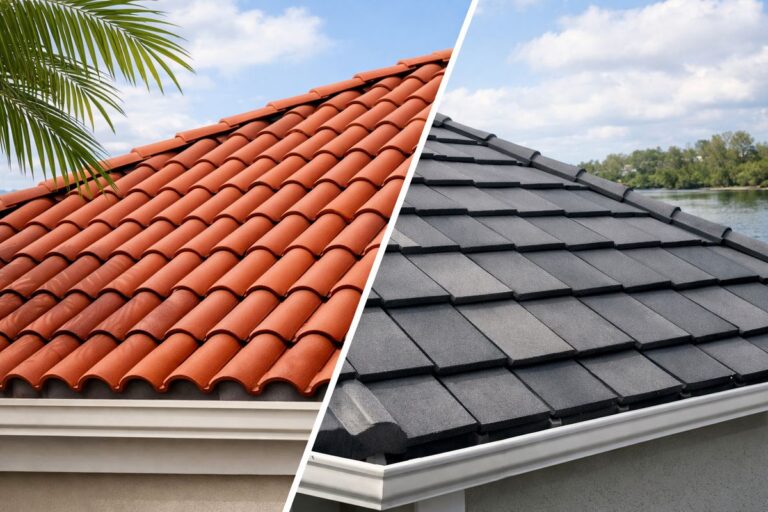
Choosing a roof in Florida gets complicated fast, because the sample board in the showroom does not have to deal with August heat, salt air in Naples, or a windy night in Broward County. In a true clay vs concrete tile roof decision, the short answer is simple: clay is the premium long-game option, but concrete is usually the smarter value for most Florida homes.
Clay vs. Concrete Tile Roof at a Glance
If your main goal is getting the best balance of price, storm performance, availability, and long-term practicality, concrete tile usually wins. If your goal is maximum lifespan, a more refined classic look, and you already have the budget and structure to support it, clay earns its premium.
That difference matters more in Florida than almost anywhere else. Your roof has to handle heat that bakes surfaces all day, humidity that never really leaves, hurricane-season wind uplift, and in coastal areas, salt-heavy air that speeds up wear on every weak point. Insurance and code compliance also sit right in the middle of the decision, not off to the side.
Here is the quick comparison:
| Feature | Clay Tile | Concrete Tile |
|---|---|---|
| Typical role | Premium choice | Best-value choice |
| Lifespan | 50 to 100+ years | 40 to 50+ years |
| Upfront cost | Higher | Lower to mid-range |
| Appearance | Classic, rich, timeless | Flexible, varied, can mimic clay |
| Weight | Heavy | Usually heavier |
| Wind performance | Strong when installed right | Strong, often excellent in testing |
| Impact resistance | Good, but more brittle | Often slightly better |
| Coastal suitability | Very good | Very good |
| Best for | High-end, long-term homes | Most Florida homes |
How Clay and Concrete Tile Roofs Are Different
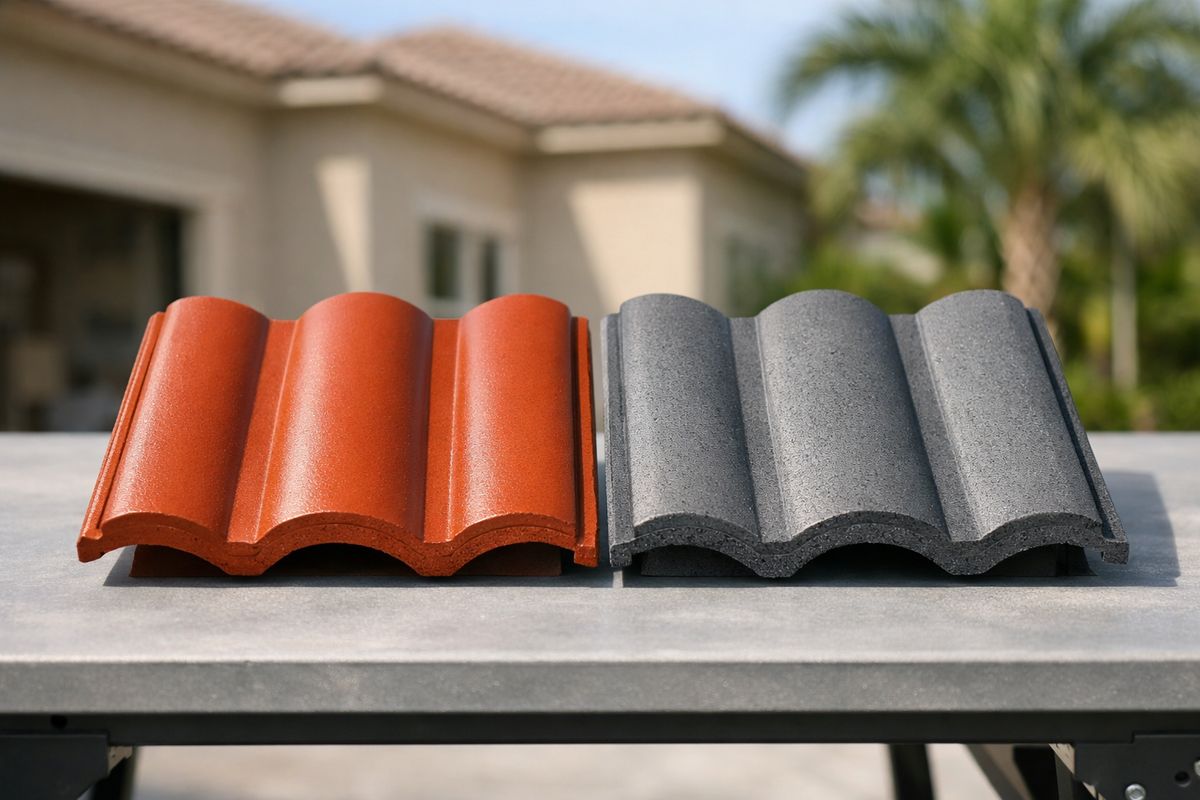
Clay tile starts as natural clay, then gets fired in a kiln until it hardens into a ceramic-like roofing product. That firing process is a big reason clay keeps its color so well and carries that unmistakable old-world look. The surface tends to feel richer and less manufactured, which is exactly why so many Mediterranean and Spanish-style homes use it.
Concrete tile is made from a cement-and-sand mix, then formed into shape and finished with pigments or coatings. It is less romantic, sure, but very practical. It can be made to resemble clay, slate, shake, or a cleaner modern profile, which gives you more design freedom if you want the look without paying top-shelf prices.
A few roofing terms help make the rest of this easier. Underlayment is the waterproof layer that sits beneath the tile. It is the part doing a lot of the day-to-day water protection, even though the tile gets all the attention. Uplift means wind pressure pulling roofing materials upward during storms. In Florida, uplift performance is not a side detail. It is one of the main events.
Looks and Curb Appeal
Clay usually looks better. That is the blunt version.
The color has more depth, the texture tends to feel more natural, and the roof often ages with more character. On a stucco home with arches, warm paint, and palm trees out front, clay tile looks like it belongs there in a way few materials can match. That classic Florida coastal or Mediterranean look is a big part of the appeal.
Concrete can get close, though. Modern concrete tiles come in a wide range of profiles and colors, and some do a convincing job of mimicking clay from the street. If your goal is visual flexibility, concrete actually gives you more room to play. You can go barrel tile, flat profile, or something in between, and you can often match HOA expectations without stretching the budget as far.
The catch is that concrete rarely has the same depth and finish as genuine clay up close. It is a bit like natural stone versus a very good porcelain copy. From ten feet away, the gap narrows. Up close, you notice it.
Lifespan and Long-Term Durability
For lifespan, clay wins.
A properly installed clay tile roof in Florida can last 50 to 100 years or more, with some systems commonly described as lasting 50, 100+ years. Concrete usually lands in the 40 to 50-plus-year range, though higher-end products can go longer if the roof is maintained well.
That sounds like a clean win for clay, but here is the real-world catch: the tiles often outlast the parts beneath them. Underlayment commonly needs replacement around the 20 to 30-year mark in Florida, especially under intense UV, humidity, and storm exposure. So even if your tile is still in great shape, the roofing system may still need major work long before the tile itself wears out.
That changes how you should think about longevity. A century-long tile is impressive, but it does not mean zero disruption or zero roofing expense for a century. It means the outer material may keep going while the waterproofing layers underneath need attention.
Hurricane and Wind Performance
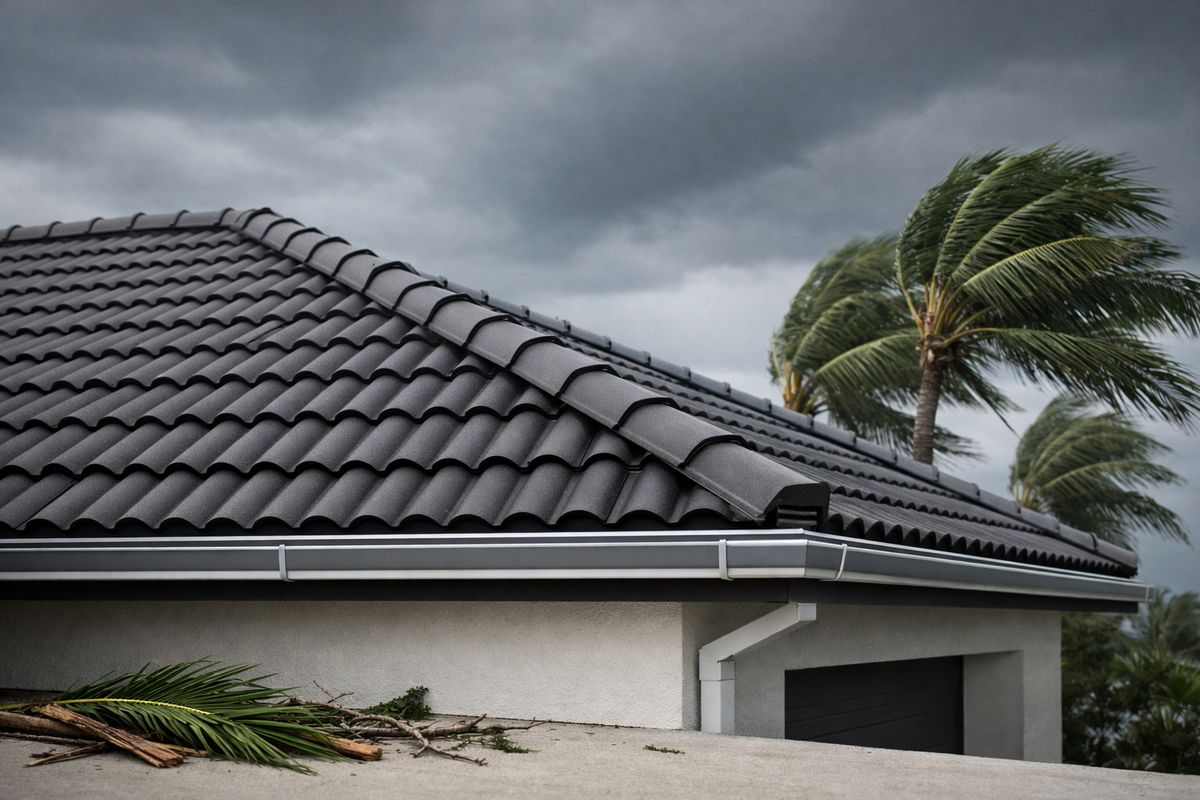
Both clay and concrete can perform well in hurricanes when the system is engineered and installed correctly. In current Florida applications, code-compliant tile roofs can be rated for 150-plus mph winds. Material alone is not the deciding factor.
Concrete does have an edge in some storm-related testing. In an ASCE study, mortar-set concrete tiles showed the strongest uplift capacity and impact resistance among the tested systems. Concrete also tends to handle projectile impact a bit better, while clay is more brittle and more likely to crack under concentrated hits like falling branches.
That said, older ideas about tile roofs flying off in storms often come from outdated installations, not modern code-compliant ones. A badly installed roof near the ridge or perimeter can fail no matter how expensive the tile is. A correctly installed practical roof can outperform a premium product put on carelessly.
Why Installation Quality Changes the Outcome
This is where the decision gets real.
Fasteners, battens, mortar, foam adhesive, edge metal, flashing details, and the exact approved installation method all affect performance. Even the same tile can perform differently depending on how it is attached. Some research found that concrete bonds especially well with mortar, while clay responds differently depending on the attachment system.
So if you compare bids, compare the whole assembly, not just the tile name. The same goes for contractor choice. Before signing anything, it helps to understand how to choose the right crew for a tile roof, because poor installation can wipe out the advantage of better materials.
Florida Code and High-Velocity Hurricane Zones
South Florida plays by stricter rules, and for good reason. Areas in and around the High-Velocity Hurricane Zone, especially Miami-Dade and Broward, often require tighter approvals, stronger testing standards, and more exact installation details.
That means your favorite tile profile is only useful if it has the right product approval for your area. Wind ratings, attachment methods, and local code requirements should come before aesthetics. If you are close to the coast or in a high-risk zone, start there.
Weight and Structural Requirements
Both materials are heavy enough to reshape the whole project. A 1,000-square-foot tile roof can weigh roughly 8,000 to 12,000 pounds, and that is not a small footnote. It can affect framing, deck requirements, labor, and total cost.
Clay is often somewhat lighter than concrete, but both sit in the heavy-roof category. If you are replacing an existing shingle roof, your home may need structural reinforcement first. That can add roughly $3,000 to $8,000, which is one reason sticker-price comparisons often miss the real cost.
This is also why broad pricing articles only tell part of the story. Your final number depends on structure, tear-off, access, roof geometry, and attachment details, which is why it helps to review the local cost drivers behind what pushes Florida roofing prices up or down.
Best Fit for Older Florida Homes
Older homes can run into trouble here, especially if the original framing was designed for lighter materials. Some post-war Florida homes and modest ranch homes were never meant to carry a tile system without upgrades.
A structural review is not overkill. It is the smart move before getting attached to either option. If your home already has tile, you may be in better shape. If you are switching from shingles, assume nothing until somebody checks the load capacity.
Heat, Energy Efficiency, and Indoor Comfort
Both clay and concrete perform well in Florida heat, especially compared with many lower-cost roofing options. Tile naturally creates small air spaces beneath the material, which helps reduce heat transfer into the attic. Add thermal mass, proper ventilation, and a reflective finish, and you get a roof that works with the climate instead of against it.
Cool-roof tile systems can make a real difference. Industry data shows reflective tile roofs can cut surface temperatures by up to 50°F and lower HVAC demand by around 10 to 15 percent. In plain English, that can mean a cooler attic, a less overworked AC system, and a house that feels less punishing at 4 p.m.
You do not need clay to get those benefits. Concrete can do it too. The bigger factors are color, reflectivity, ventilation, and the quality of the full roof assembly.
Tile Color Matters More Than Most People Expect
Lighter colors can run dramatically cooler than darker ones in Florida sun. Some findings have shown more than a 50-degree difference between light and dark tile surfaces, which is huge when the roof is baking all day.
So yes, appearance matters, but color is not just style. A dark charcoal roof may look sharp on paper, but in a hot Florida attic it can act like a cast-iron skillet. If comfort and energy bills matter, lighter shades usually make more sense.
Salt Air, Humidity, and Coastal Exposure
Near the coast, both clay and concrete hold up well as tile materials. That is one reason tile roofing remains popular in Florida, especially in areas where corrosion can punish other systems. The tiles themselves are not usually the weak link.
The weak links are often the supporting parts: fasteners, flashing, valley metal, sealants, and underlayment details. Salt air and moisture can wear those components down faster than many homeowners expect. So if your home is near the water, corrosion-resistant accessories and disciplined installation matter just as much as the tile choice.
That is also why coastal roofs need more consistent checkups. The tile may look fine from the driveway while hidden components slowly age underneath.
Maintenance, Repairs, and Everyday Upkeep
Neither option is maintenance-free, despite the sales language you sometimes hear. Both need inspections, occasional tile replacement, cleaning in algae-prone areas, and care when anybody walks on the roof. Tile can crack under foot traffic if it is handled carelessly.
Concrete is usually easier to source and match for repairs, especially on newer roofs. That practicality matters once years pass and a few tiles need replacing after a storm or service visit. Clay can be harder to match exactly, especially if the profile or color has been discontinued.
Concrete may also need more cosmetic upkeep over time because surface coatings can fade or wear. Clay usually keeps its character better without added coating work. For ongoing care, it helps to know the basics of keeping a Florida tile roof in good shape, because small maintenance decisions can stretch the life of either material.
Underlayment Replacement: The Hidden Midlife Cost
This is the expense that surprises people most.
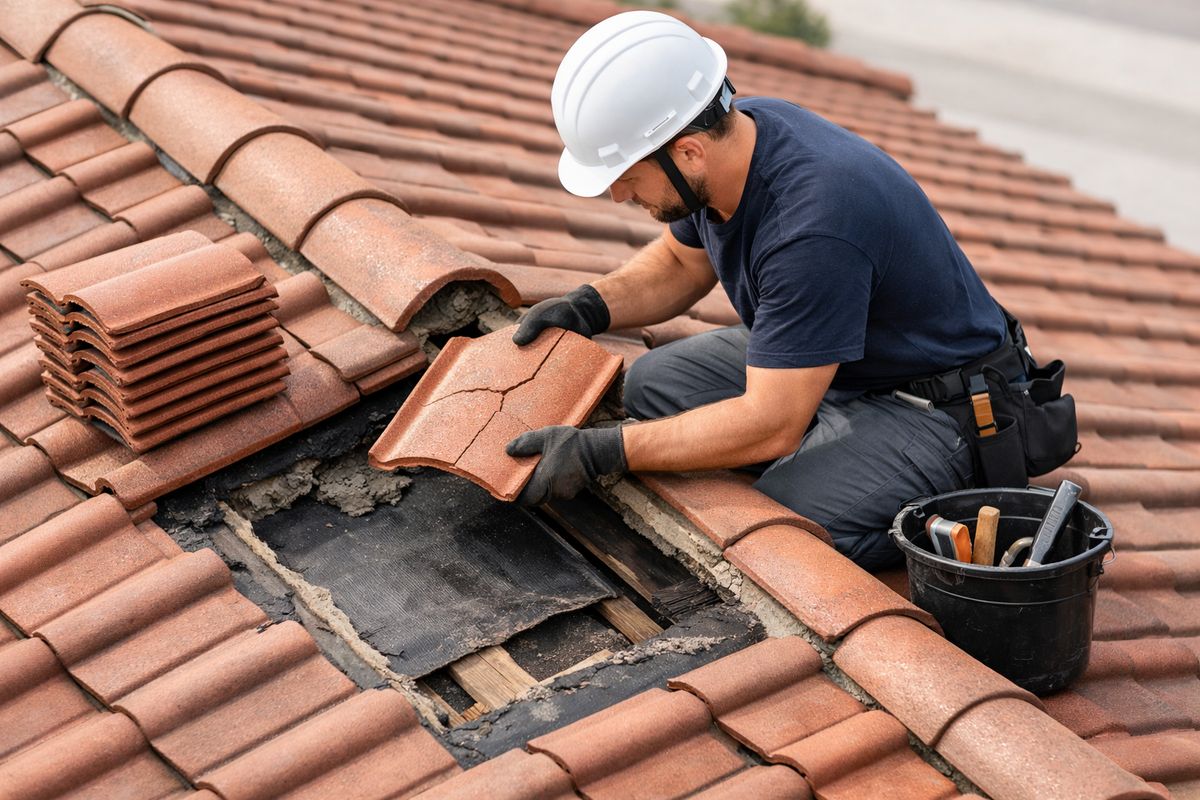
A lot of Florida tile roof problems are really underlayment failures, not tile failures. By the time water shows up inside, the tiles may still look serviceable while the waterproof layer beneath has aged out. Replacing underlayment under an existing tile roof can involve lifting and resetting tiles, and that is labor-intensive work.
So if somebody sells you on a 75-year roof, make sure you ask about the midlife cost. The tile may last that long. The whole roofing system usually will not without major service along the way.
Insurance, Impact Ratings, and Resale Appeal
Insurance conversations in Florida have gotten sharper, and roofing details matter more than ever. Carriers and inspectors often care less about the romantic story of clay versus concrete and more about ratings, age, attachment, condition, and code compliance.
Impact ratings are part of that conversation, especially Class 4 in some markets. Florida is also one of the states where insurers may impose surcharges on non-rated roofs, which pushes buyers toward better-tested systems. Concrete can have a slight advantage here if you are focused on impact resistance, but the full assembly is still what counts.
For resale, both materials help. Tile carries status in Florida, plain and simple. Clay may boost premium appeal more, while concrete often hits the sweet spot of looking upscale without overspending.
Pricing and Long-Term Value
Clay usually costs more upfront. Concrete usually gives you better cost-to-performance value.
In Florida, clay often lands around $9 to $17 per square foot on the lower end of local estimates, and higher in premium installations. Concrete often falls around $10 to $20 per square foot installed, though many real projects for both materials can rise into the broader $15 to $25 range once labor, tear-off, disposal, flashing, specialty trims, and difficult rooflines enter the picture.
That overlap can confuse people. If the prices can get close, why not just choose clay? Because material price is only one part of the bill. Availability, profile selection, structural upgrades, installation complexity, and future repairs all affect the actual value you get. If you want a deeper look at the moving parts, this breakdown of what Florida homeowners actually pay for tile work helps connect the quote to the real project.
Upfront Cost vs. Lifetime Cost
Paying more now makes sense when you plan to stay for decades, your home fits the style, your structure can carry the load, and you care a lot about long-term appearance. In that case, clay can justify itself.
But if your ownership horizon is more like 15 to 30 years, or you want strong performance without stretching the budget, concrete often makes more financial sense. You still get a durable tile roof, good heat performance, strong wind resistance, and easier sourcing, but without paying a premium for maximum longevity you may never fully use.
In other words, clay can be the better lifetime value on the right house. Concrete is usually the better practical value on the average house.
Which Roof Is Better for Your Florida Home?
Here is the driveway version: choose based on your house first, not the sample board.
If your home is higher-end, already framed for tile, and the architecture really wants that authentic barrel-tile look, clay is hard to beat. If your home needs a tough, attractive, hurricane-ready roof that keeps costs more controlled, concrete is usually the better fit.
That difference matters even more in neighborhoods with HOA rules, insurance pressure, or strict local approvals. Your roof has to work on paper, in the field, and on your monthly budget.
Choose Clay Tile If…
Choose clay if your priorities line up with premium curb appeal, the longest possible lifespan, and high-end resale positioning. It makes the most sense on homes that already suit Mediterranean, Spanish Colonial, or similar architecture, and on structures that can carry the weight without expensive reinforcement.
Clay also makes sense if you plan to stay put for a very long time and care about color depth and classic appearance more than lowest upfront cost. If you want the roof to feel like part of the home’s identity, not just a covering, clay earns that reputation.
Choose Concrete Tile If…
Choose concrete if you want the best all-around balance for a Florida home. It is usually the better pick for tighter budgets, easier sourcing, broad style options, and storm-focused practicality. It also makes sense if you want something that can mimic clay without paying full clay pricing.
Concrete is especially compelling if your focus is durability, insurance-friendly performance, and realistic long-term ownership. For many homes, it is the least fussy path to a strong tile roof that still looks right in Florida.
The Verdict: Which Fits Florida Best?
For most Florida homes, concrete tile is the better all-around fit.
It balances cost, durability, storm performance, design flexibility, and repair practicality in a way that suits how most people actually buy roofs. You still get the benefits that make tile attractive in Florida, just without paying premium money for longevity or aesthetics that may not matter as much on your specific home.
Clay still has a real place. If your budget is stronger, your structure can support it, and your style goals lean classic and upscale, clay is the best premium choice. But for the average Florida home trying to make a smart decision, concrete is the one that usually makes the most sense.
One Smart Next Step Before You Decide
Before you choose, get a structural check and two side-by-side quotes using the same underlayment and attachment specs. That one move cuts through a lot of sales talk.
You will see quickly whether clay’s extra cost is buying something meaningful for your home, or whether concrete is already giving you everything you need.
Frequently Asked Questions
Is clay tile better than concrete tile in Florida?
Clay is better if you want premium appearance and the longest lifespan. Concrete is better for most homes because it gives you strong hurricane performance, good longevity, and better value.
Do clay or concrete tile roofs handle hurricanes better?
Either can handle hurricanes well if installed to current code. In practice, attachment method, edge detailing, and installation quality matter at least as much as the tile material.
Which tile roof lasts longer in Florida?
Clay usually lasts longer. Clay often reaches 50 to 100-plus years, while concrete more often falls in the 40 to 50-plus-year range. But underlayment commonly needs replacement much sooner than either tile type.
Are concrete roof tiles heavier than clay?
Usually, yes. Both are heavy roofing materials, but concrete is often heavier. That matters most when you are switching from shingles or working with an older Florida home.
Is a tile roof worth the extra cost in Florida?
Often, yes, especially if you want better durability, heat performance, and curb appeal than shingles can offer. The smart question is not just whether tile is worth it, but which tile system fits your structure, budget, and location best.
What should you compare in quotes besides tile material?
Compare the underlayment, attachment method, approved wind rating, flashing details, tear-off scope, and whether structural reinforcement is included. Those details often decide how the roof performs long after the tile color stops feeling exciting.