
Getting a tile roof quote in Florida can feel like trying to price a car after the dealer starts adding packages you did not know existed. If you are searching for roof replacement cost Florida, the real number depends far more on wind rules, underlayment, insurance pressure, and roof design than on a national average pulled from a calculator.
Why tile roof replacement in Florida costs more than the number on a national calculator
A leak after an August storm in Tampa rarely turns into a simple square-foot math problem. Once a contractor gets on the roof, the conversation usually shifts to code upgrades, decking condition, permit requirements, and whether your existing tile can stay or has to go.
That is why Florida pricing often surprises people. A national benchmark for roof replacement sits around $9,526 nationwide, but Florida roofs live in a different world. Heat, salt air, UV exposure, hurricane uplift, insurance underwriting, and local inspection rules all raise the floor before a single new tile goes on.
Tile makes that gap even wider. Tile systems are heavy, labor-intensive, and built in layers. What you see from the street is only part of the cost. Under the tile sits the waterproofing that often determines whether your roof actually performs in a Florida storm.
What a tile roof replacement usually costs in Florida
A practical Florida range for a full roof replacement starts around $12,000 and can run past $45,000, especially in South Florida or on larger, more complex homes. For tile specifically, many projects land well above the statewide baseline of about $11,500, because tile is one of the pricier roofing categories to install.
If your home has a simple layout and uses concrete tile, your quote may land toward the lower end of the tile range. If your home is in a coastal area, has a steep cut-up roof, or needs clay tile matching, the price can climb quickly.
Typical price ranges for concrete tile, clay tile, and tile relay
Concrete tile roof replacement in Florida often falls around $18,000 to $35,000 for a typical single-family home. On a square-foot basis, installed concrete tile often lands in the low-to-high teens per square foot, depending on profile, access, and underlayment choices.
Clay tile usually costs more. Installed pricing commonly lands around $12 to $24.75 per square foot nationally, and Florida jobs often skew higher because labor and code requirements are tougher. If your home needs a specific clay profile or imported color, scheduling and freight can add another layer of cost.
A tile relay is the budget-saving exception. That means usable existing tiles are carefully removed, the old underlayment is replaced, and the original tiles are put back on top. In many markets, a relay runs about $450 to $700 per square, while a brand-new tile replacement can run much more. If your existing tile is sound and enough matching pieces are available for breakage, relay can save a lot.
Why Florida prices often run higher than national averages
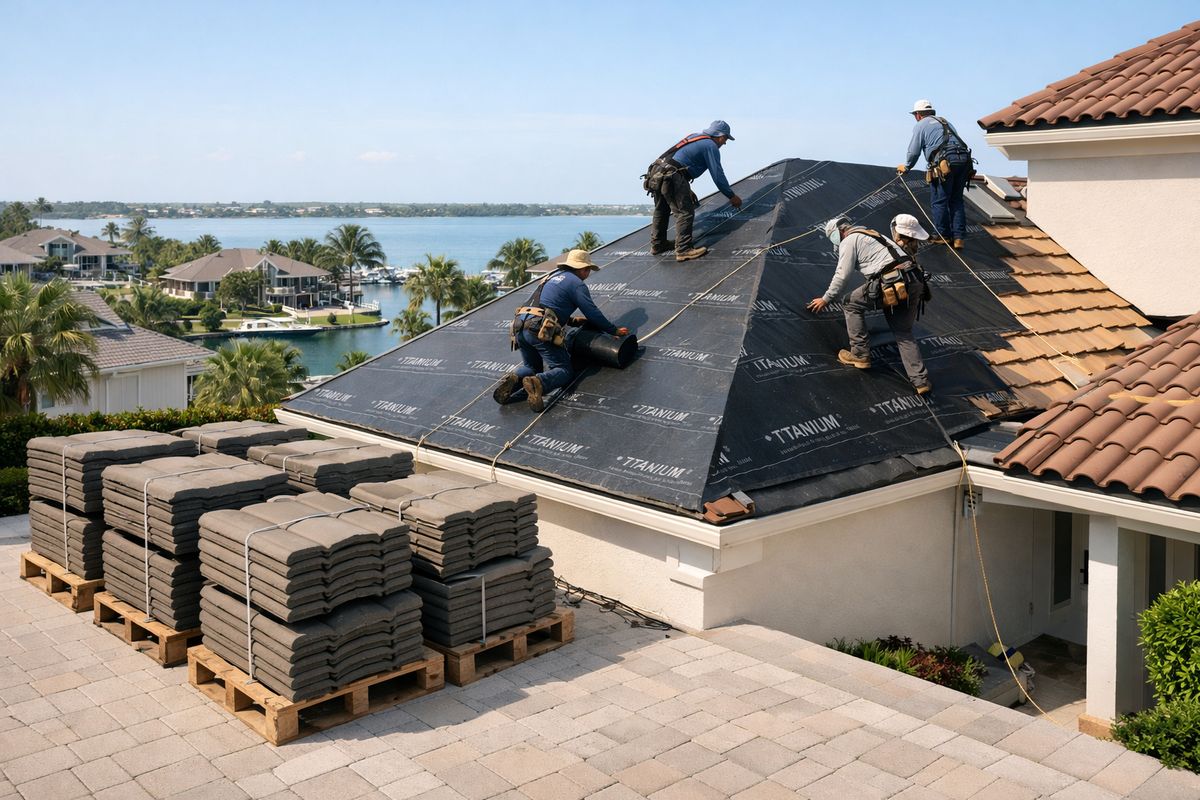
Florida quotes look high for good reason. Labor costs run higher than in many inland markets, and roofing crews move slower when a roof is steep, high, or packed with valleys and penetrations. Heavy tile adds still more labor because every piece has to be handled, staged, and set correctly.
Then there is the code side. Coastal counties often require stronger fastening patterns, better secondary water protection, product approvals, and more inspections. In South Florida, material inflation also pushed prices up fast, with 18% higher material costs reported in the 2022 to 2023 period. So yes, a Florida quote can look expensive. It is often expensive for real reasons, not because somebody added fluff.
The biggest pricing factors that change your quote
If two tile roof estimates look wildly different, the difference is usually hiding in the scope. One quote may include upgraded underlayment, permit handling, disposal, and code work. Another may just price the obvious surface materials and leave the rest to change orders later.
Roof size, shape, pitch, and access
Square footage still matters, but it is only the start. A 2,200-square-foot roof with long clean runs is easier to replace than a 2,200-square-foot roof chopped up with valleys, hips, dormers, and second-story sections.
Pitch matters too. Steeper roofs slow down installation, require more safety gear, and create more waste. Complex roof designs can add 10% to 25% to pricing, and steep slopes can add another 10% to 20%. Tight lot lines, pool enclosures, landscaping, or limited driveway space also raise labor because staging heavy tile becomes a bigger production.
Full tear-off vs. tile relay
This is one of the biggest decision points in a tile project. Full tear-off means old tile comes off and gets discarded, then the system is rebuilt with new tile. That costs more in materials, more in disposal, and often more in labor.
Relay keeps the old tile in service. It only works when the existing tile is still in good enough shape to survive removal and reinstallation, and when enough extra pieces are available to replace breakage. The catch is that not every roof qualifies. Brittle tile, discontinued profiles with no attic stock, or previous poor installation can push you back to full replacement.
Underlayment and waterproofing system
Here is the thing: on a Florida tile roof, the underlayment often matters more than the tile itself for day-to-day leak protection. Tile sheds water, but the waterproof layer underneath is what saves you when wind-driven rain starts working sideways.
Many Florida installs use peel-and-stick direct-to-deck systems, especially near the coast. That approach costs more than a bargain underlayment package, but it usually buys better storm performance and longer life. If you want a deeper look at why this layer matters, this guide to tile roof systems and performance gives a useful overview. A cheaper quote that cuts corners here can age badly, fast.
Decking repairs and hidden wood damage
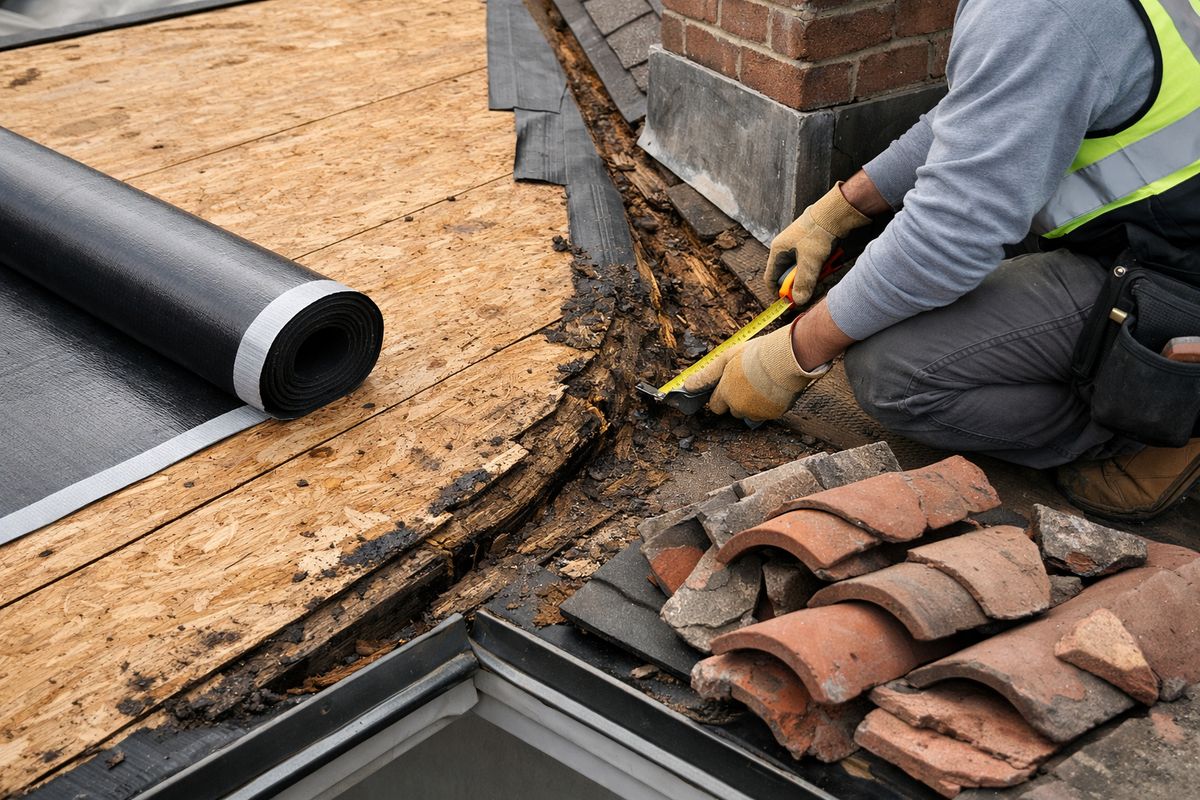
Some of the most annoying roof costs do not appear until tear-off day. Once old underlayment comes off, damaged plywood or plank decking can show up around valleys, skylights, chimney areas, or spots that leaked slowly for years.
In Florida, decking repairs commonly add $2 to $5+ per square foot in affected areas. That is why a serious estimate should mention decking as an allowance or contingency item. If a quote pretends hidden wood problems do not exist, that is not reassuring. It usually means the surprise is just being postponed.
Florida code upgrades and hurricane requirements
“Meets code” sounds simple, but it is not always simple in practice. Depending on the roof and location, code upgrades can include sealed roof decks, specific fastening patterns, improved edge metal, ventilation changes, or approved components within the tile assembly.
There is also a difference between bare-minimum compliance and building a stronger roof while everything is open. If your budget allows, replacement is the easiest moment to add secondary water resistance or other wind-mitigation upgrades that may help both durability and insurance conversations later.
High-Velocity Hurricane Zone rules in Miami-Dade and Broward
If your property sits in Miami-Dade or Broward, the rules get stricter. High-Velocity Hurricane Zone requirements can increase a project cost by 10% to 20% through tighter approvals, enhanced installation methods, and more demanding inspections.
That extra cost is not random. HVHZ jobs often require very specific product approvals, fastening details, and documentation. A quote from outside the area that looks much lower may simply be missing the local reality.
Concrete tile vs. clay tile: what changes the price
Not every tile roof quote is talking about the same thing. “Tile” is a category, not a single material, and the gap between concrete and clay can be meaningful.
For a closer side-by-side comparison, it helps to review how the two tile types stack up in Florida conditions. But the broad price drivers are straightforward.
Concrete tile pricing and value
Concrete tile usually gives you the lower upfront price. It comes in a wide range of profiles and colors, shows up in neighborhoods across the state, and often hits the best balance between looks, durability, and cost.
That makes concrete the default choice for many Florida homes. If you want classic tile curb appeal without stepping into premium clay pricing, concrete is often the practical lane.
Clay tile pricing, supply, and long-term appeal
Clay usually costs more because the material itself costs more, labor can be trickier depending on the profile, and matching can be difficult. After major storms, supply delays can get ugly. In some cases, clay tile lead times stretched for months, which matters if you are trying to satisfy insurance deadlines.
Still, clay has a look that concrete does not fully duplicate. For Mediterranean-style homes, historic properties, or roofs where exact replacement matching matters, clay may be the right answer even at a higher price.
Weight and structural considerations
Tile is heavy. Concrete is heavy. Clay is heavy too, though exact weights vary by product. If your home already has tile, the framing was likely designed for it. If you are switching from shingles to tile, that is a different conversation.
Some homes need engineering review or structural upgrades before a heavy tile system can go on. That can add meaningful cost. It is not common on existing tile homes, but it matters a lot when material changes are involved.
How tile compares with shingle and metal roof replacement in Florida
Tile is not the cheapest roofing option in Florida. It is also not trying to be. The real question is whether the higher upfront cost fits your timeline, insurance situation, and how long you plan to stay in the home.
Asphalt shingles: lower entry cost, shorter Florida lifespan
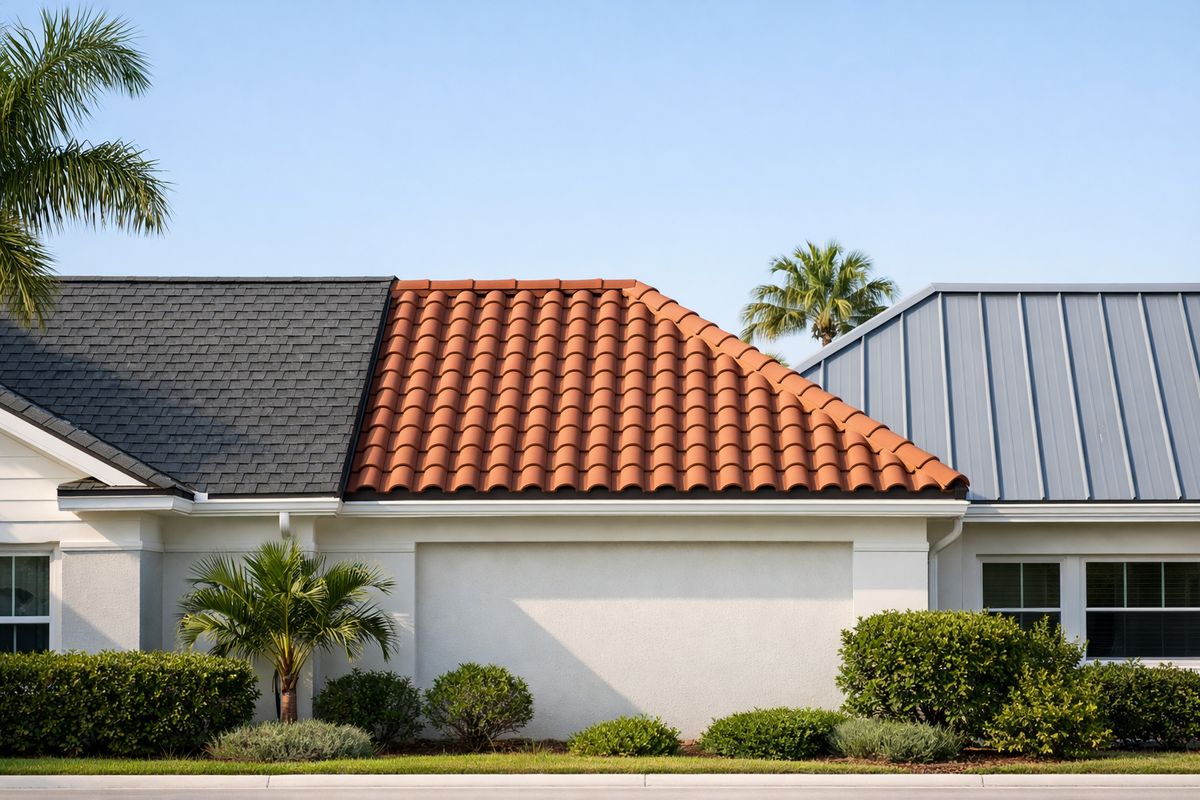
Shingles usually win the upfront budget conversation. In many Florida markets, a standard shingle replacement comes in well below tile, which is why shingles still dominate so much of the market.
But Florida is hard on shingles. Heat, UV, and storm cycles shorten service life, and insurance underwriting tends to look harder at aging shingle roofs. If you are comparing surfaces, this breakdown of how tile and shingles handle Florida heat helps show why cheaper now can mean replacing sooner.
Metal roofing: higher upfront cost, strong storm appeal
Metal often lands between high-end shingles and premium tile, though standing seam can rival or exceed some tile jobs. It is popular because it is durable, long-lasting, and appealing in storm-prone areas.
The catch is that “metal roof” covers a lot of systems. Exposed-fastener panels and standing seam are not priced the same, and not every homeowner likes the look. Still, if storm performance and long service life sit at the top of your list, metal belongs in the conversation.
When tile makes the most sense for your home
Tile makes the most sense when you plan to stay put, care about long-term durability, want classic Florida aesthetics, or need to satisfy HOA design expectations. It also fits homes in coastal or high-exposure areas where durability and energy performance matter more than the lowest opening bid.
Tile is expensive up front. That part is true. But tile can also last decades upon decades, and in many cases the underlayment gets replaced long before the tile itself is done.
The insurance angle: why roof cost and roof age are tied together in Florida
In Florida, roof replacement decisions are often driven by insurance long before a bucket appears in the hallway. That changes the math.
Roof age, non-renewal risk, and underwriting pressure
Once a roof starts aging, insurance pressure can show up fast. In Florida, roof age is the #1 reason for non-renewal after 15 years. That does not mean every 15-year-old roof must be replaced on the spot, but it does mean your options can shrink if you wait too long.
That pressure gets worse when insurers shift older roofs toward actual cash value treatment instead of replacement cost coverage. Suddenly the problem is not just what a new roof costs. It is what happens if you have to pay a much larger share yourself.
Wind mitigation features that may affect premiums
A roof replacement can be more than a cosmetic reset. It can also be a chance to improve parts of the roof system that insurers care about, such as deck attachment, roof-to-wall connections, and secondary water resistance.
Those details are not glamorous, but they can matter. If you have not had a recent inspection, it helps to understand what a Florida roof inspection should actually look for before you commit to a full replacement or try to negotiate with your insurer.
Grants, financing, and out-of-pocket planning
Florida homeowners often piece together roof funding from more than one source. The My Safe Florida Home grant can provide up to $10,000 for qualifying hardening work. Financing is also common, especially once a project moves past a few thousand dollars.
Another number to keep in mind is your wind or hail deductible. In Florida, that often runs as a percentage of home value, not a small flat amount. Before signing a contract, check how much of the bill is truly coming from insurance, how much is coming from savings or financing, and whether the timing affects your policy renewal.
Florida rules, permits, and the 25% replacement question
Roofing code in Florida is not exactly light reading, but understanding the basics can save you from a nasty surprise.
What the 25% roof rule means in practice
This rule confuses a lot of people, partly because it sounds simple and plays out differently depending on the situation. In plain English, if more than 25% of a roof section is repaired or replaced within a 12-month period, that section may have to be brought up to current code.
That means a repair discussion can suddenly become a bigger permitted project. It is one reason storm damage estimates sometimes jump after inspection. In fact, 55% of Florida residents are unaware of this rule, which is why partial-fix expectations often collide with code reality.
Permits, inspections, and why skipping them can cost more later
A legal roof replacement in Florida needs permits. Fees vary by county and city, but permits and inspections are not optional decorations on the paperwork. They are part of how the job gets documented for code, insurance, and resale.
Skipping permits can come back to bite you later through claim disputes, failed home sales, or lender and inspector questions. If a contractor suggests saving money by avoiding permits, that is not a clever shortcut. It is a warning sign.
Extra costs that show up after the estimate
Most roof estimates look clean on page one because the messy stuff lives in the details. That is where projects either stay on budget or drift.
Flashing, vents, skylights, and chimney details
Anywhere the roof gets interrupted, labor goes up. Flashing around walls, vent penetrations, skylights, chimneys, and valleys often needs replacement or at least careful integration with the new system.
Those parts are small compared with the full roof, but they are where leaks love to start. On tile roofs especially, edge and penetration details take time. Time is money, and this is one of the easiest places for bargain quotes to get thin.
Disposal, crane or lift access, and staging
Tile is heavy, awkward, and not fun to move by hand all day in July. Some jobs need cranes, conveyors, lifts, extra dumpster runs, or special staging just to get material on and off the roof safely.
That gets more common on waterfront lots, narrow driveways, urban infill properties, and taller homes. If your estimate includes logistics costs, that is not necessarily padding. It may simply reflect the reality of handling tile without tearing up your yard or slowing the job to a crawl.
HOA, matching tile, and lead-time issues
HOA approval can delay scheduling, and replacement matching can get even trickier. Some older tile profiles are discontinued. Some colors fade in a way that makes new stock look obviously different. Some clay products take months to arrive.
If your project depends on matching an existing look, raise that issue early. Late surprises here can cost both time and money.
Common mistakes that make a Florida tile roof project cost more
Most expensive roofing mistakes happen before work starts. Usually in the quote stage.
Choosing by price alone
A low number can feel like a win until you realize what got left out. Underlayment quality, code upgrades, permit handling, disposal, ventilation work, and cleanup are all common places to trim a quote on paper without trimming the actual job in real life.
If one estimate is dramatically lower, compare scope line by line. Cheap roofs are often just incomplete roofs.
Not asking what happens if bad decking is found
This one matters a lot. Hidden wood damage is common enough that your contract should explain how decking replacement gets priced if it appears during tear-off.
Ask for unit pricing in writing before the project starts. Otherwise, you are agreeing to a mystery number at the exact moment your roof is already open.
Ignoring product approvals and contractor licensing
Florida roofing is not the place for vague substitutions. Tile systems rely on approved components that are meant to work together, especially in high-wind areas. Licensing matters too, and so does experience with tile specifically.
If you are comparing crews, spend a little time checking how to vet a properly qualified Florida roofer. The right paperwork and the right tile experience are not the same thing, and you want both.
Waiting until insurance or storm damage forces a rushed decision
Rushed roof decisions are expensive. After a storm, schedules tighten, prices rarely improve, and your ability to compare bids shrinks fast.
The better move is to replace on your timeline when possible, not when a non-renewal notice or emergency leak corners you.
How to compare tile roof replacement quotes without getting lost
You do not need to become a roofer to compare bids well. You just need each estimate to answer the same set of questions.
What a solid Florida roof quote should include
A useful quote should clearly spell out the tile type, underlayment system, whether the project is full replacement or relay, tear-off scope, flashing work, ventilation, permit handling, cleanup, warranty terms, and any allowance for decking repairs. It should also mention code-related upgrades instead of hiding them in vague language.
If you are shopping several proposals, consistency matters more than fancy formatting. A one-page estimate can be fine if the scope is clear. A five-page estimate can still be slippery if every hard detail is missing.
Questions to ask before you sign
Ask whether the quote is for full replacement or tile relay. Ask what happens if tiles break during removal. Ask whether HVHZ rules apply to your address. Ask how inspections will be handled and who pulls the permit. Ask for decking replacement pricing up front. Ask whether the underlayment is peel-and-stick direct-to-deck or a cheaper alternative.
One more practical thing: ask how long the project is expected to take and what could delay it. Tile projects move differently than simple shingle jobs, especially when matching materials are involved.
Best roofing choice by budget, timeline, and long-term goals
A good roof choice is not about chasing the fanciest material. It is about matching the system to your budget, your house, and how long you expect that roof to carry you.
Best if you want the lowest upfront cost
Shingles usually win here. If the budget is tight and you need the most affordable way to get code-compliant coverage back on the house, shingles are the practical answer.
The tradeoff is shorter life in Florida, more sensitivity to heat and UV, and sometimes tougher insurance optics as the roof ages.
Best if you want long-term durability with classic Florida curb appeal
Concrete or clay tile usually fits this goal best. Concrete tends to be the more budget-friendly path, while clay carries the higher-end look and often the higher price.
If you want the traditional Florida look and plan to stay in the property for the long haul, tile earns its keep.
Best if you want storm-focused performance and long service life
Metal and premium tile assemblies both deserve a look. A stronger underlayment package, better attachment details, and wind-mitigation upgrades can matter as much as the surface material itself.
If storms and insurance pressure are driving the decision, think in terms of roof system performance, not just roof color and material label.
Best if your existing tile can be reused
A tile relay may be the sweet spot. If your current tile is still serviceable, reusing it while replacing the waterproof layers underneath can cut costs without giving up the look of the home.
Before you decide, try one simple thing: ask every contractor whether your existing tile is a real candidate for relay, and ask why or why not.
Frequently Asked Questions
How much does a tile roof replacement cost in Florida?
For many homes, concrete tile replacement lands around $18,000 to $35,000, while clay tile can run higher depending on profile, availability, and location. Large homes, coastal properties, and HVHZ jobs can push beyond that range.
Is a tile relay cheaper than a full tile roof replacement?
Yes, often by a wide margin. A relay reuses existing tiles and replaces the underlayment underneath, which cuts material and disposal costs. It only works if the existing tile is still in good enough condition and enough matching pieces are available.
Why is my Florida roof quote so much higher than a national average?
Florida pricing includes hurricane-related code requirements, permits, inspections, higher labor costs, and often better waterproofing systems. Tile roofs also require more handling, more staging, and more time than simpler roofing materials.
Does insurance pay for roof replacement in Florida?
Sometimes, but not always. Coverage depends on the cause of damage, the age of the roof, the policy terms, and your deductible. Older roofs can create claim issues or non-renewal pressure even before a major leak happens.
What is the 25% roof rule in Florida?
If more than 25% of a roof section is repaired or replaced within 12 months, that section may need to be brought up to current building code. That can turn a partial repair into a larger and more expensive project.
How can you keep roof replacement costs from spiraling?
Get at least a few detailed quotes, compare scope instead of headline price, ask for decking unit pricing in writing, confirm permit handling, and check whether your tile can be reused. Those few steps catch a lot of expensive surprises before work begins.