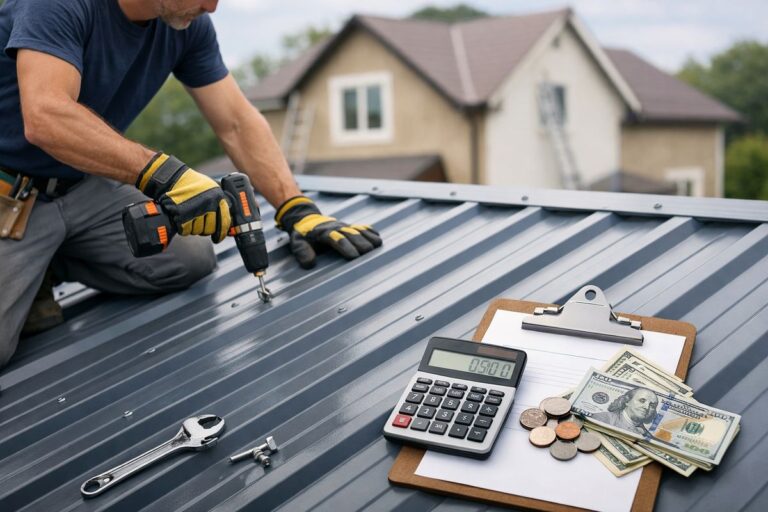
If you’ve looked at two metal roof quotes and wondered how the numbers got so far apart, you’re not imagining it. Metal roof installation cost can swing wildly even when two homes seem almost identical, and the reason usually has less to do with the metal itself than most people expect.
Why Two Metal Roof Quotes Can Be Miles Apart
Picture two 2,000-square-foot homes a few streets apart in Fort Myers. Same general age, same square footage, same goal: replace an aging shingle roof with metal. One gets a quote in the low twenties, the other lands much higher. That gap is normal.
Here’s the thing: metal roof installation cost is never just a square-footage math problem. Labor, roof shape, permit requirements, wind-zone fastening, trim details, and the type of system you choose can shift the price almost as much as the metal panels. On a simple roof, material might feel like the star of the show. On a chopped-up roof with valleys, skylights, and coastal exposure, installation is often the real budget driver.
That matters because a low quote can look great until you realize it leaves out half the job. If one contractor priced only panels and basic labor, while another included upgraded underlayment, code-compliant flashing, tear-off, permits, and corrosion-resistant trim, those quotes are not actually competing with each other.
The Real Cost Range for Metal Roof Installation
For most homes in 2026, installed metal roofing falls in the range of about $7 to $30 per square foot. On a 2,000-square-foot roof, that commonly puts the full project somewhere around $14,000 to $60,000, depending on the system, labor, and job conditions. A lot of Florida projects land somewhere in the middle, but coastal homes, complex roofs, and premium systems can push higher fast.
Installed cost should mean the whole working roof system, not just sheets of metal. That usually includes the panels, underlayment, trim, flashing, fasteners or clips, labor, and basic jobsite setup and cleanup. If a quote talks mostly about panel price, slow down. You are not buying metal sheets. You are buying a roof that has to stay put in wind, shed water cleanly, and meet code.
What “Per Square Foot” Actually Means in Roofing
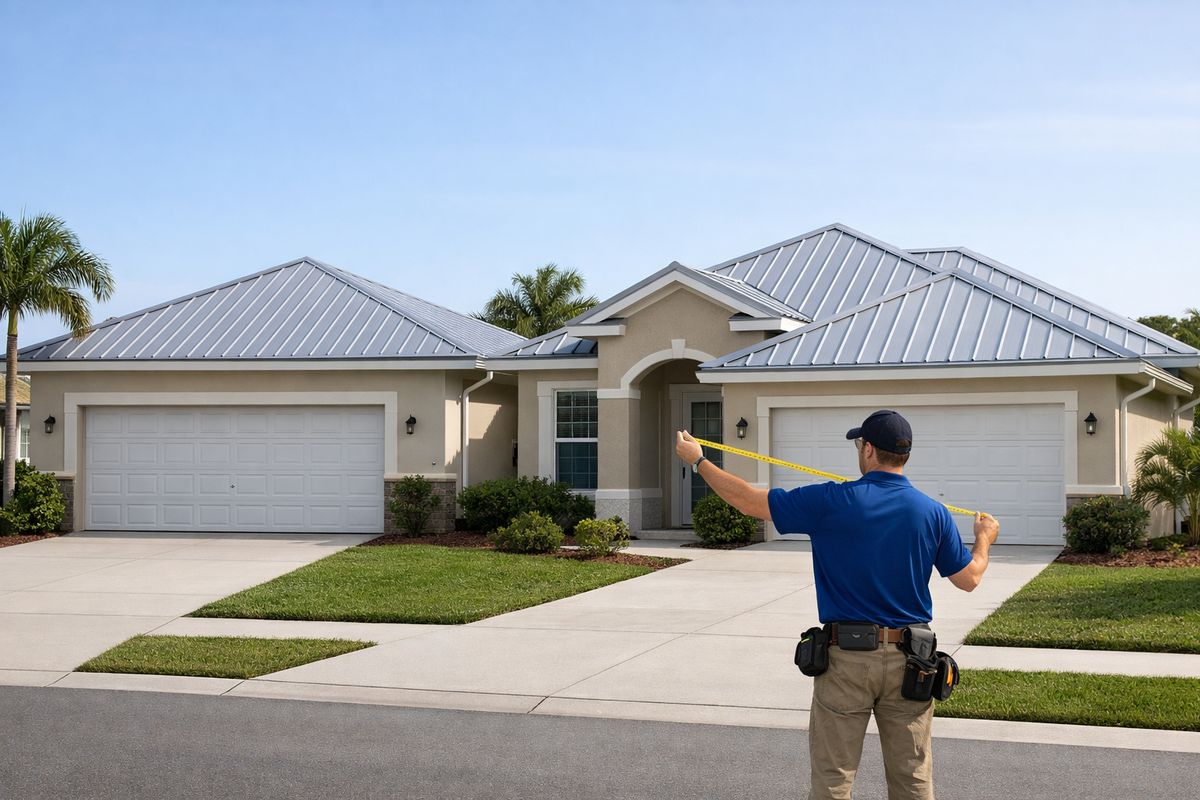
Roofing square footage is not the same as your living area. A 2,000-square-foot house does not always have a 2,000-square-foot roof. Pitch, overhangs, porches, garages, and layout all add surface area.
The catch is simple: the roof is the skin over the shape of the home, not the flat floor plan underneath it. A steep roof with deep overhangs can have far more roofing area than the home’s interior suggests. That is why roofing estimates are based on measured roof area, not just the number on your property appraiser record.
A Quick Florida Example
Take a home in Cape Coral with a low-slope, simple gable roof and easy driveway access. That home may price fairly efficiently with exposed-fastener steel or a basic standing seam system. Now compare it to a similar-size home closer to open salt exposure, with hips, valleys, a chimney chase, and stricter fastening requirements for a high-wind zone. Same home size on paper, different roofing reality.
In Florida, coastal exposure and code requirements are not side notes. They can change material choice, fastening schedule, trim details, and labor time. If you want a better feel for how system choices stack up, it helps to review the different roof styles that work in Florida before comparing prices.
What Drives the Price the Most
Most of the final number comes from a handful of factors. Some are obvious, like the type of metal. Some are less obvious, like how long the crew will spend cutting trim around roof penetrations or fastening panels to meet wind requirements. If you want to understand your quote, start here.
Metal Type and Profile
Material choice creates the widest price spread. Corrugated and exposed-fastener steel are usually on the lower end. Standing seam costs more. Aluminum often sits above standard steel. Metal shingles and specialty stamped systems can go higher because they involve more pieces, more trim, and more labor. Copper lives in its own premium tier.
That price jump is not just about prettier metal. Standing seam, for example, usually costs more because the panels, clips, layout, and detailing are more demanding to install. Premium metals also cost more because the raw material is more expensive before the first panel even goes on the roof. Industry pricing commonly places corrugated steel around $5 to $13 per square foot installed, standing seam steel around $9 to $17, aluminum around $4 to $17, metal shingles around $6 to $18, and copper at $15 to $40 or more.
Labor and Installation Skill
Labor is the sleeper issue in metal roof pricing. On many projects, 60% to 70% of the price can come from installation. That is why one contractor can be much more expensive than another without necessarily overcharging.
Metal roofing is less forgiving than asphalt. Panels have to align. Flashing has to be done right at walls, valleys, vents, and edges. In hurricane-prone areas, fastening schedules and attachment details matter a lot. A crew that regularly installs metal in coastal Florida is not just charging for time. You are paying for fewer mistakes, cleaner details, and better odds that the roof performs the way it should.
Roof Shape, Slope, and Complexity
Simple roofs are cheaper to roof. That sounds obvious, but it is easy to underestimate how much shape changes the budget. Valleys, dormers, skylights, hips, multiple elevations, and transitions all increase cutting, fitting, flashing, and waste.
Steep pitch adds another layer. Crews move slower, staging gets harder, and safety equipment becomes more involved. As a rough guide, complex roof designs often cost 15% to 25% more, and steep roofs can add another 15% to 35%. If your roof looks like a folded paper crane instead of a plain box, expect the labor line to reflect it.
Coastal Conditions and Florida Code Requirements
Salt air changes the conversation. Near the coast, corrosion resistance matters more, which can push you toward aluminum or upgraded coated steel instead of basic options. Fasteners, clips, flashing metals, and trim accessories also need to make sense for that environment. A roof is only as durable as its weakest exposed component.
Florida code requirements also affect price directly. High-wind fastening patterns, approved underlayment assemblies, permit documentation, and inspections all add cost, but in a useful way. You are not paying for paperwork for fun. You are paying for a roof system that has a better chance of holding up when weather gets serious.
Metal Roof Cost by Material and System Type
Different systems make sense for different budgets and properties. The smart move is matching the roof to your location, your ownership timeline, and how much maintenance you want to deal with later.
Steel: The Practical Middle Ground
Steel is often the most practical balance of cost, strength, and availability. For many inland or moderately exposed properties, galvanized or Galvalume steel gives you solid durability without jumping into premium pricing. Installed cost often lands in the middle tier, depending on profile and coating.
The catch is coastal use. Standard steel can still work in some cases, but salt exposure raises the stakes. Better coatings, better trim details, and careful maintenance matter more near the water. If your property sits in heavy salt air, bargain-grade steel can become expensive later.
Aluminum: Worth a Look Near the Coast
Aluminum usually costs more upfront than basic steel, but coastal homeowners often find the math easier to justify. Its biggest advantage is corrosion resistance. In salt-heavy environments, that is not a luxury feature. It is a practical one.
Pricing varies by profile, but aluminum roofing commonly runs higher than steel because the material itself costs more. If your property is close to the Gulf or Atlantic, that higher upfront cost can buy peace of mind and a longer service life.
Standing Seam vs. Exposed Fastener
This is one of the biggest decisions affecting price. Exposed-fastener systems usually cost less upfront because the panels and installation process are simpler. They can make sense on tighter budgets, utility buildings, and straightforward residential roofs where cost control matters most.
Standing seam costs more, often noticeably more, because it uses concealed fasteners and more precise installation methods. In return, you usually get a cleaner look, fewer exposed penetrations, and better long-term performance. If you are comparing systems head to head, understanding quote differences becomes especially useful because this is where shortcuts tend to hide.
Premium Options Like Copper or Metal Shingles
Copper is the premium end of the spectrum, both in appearance and cost. It can last a very long time and develops a distinct patina, but it is not the budget-conscious choice. Metal shingles sit in a different premium lane. They often appeal to homeowners who want the durability of metal without the panel look.
These options can make sense for luxury homes, historic properties, or projects where curb appeal carries a lot of weight. But for most buyers, the better question is not “what is the fanciest option?” It is “what system fits the property without overbuying?”
The Extra Costs That Surprise People
This is where many budgets get knocked off track. The roof quote that looks light and clean at first glance can grow fast once real job conditions show up.
Tear-Off, Disposal, and Deck Repairs
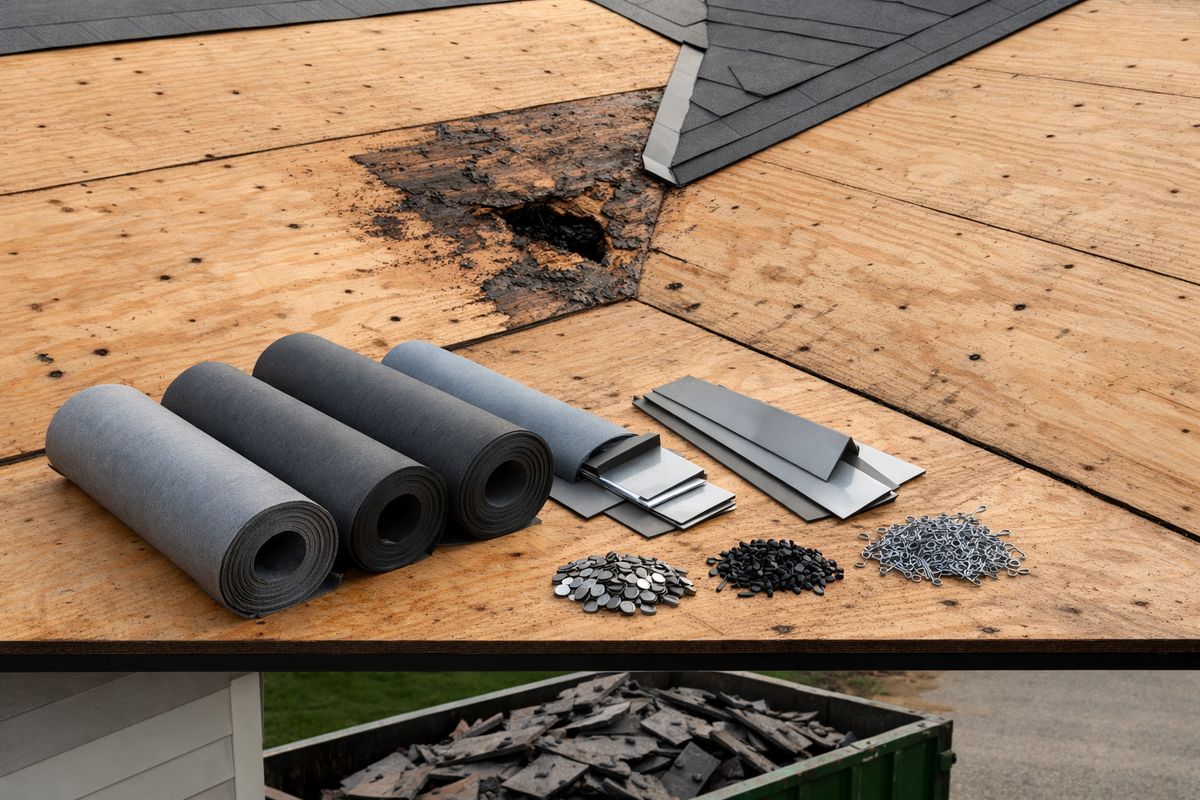
If the existing roof needs to come off, that costs money. Removal and disposal often run about $1,000 to $5,000 depending on size, layers, and access. If damaged decking shows up underneath, repairs can add roughly $2 to $5 per square foot for the affected areas.
Hidden wood rot is the classic surprise. From the ground, everything can look fine. Once the old roof comes off, soft decking around valleys, chimneys, or old leak points can change the budget in one afternoon. That is normal roofing reality, not a scam, as long as the contractor documents it clearly.
Underlayment, Flashing, Trim, and Fasteners
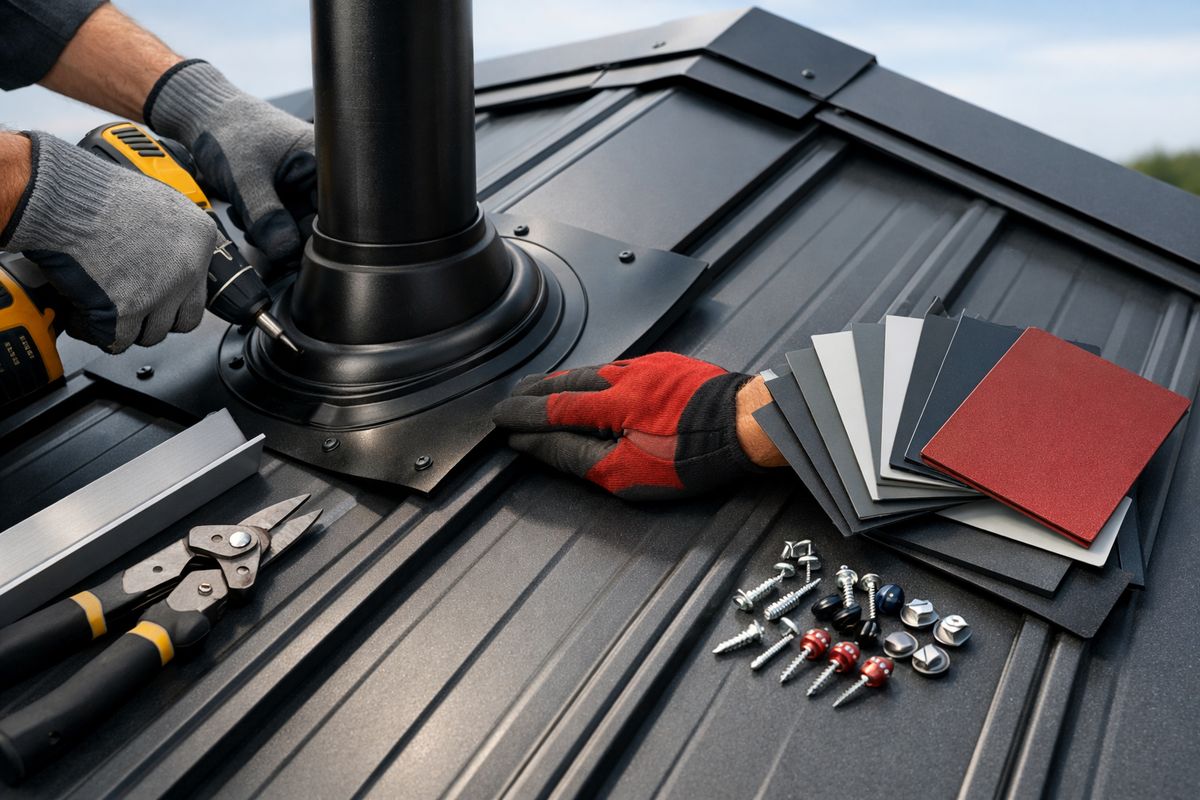
These are the small parts that are not actually small. Underlayment is the water-shedding layer under the metal. Flashing seals transitions around walls, chimneys, valleys, and penetrations. Trim finishes edges and protects vulnerable lines. Fasteners or clips hold the whole system in place.
If a quote glosses over these items, you are not looking at a fully defined roof system. In Florida, those details matter even more because wind and rain exploit weak edges first. A cheap panel with mediocre trim is like putting bargain tires on a truck you plan to drive through a storm.
Permits, Inspections, and Specialty Add-Ons
Permits usually add a few hundred dollars, often around $250 to $500, and inspections are part of the process. In Florida, permit handling is not optional admin fluff. It is part of a code-compliant installation.
Specialty items can also change the number: upgraded coatings, vent modifications, solar standoff adjustments, custom edge metal, and engineering requirements on certain properties. None of these should surprise you at signing. A good estimate spells them out or at least explains what is included and what would count as extra.
Upfront Price vs. Long-Term Value
Metal roofing costs more at the start. That part is true. But sticker price alone gives you an incomplete picture, especially in a hot, storm-prone state where durability and efficiency matter every single year.
Lifespan, Maintenance, and Repair Expectations
A well-installed metal roof often lasts 40 to 70 years or more, while asphalt shingles usually land in the 15 to 30 year range. That means metal may outlast one or even two asphalt replacements. Over time, that changes the value equation.
Maintenance also tends to be lighter, especially with higher-quality systems. Fewer replacements, fewer recurring patch jobs, and better durability can make the higher upfront cost easier to justify if you plan to stay in the home. For a deeper side-by-side view, it helps to compare how metal stacks up against shingles in Florida.
Energy Savings in Hot, Sunny Climates
Florida sun is relentless. Reflective finishes and cool-roof coatings can help bounce heat away instead of soaking it in, which may reduce cooling demand. Depending on the system and coating, energy savings can be meaningful, though not magical.
Some sources put potential savings in the 10% to 25% range, with certain reflective finishes performing even better in the right conditions. The practical takeaway is simpler: a reflective metal roof can help your attic and HVAC work less hard in the hottest months.
Insurance, Resale, and Storm Resilience
A stronger roof can pay you back in less obvious ways. Some homes may qualify for insurance benefits, depending on the system and local underwriting rules. A metal roof can also appeal to future buyers who do not want to inherit an aging shingle roof.
There is also the plain value of storm resilience. Better wind performance, fewer blow-offs, and stronger impact resistance matter in hurricane-prone regions. You may not put a perfect dollar amount on that, but you will notice it when weather maps start turning red.
How to Compare Quotes Without Getting Burned
A good quote is specific. A bad quote is vague, oddly cheap, and full of missing pieces. The trick is comparing scope, not just total price.
What a Good Quote Should Include
A solid estimate should clearly identify the metal type, panel or profile, gauge or thickness, finish or coating, underlayment type, flashing scope, trim package, tear-off terms, disposal, permit handling, warranty coverage, and cleanup. It should also mention how decking repairs are handled if damaged wood is found.
You do not need a novel. You do need enough detail to know what you are actually paying for. If one quote is two pages of specifics and another says “metal roof install, includes labor and materials,” those are not equal documents.
Red Flags in Low Bids
The biggest red flag is missing scope. No mention of underlayment, flashing, permits, or edge metal usually means those details are either excluded or vaguely assumed. That is where cheap jobs become expensive fixes later.
Another warning sign is pricing that seems to reflect only panel cost. A roof is not just metal on wood. It is a system. If the number feels too good to be true, it usually means something real has been left out. Also watch for unclear warranties, no line for tear-off, and no plan for inspections.
Questions to Ask Before You Sign
Ask whether the proposed system is suited for coastal exposure. Ask for the wind-rating documentation. Ask who pulls the permits and who meets the inspector. Ask what happens if bad decking is uncovered. Ask whether the installer regularly works with the exact metal system in your quote, not just roofing in general.
And yes, ask about licensing and insurance. That should not feel awkward. A metal roof is a long-term purchase, and poor installation can cancel out the benefits of even the best materials.
Which Metal Roof Option Fits Your Budget and Your Property
Not every property needs the same system. The best choice depends on your budget, how close you are to salt air, and how long you expect to own the building.
Best Fit for Tighter Budgets
If upfront cost is the main pressure point, simpler exposed-fastener steel systems usually make the most sense. They keep metal roofing within reach without jumping straight to premium pricing. A basic roof shape helps even more, because it reduces labor and waste.
That does not mean cheap for the sake of cheap. It means choosing a straightforward system and making sure the quote still includes the underlayment, trim, permits, and installation details that matter.
Best Fit for Coastal Homes
Near the coast, corrosion resistance deserves a bigger share of your budget. Aluminum is often worth a serious look, and upgraded coated systems can also make sense depending on exposure and design. Salt air is relentless, and this is one place where buying a little more roof upfront can save headaches later.
Best Fit for Long-Term Ownership
If you plan to stay put for decades, standing seam is often the stronger long-term play. You pay more now, but you get a cleaner system with concealed fasteners, lower maintenance expectations, and a longer-performing roof assembly.
That is especially true if energy efficiency, appearance, and durability matter more to you than the lowest possible quote on day one.
Try This Before You Request Quotes This Week
Before you call anyone, do one simple prep step. Measure your home’s rough footprint, note every valley, skylight, chimney, or roof level change, and ask every contractor for the same line-item scope. That one move makes the quote comparison much cleaner.
A little prep now can save you from chasing a low number that was never the real project price in the first place.
Frequently Asked Questions
How much does a metal roof installation usually cost in Florida?
Most projects fall somewhere in the broad national installed range of about $7 to $30 per square foot, but Florida pricing often shifts based on wind-zone requirements, roof complexity, and coastal corrosion concerns. Simple inland roofs usually price lower than complex coastal ones.
Why is labor such a big part of metal roof installation cost?
Metal roofing takes more precision than asphalt shingles. Panel alignment, flashing, trim work, fastening patterns, and code compliance all add time. On many projects, labor makes up the majority of the total cost.
Is standing seam worth the extra money?
Often, yes, if you value long-term performance, a cleaner look, and fewer exposed fasteners. If your budget is tighter or the roof is simple and utilitarian, an exposed-fastener system can still be a sensible choice.
Does living near the coast increase metal roof cost?
Yes. Coastal properties often need more corrosion-resistant materials, upgraded coatings, and better accessory choices. Salt air affects more than just the panels, so the full system usually costs more.
Can you install a metal roof over shingles to save money?
Sometimes, but only if local code, product approvals, and the roof structure allow it. It can reduce tear-off costs, but it is not always the right choice and should never be assumed without proper review.
What should you ask for in every roofing quote?
Ask for the metal type, profile, thickness, coating, underlayment, flashing and trim scope, tear-off terms, permit handling, warranty details, cleanup, and how decking repairs are billed. If those details are missing, the quote is not complete.